
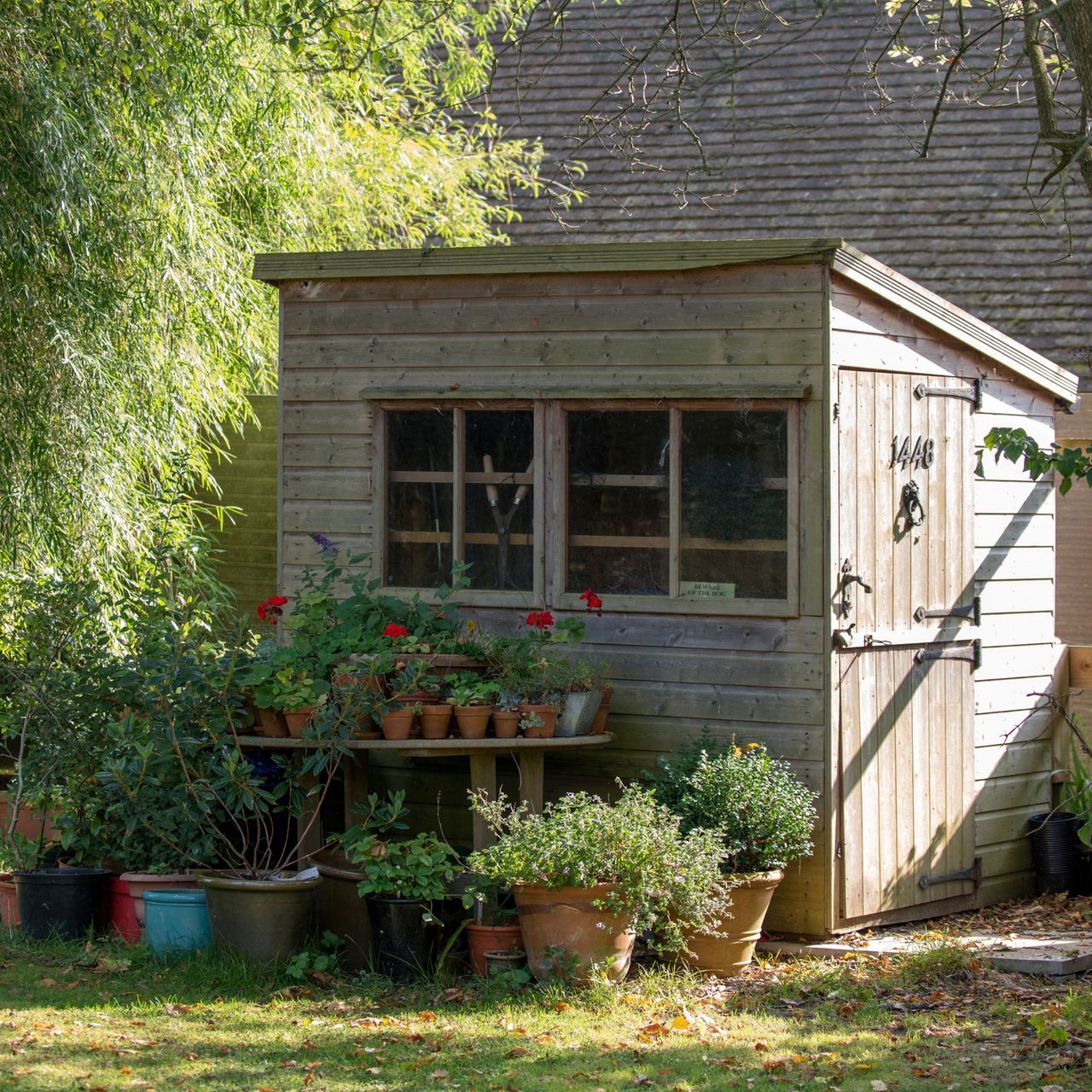
North-facing gardens get a bad rap – they're typically a lot more shaded than other garden aspects, which can make things tricky for plants that enjoy plenty of sunshine.
The good news? There are plenty of north-facing garden ideas that can make a space just as productive as those blessed with full sun. So many small garden ideas can be applied to north-facing gardens, for example, where space and light are at a premium. It's just about choosing the plants, colour schemes and designs that complement a shadier space instead of subtracting from it.
If you're planning a north-facing garden, or looking to enhance one, there's plenty of room for creativity. Here's a list of our favourite north-facing garden ideas that make the most of this underrated garden type.
1. Plant shade-loving varieties in pots
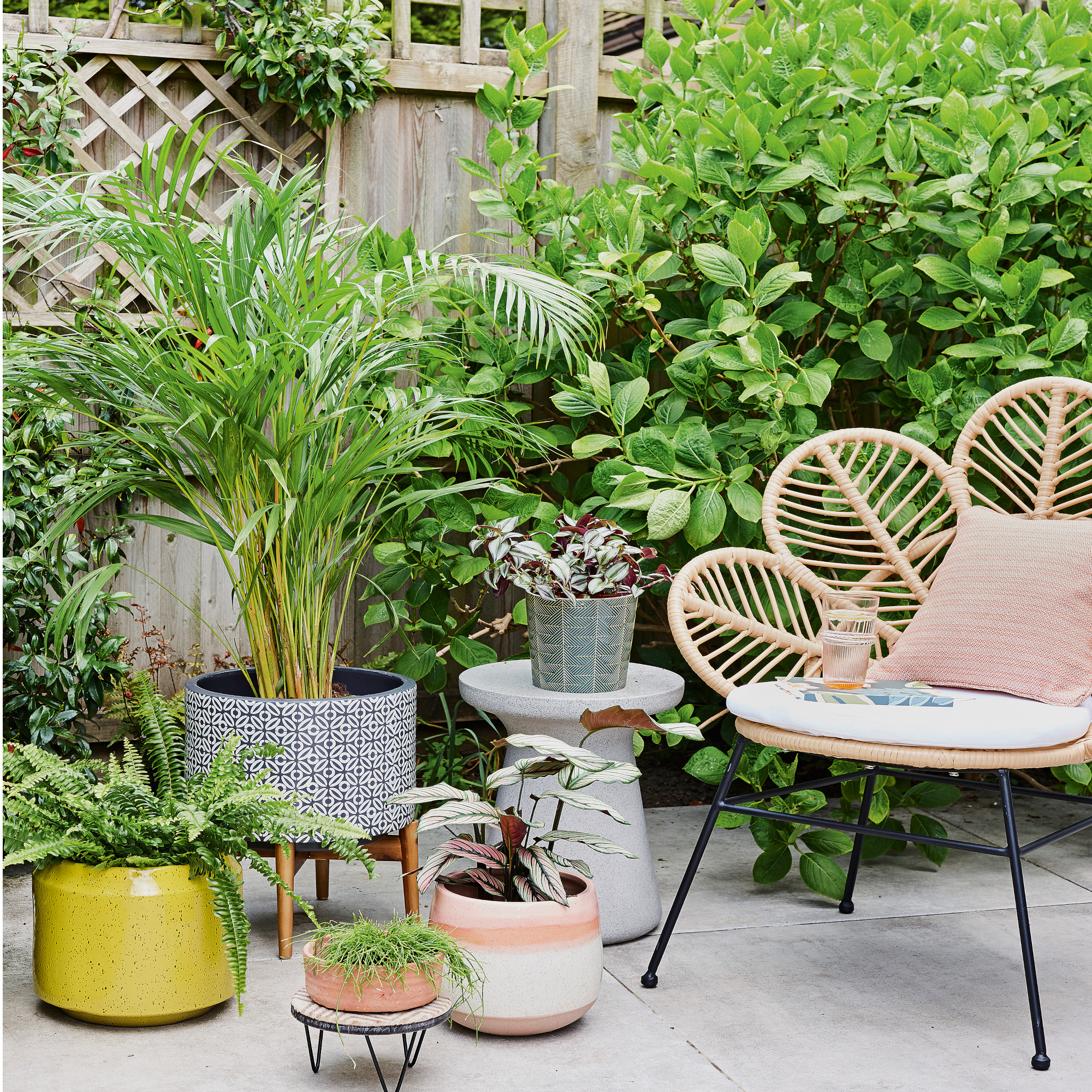
One of our favourite north-facing garden ideas when border space is limited is planting up a few shade-loving pot plants – it's the perfect way to add greenery to your space that will thrive in shadier conditions.
If you're keen to plant varieties that enjoy a little sun, you can simply position the pots in a spot that receives the most light. That's usually the point in your garden that's furthest away from the house, and sometimes the perimeter of the garden, too.
Hostas ('Francee', which you can buy from Crocus, is a popular variety) love the shade and look beautiful in warm terracotta pots, and if you want to pack a punch with colour, begonias are a great choice. Choose a collection of pots with varying heights and shapes like the ones in the image above to keep your display interesting.
2. Utilise shade-friendly hanging baskets
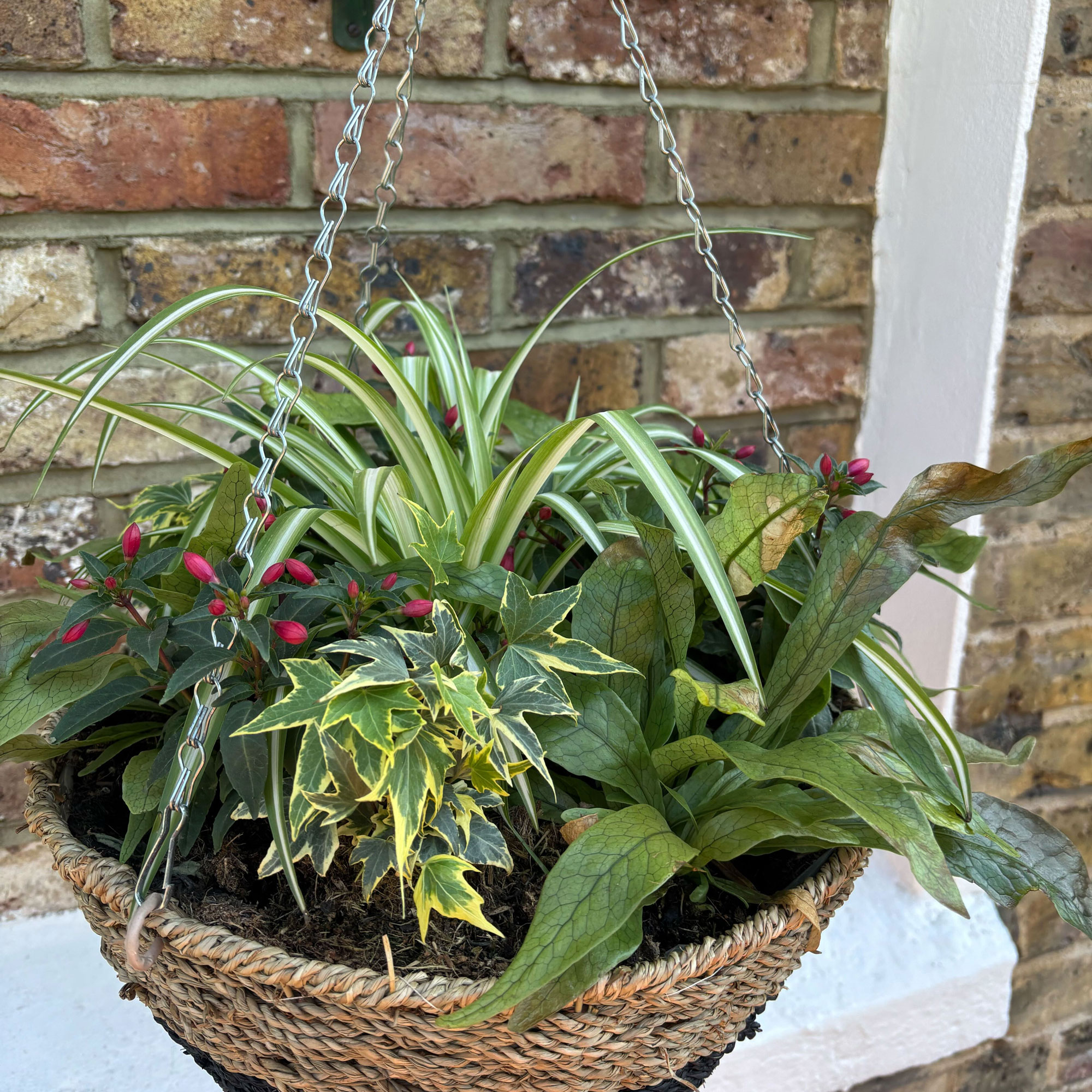
Hanging baskets are another brilliant way to add greenery to a paved or compact garden, and if you select shade-loving plants like Rebecca Knight, our Digital Editor, did, you can create the perfect hanging basket for a north-west-, north-east-, or north-facing balcony.
Ferns, fuchsias and spider plants are among the best candidates for a shade-loving hanging basket. They're also ideal for a north-facing balcony garden, where light is at a premium. Just remember to keep on top of watering, especially during the summer, when the soil will dry out more quickly.
3. Cut down on the grass and extend your planting
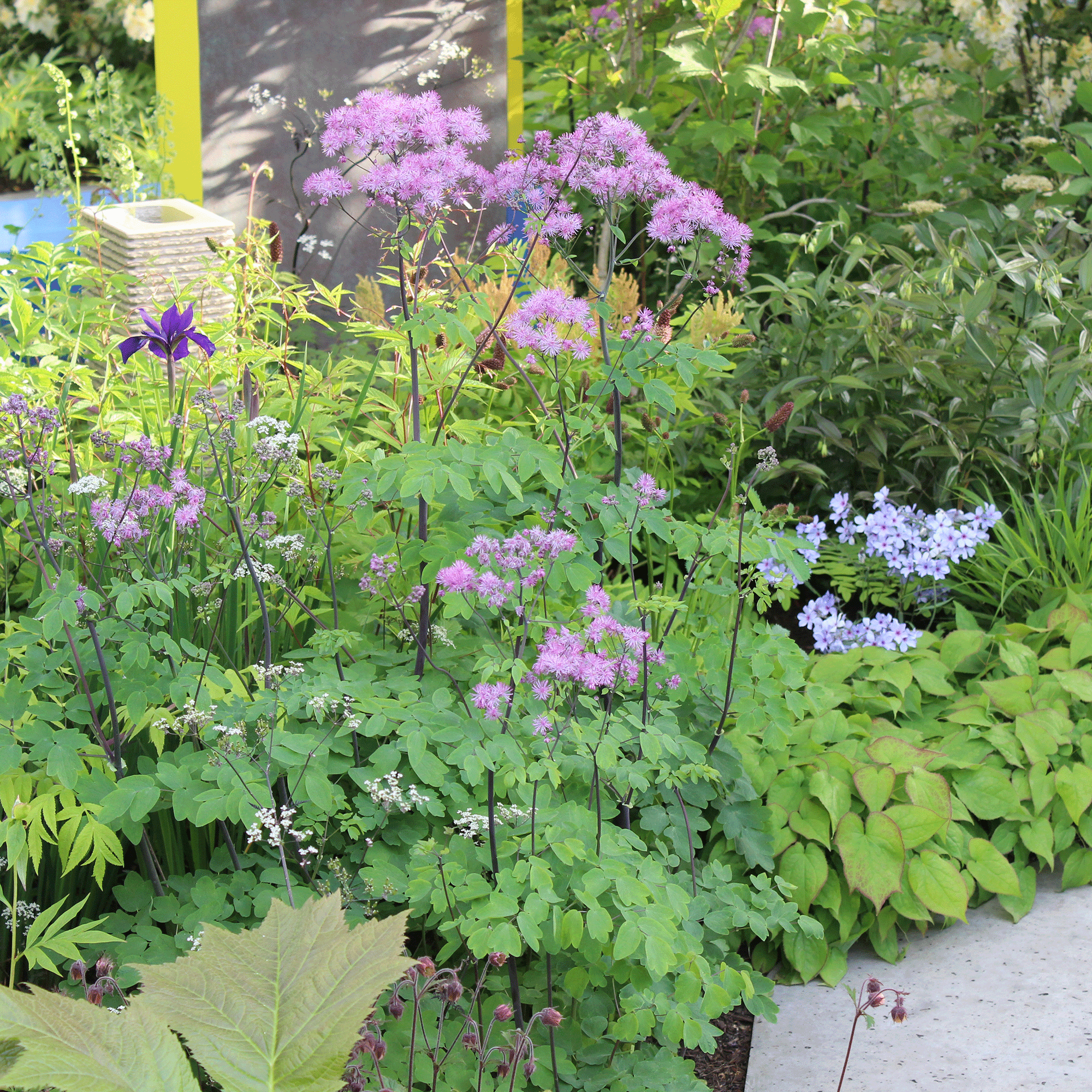
If you have a fairly small garden, having a large amount of it dedicated to a lawn is not your best option. A smaller north-facing garden will get less sunlight, which will prevent your grass from growing to its full capacity and make it look sparse.
If you do still want a small area of grass opt for a shade-tolerant grass mix like this Miracle-Gro EverGreen Shady Lawn Seed from Amazon.
'If you still want your garden to be green, think about extending your planting spaces and covering your garden with plants and flowers,’ says Rian Habergham, garden expert at Leisure Bench.
4. Embrace low-maintenance ferns
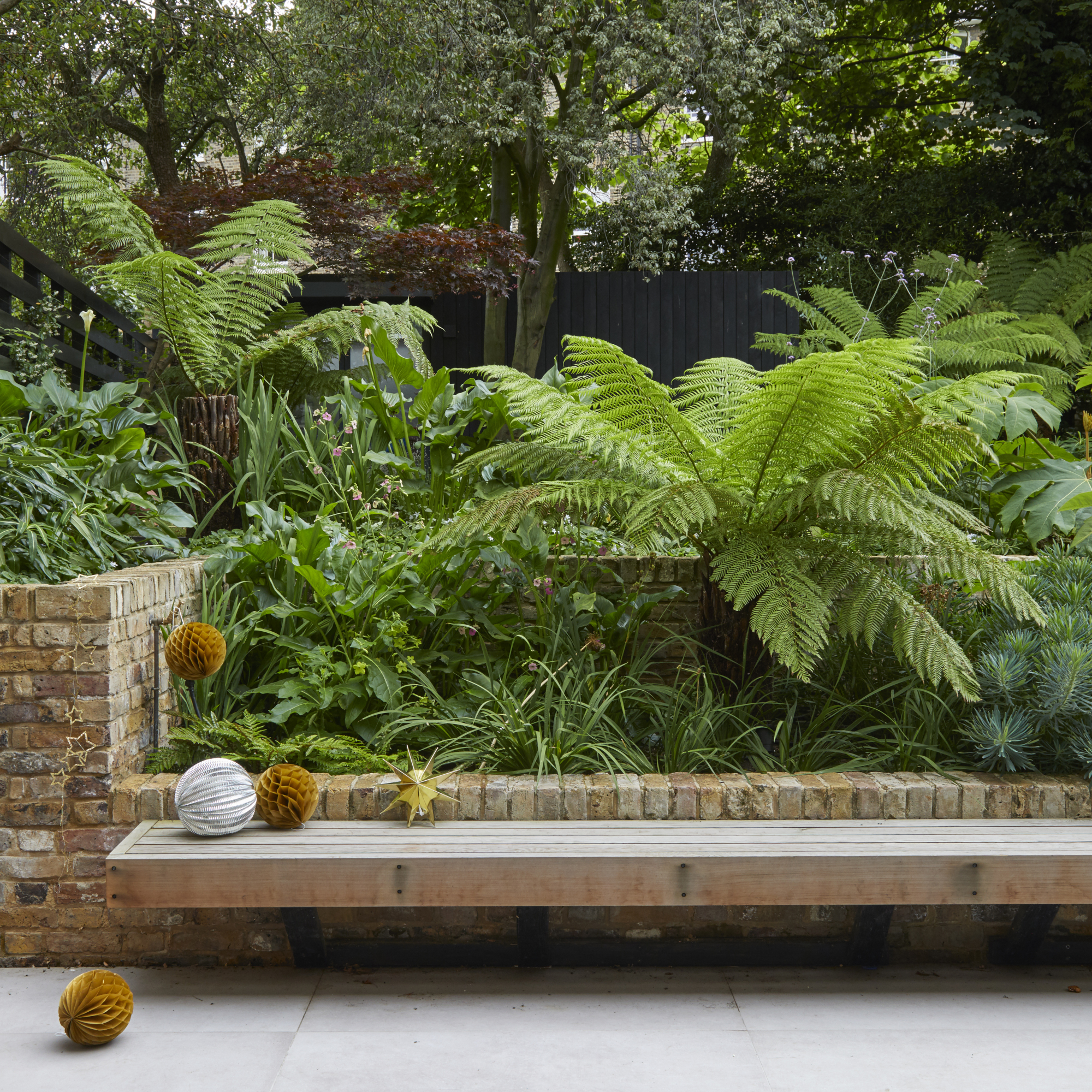
For shady gardens, low-maintenance ferns offer great colour and texture, come in a variety of colours, shapes and sizes, and are a brilliantly easy garden idea. They work well for north-facing gardens because direct afternoon sun can scorch and dry out the leaves. For greenery all year round, holly ferns are hardy plants which last all through winter and thrive in the colder shade.
The western sword fern is one of the most robust and low-maintenance ferns, with glossy, deep-green fronds. For continuous groundcover which will fill in any sparse gaps, Japanese tassel ferns work well under flowering shrubs, and the evergreen deep fronds spread out for beautiful coverage. For a fern with a slightly more interesting shape, the hart’s-tongue fern has eye-catching frilly fronds in a strong, glossy green.
5. Bring in pops of painted colour

If you want to bring colour to a shaded garden, it's also worth getting to know the best paint colours for a north-facing garden. Paint dark wooden furniture a brighter colour, give your fence a new lease of life, or even add splashes of colour with garden accessories like cushions and outdoor rugs.
You could also take the opportunity to save money and upcycle old wooden furniture and paint it in your favourite colour or match it to the flowers in your garden.
6. Build around a fire pit
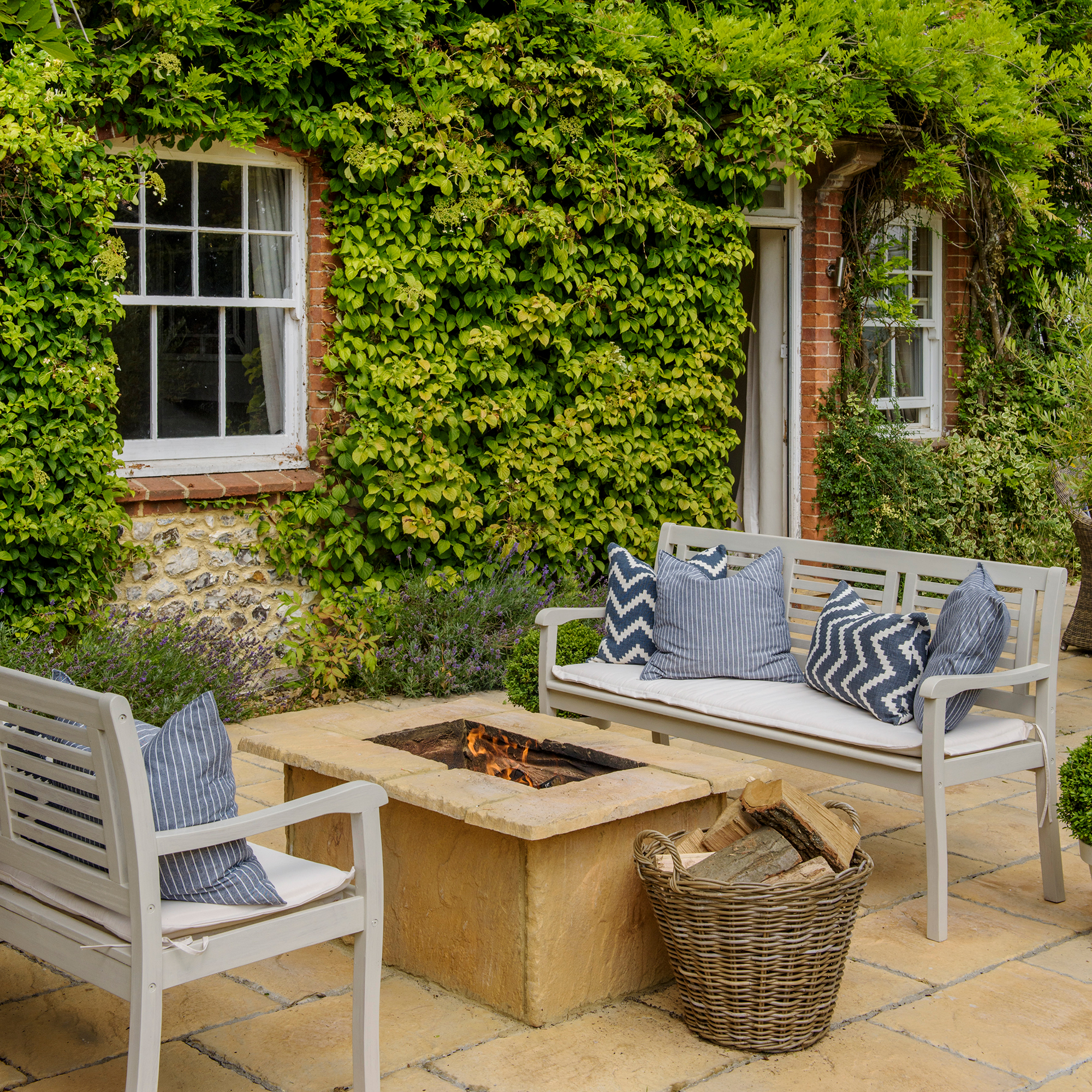
The best firepits can work in any garden, no matter the size or aspect, and they are especially well-suited to north-facing gardens.
'There are a number of benefits to having a fire pit, including bringing the comfort and cosiness of an open fire to the garden and adding a focal point to your garden where you can sit, relax and lap up the heat from the flames,' explains Natalie Carton, furniture and home accessories buyer at Fenwick.
Try building your seating around the fire pit to help you make the most of that aforementioned evening sunshine.
7. Choose shade-loving evergreens
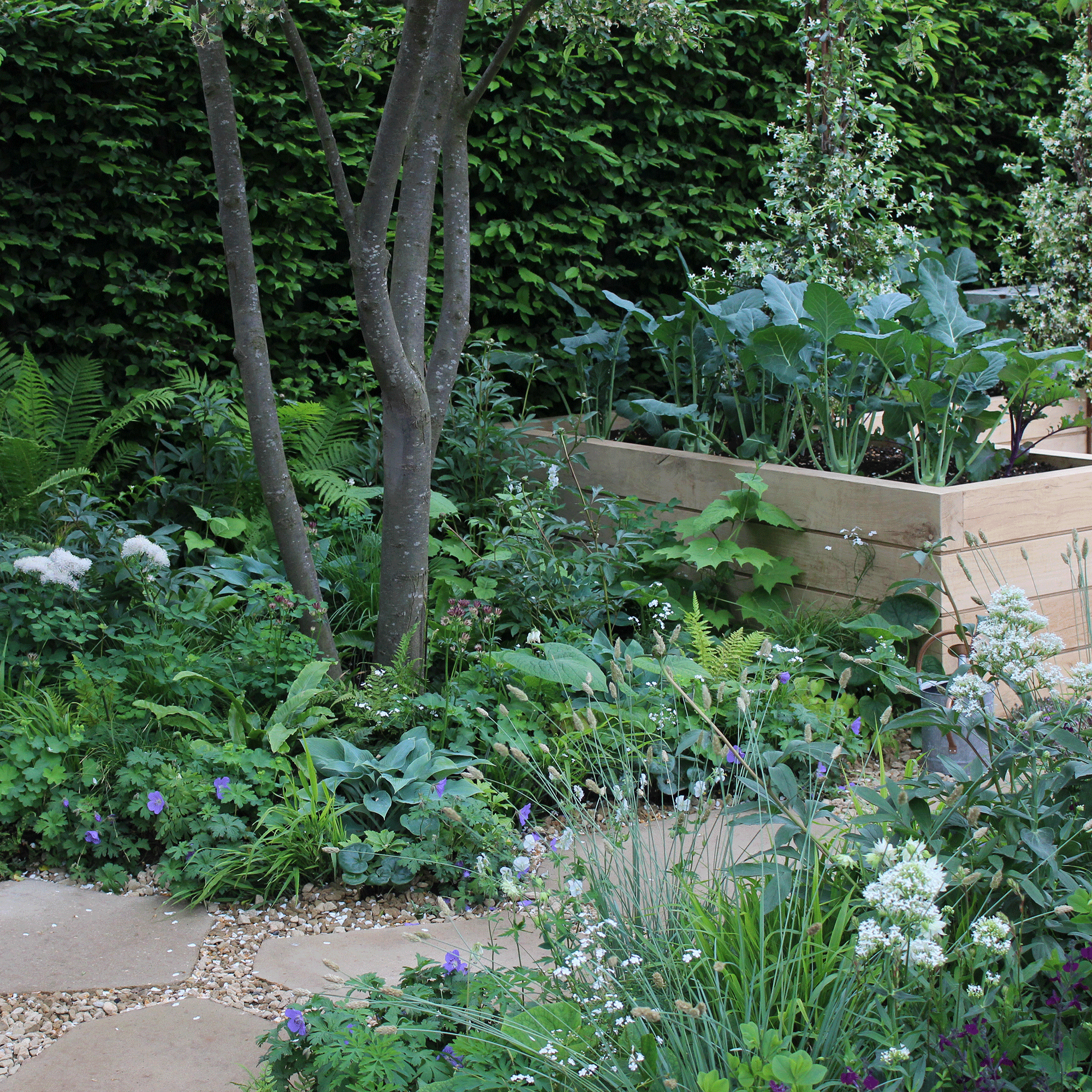
Garden designer Jacquie Felix-Mitchell specialises in oasis-style gardens, and suggests that you look for plants ‘which sing in the shade’. If ground planting space is limited, there are plenty of shade-loving plants for pots, and evergreen varieties will grant you greenery all year round.
‘The gorgeous and rather stylish Hydrangea petiolaris is an evergreen climbing hydrangea, and you can easily grow it up a wall,' Jacquie says. ‘Clematis armandii, too, is a classy plant with evergreen pointed leaves. First among equals, she'll romp her way up a trellis, pergola or wall, and give you small scented white flowers in late winter, or early spring.’
8. Opt for a highly textured planting scheme
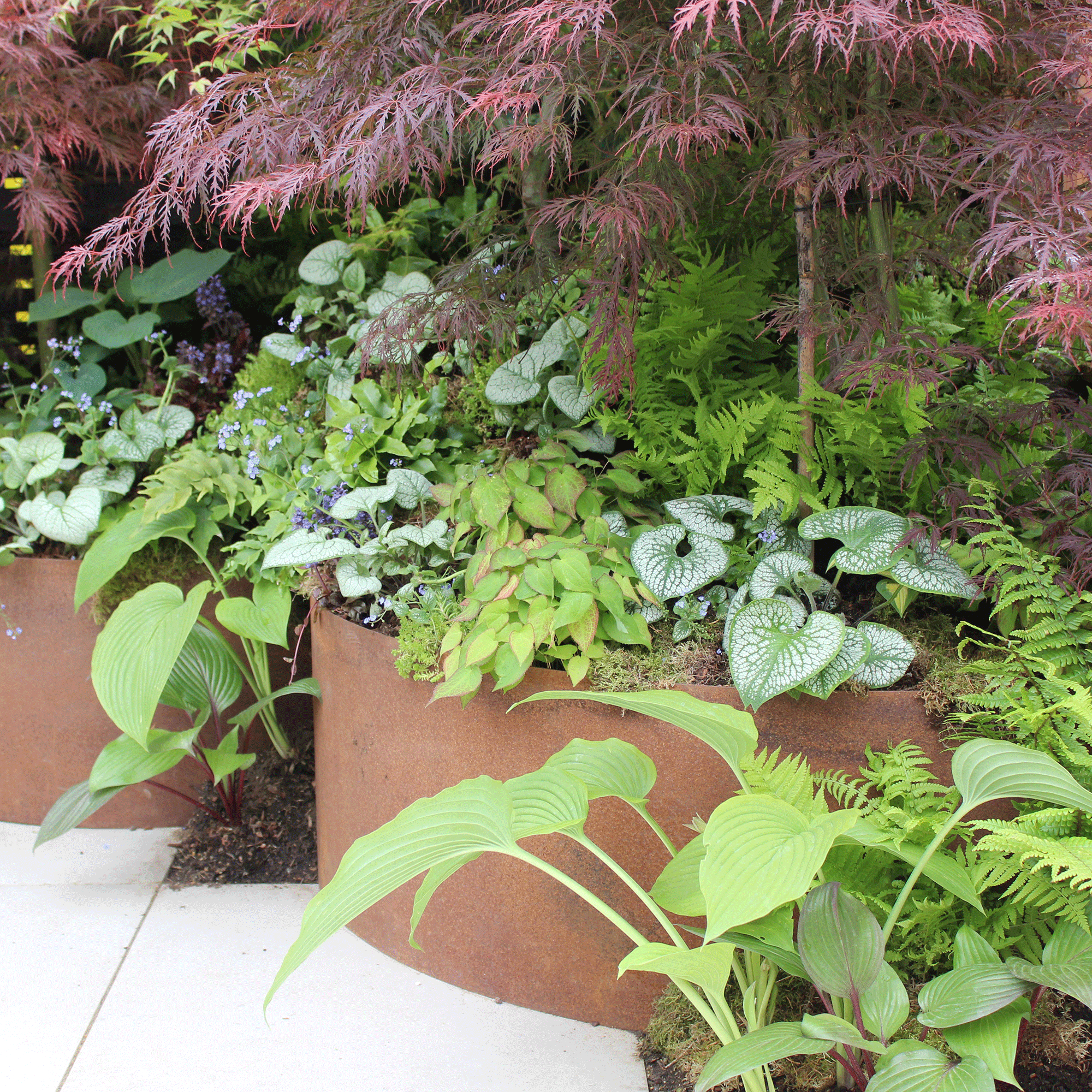
To avoid your north-facing garden looking dark and foreboding, award-winning garden designer Matthew Childs suggests that you choose plants with lots of textural foliage.
‘North-facing gardens can be beautifully relaxing tranquil spaces if you embrace greens in your planting with lots of textural foliage and different shaped leaves,’ he says. ‘For these spaces, hosta, ferns and epimediums are my go-to plants, with glossy leaf plants like Fatsia japonica reflecting light into the space.’
Matthew adds that ‘adding in a sprinkle of white or lime green in the flowers or foliage of your planting will also help to illuminate the space’.
9. Take advantage of an outdoor kitchen
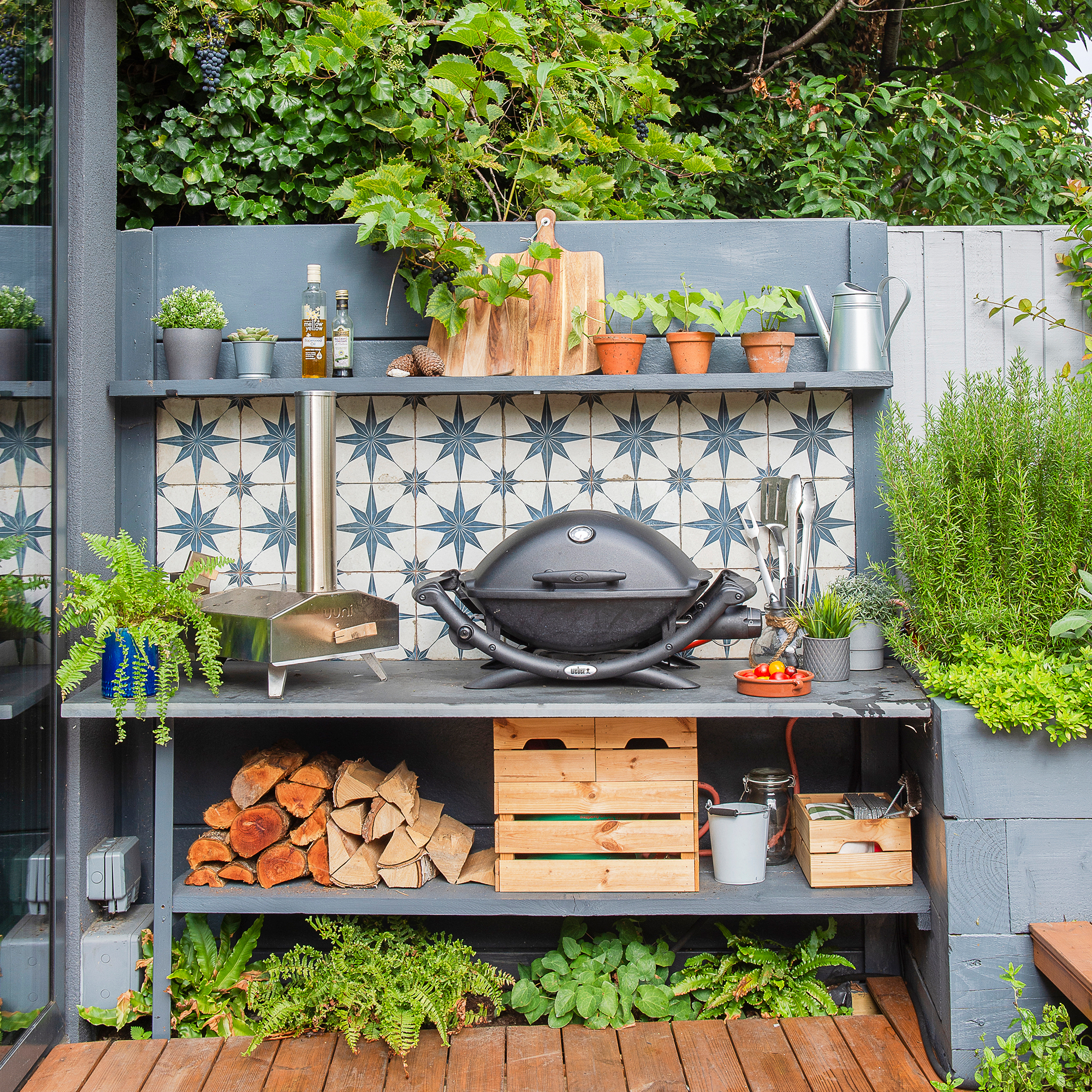
There is nothing worse than trying to cook, hot and bothered, under the blazing sun. This is where having a north-facing garden comes in handy.
An outdoor kitchen makes alfresco dining much easier and creates a much more sociable experience when you can cook for your guests. Just make sure to choose outdoor kitchen ideas that have adequate worktop space and storage and are made from hard-wearing materials.
‘For budding outdoor chefs, north-facing gardens can be perfect for setting up your garden kitchen. Never worry about getting the sun in your eyes while trying to cook up your latest masterpiece, and keep your cool when grilling thanks to the generous shade,’ says Joel Garthwaite from Harbour Lifestyle.
10. Create an area for wildflowers
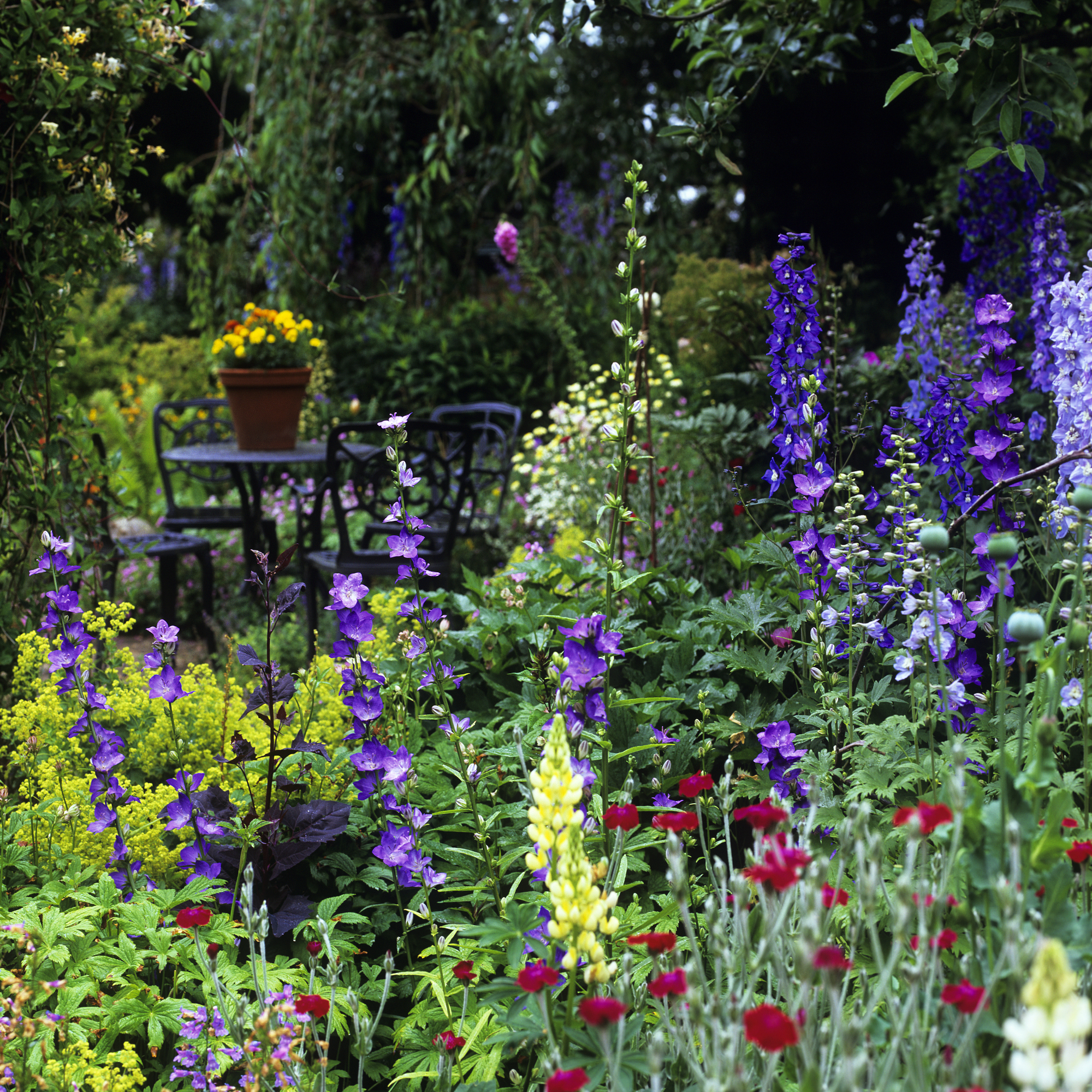
‘While most flowers require a lot of sunlight, many wildflowers grow very well in the shade,’ says Chris McIlroy, lawn expert at The Grass People.
Some of the best wildflowers for shady gardens include sweet cicely, angelica, sweet woodruff and red campion. These will provide a variety of different colours, brightening even the shadiest spot.
'These wildflowers are also ideal for a wide range of pollinators and help create a habitat for local wildlife in your area,' adds Chris.
This Wildflowers 'Woodland Shade Mix' from Thompson & Morgan is ideal.
11. Choose light-coloured furniture
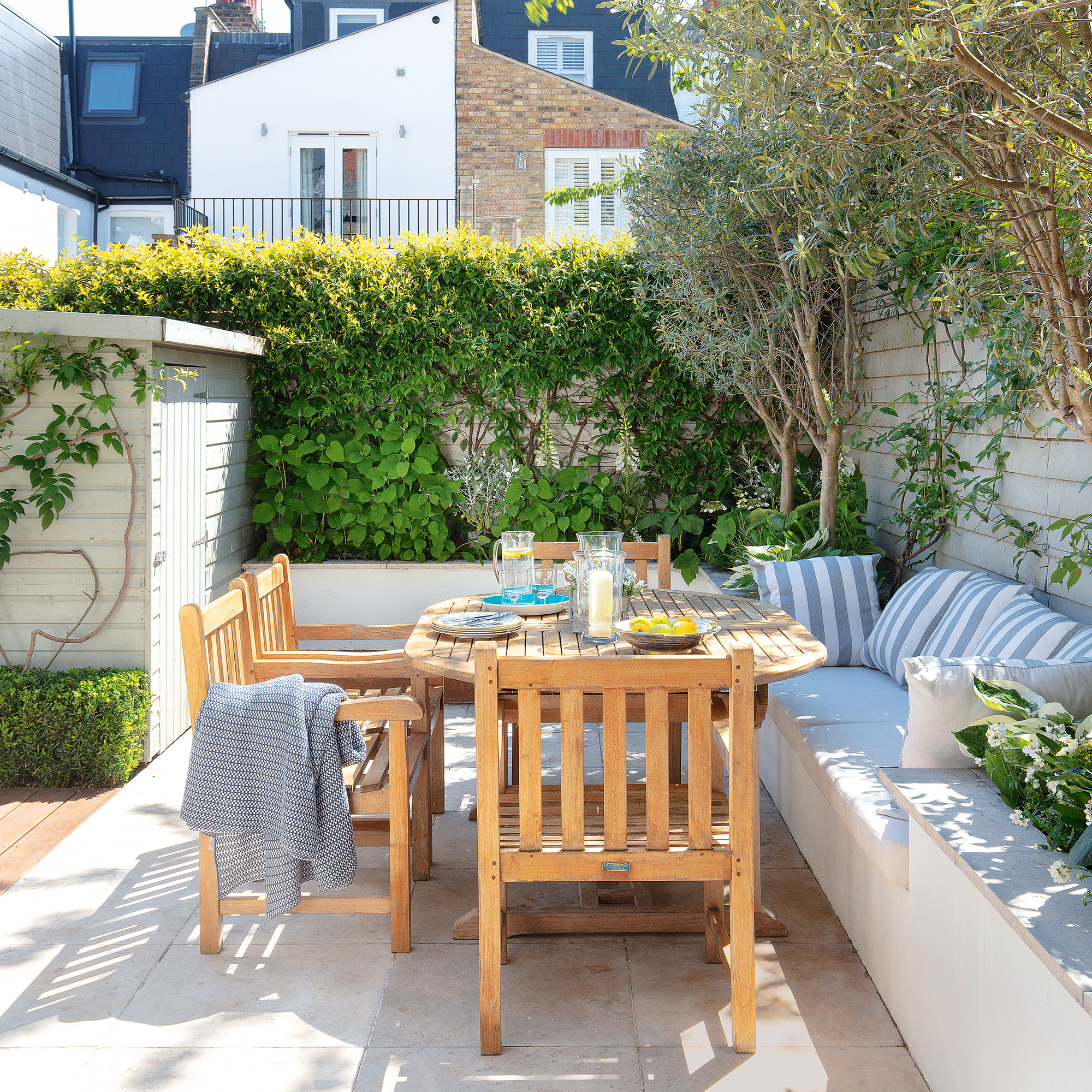
Light-coloured garden furniture ideas look great in shady gardens, especially with minimalist furniture. Simple light-coloured furniture will give your north-facing garden ideas an elegant feel and prevent the space from feeling dark and gloomy.
An uplifting yellow tone will bring vibrancy to the darkest gardens and can be incorporated through cushions and seating. Grey and off-white look good against rattan and will give the illusion of a larger, brighter space, as well as complement any other colours in your garden.
Kris Manalo, design lead at Atkin and Thyme says, ‘Choosing paler coloured furniture will visually lift a north-facing garden. It stands out against the natural greens and browns and will make your seating area feel light and inviting.’
12. Place furniture at the back of the garden
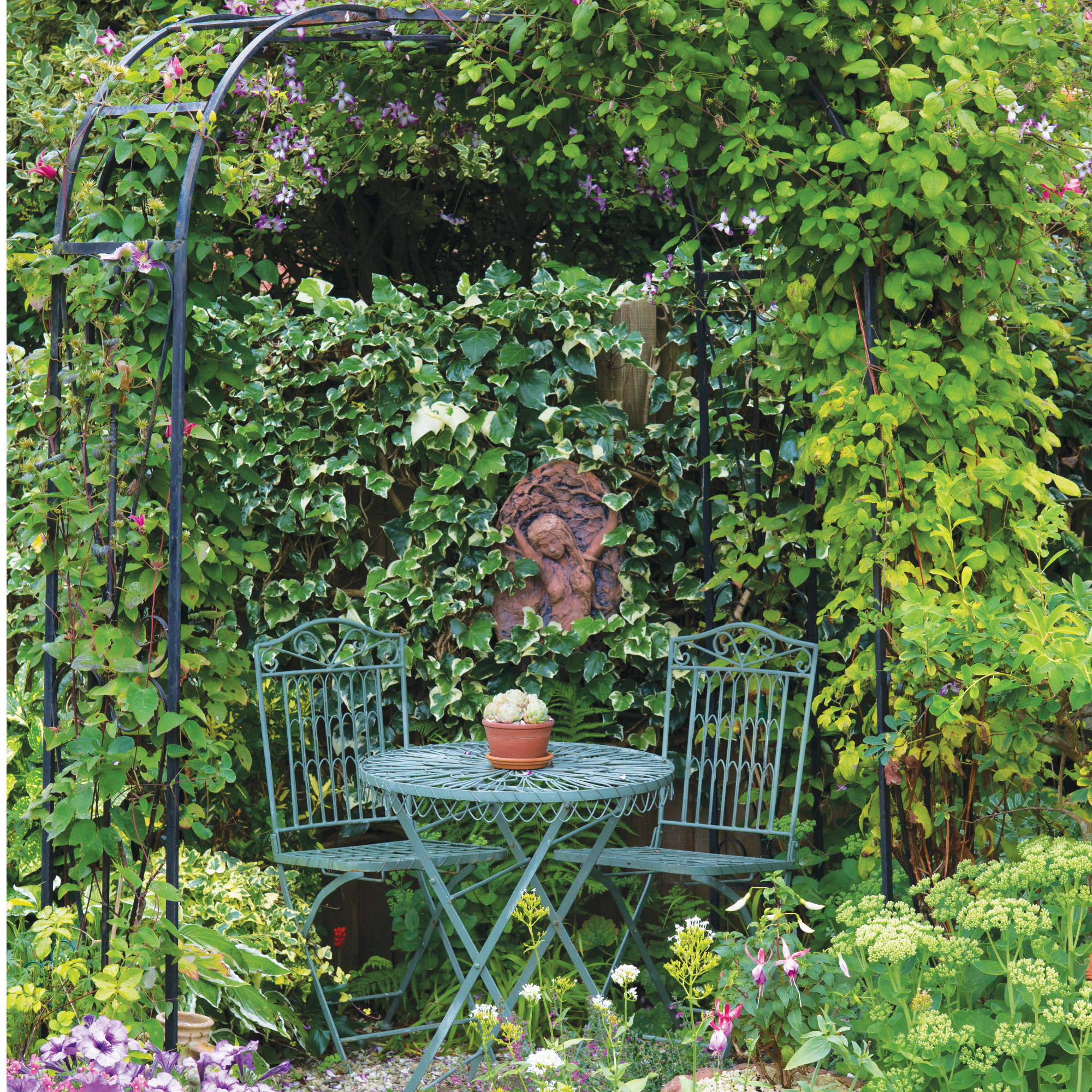
A north-facing garden mainly gets sunlight to the back of the garden, so this is the ideal place for furniture. Find the sunniest spot in the back of your garden for a cosy seating area that will look good day and night.
Rian Habergham from Leisure Bench says, 'This part of your garden is likely to get the most sun, with the part of your garden closest to your home getting the least. Instead of having your seating area close to your house, create it further down your garden to ensure it receives the sun.
'There are many benefits to having your seating area at the bottom of your garden, such as added privacy from neighbours and less interference from activities going on in the home. It also means that you create a separate space that feels more secluded and relaxing.’
13. Embrace lush greenery
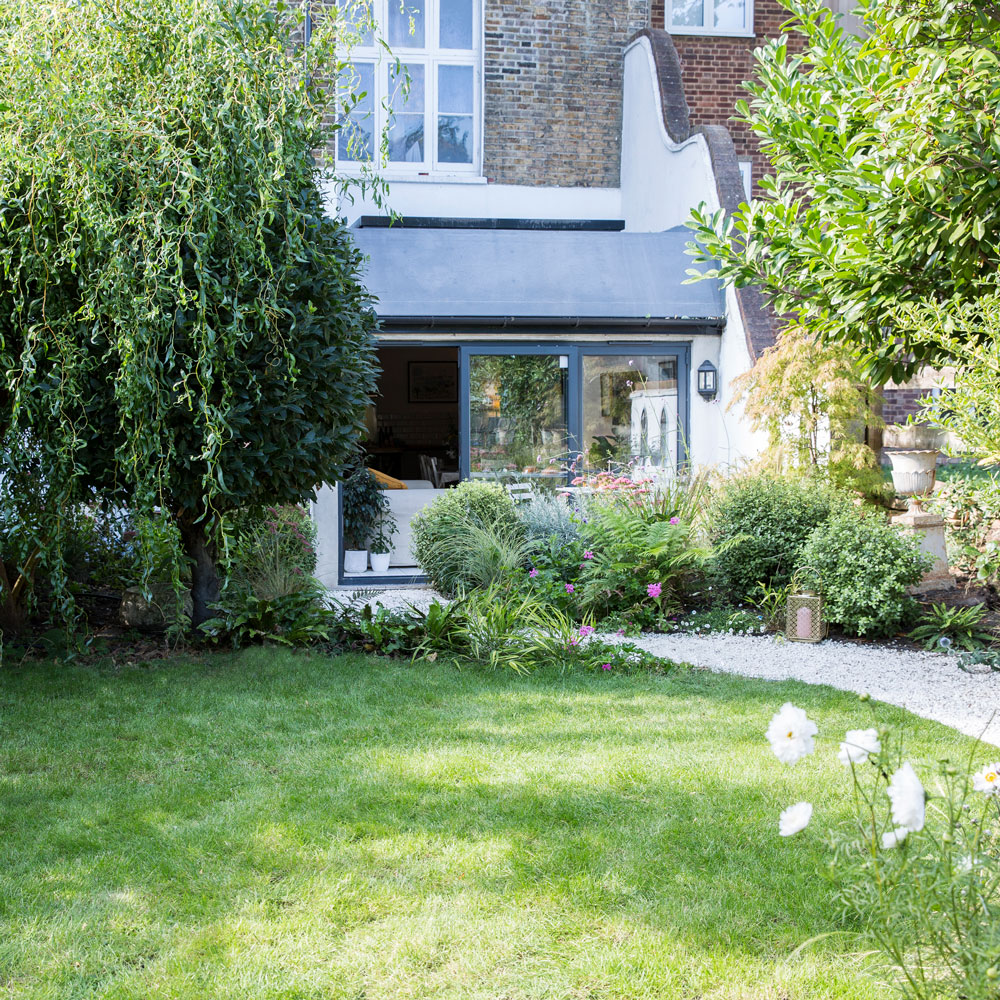
Plenty of foliage-heavy plants thrive in shade, so you don't have to give up the greenery just because you have a north-facing garden.
'Embracing lush greenery can be incredibly impactful in north-facing gardens' explains expert gardener Rachel Morgan. 'Green gardens do not have to be dull or boring, as you can have incredible variation in green shades. One of the great benefits of having a lush, mostly green garden is that, invariably, many of these will be evergreen, so you will have constant interest all year round.
'Pops of colour can be added seasonally, or in certain sections of the garden for extra impact. For example, fully shaded garden border ideas can be filled with ferns, but add hellebores for a jolt of colour in spring, and Welsh poppies for the same in summer.'
14. Cut down on structures
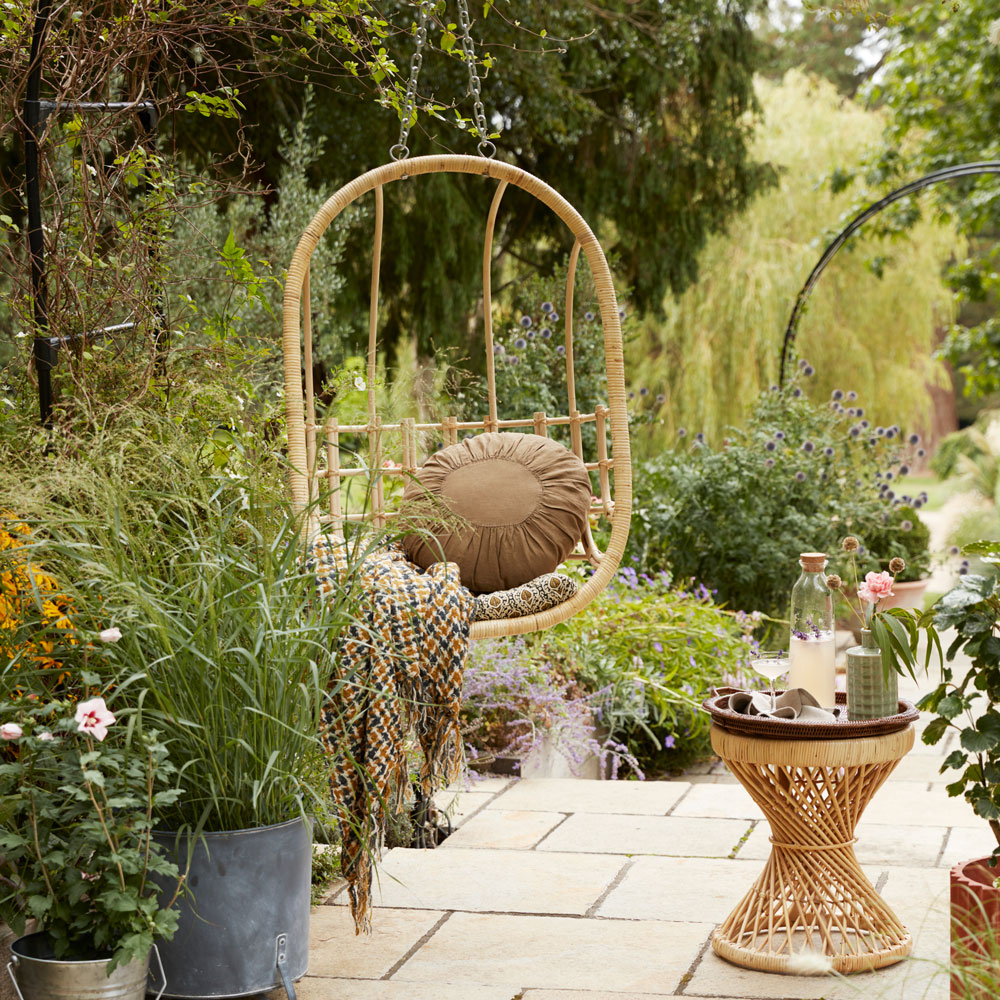
In north-facing gardens, obstructions to sunlight should be removed, including any trees or structures, in order to maximise light levels.
'Remove a layer of leaves from a particular dense canopy to do this, or look at lowering imposing hedges that may obstruct light,' suggests Chris Bonnett from Gardening Express. Choose garden fence ideas which still allow as much light as possible to get through to your garden, too.
Rian Habergham from Leisure Bench adds, 'Cut away a layer of trees or remove a large fence that is preventing your garden from getting as much light as possible. While nothing can be done about your property blocking out the sun, you can change how your garden blocks it.'
15. Generously plant bulbs
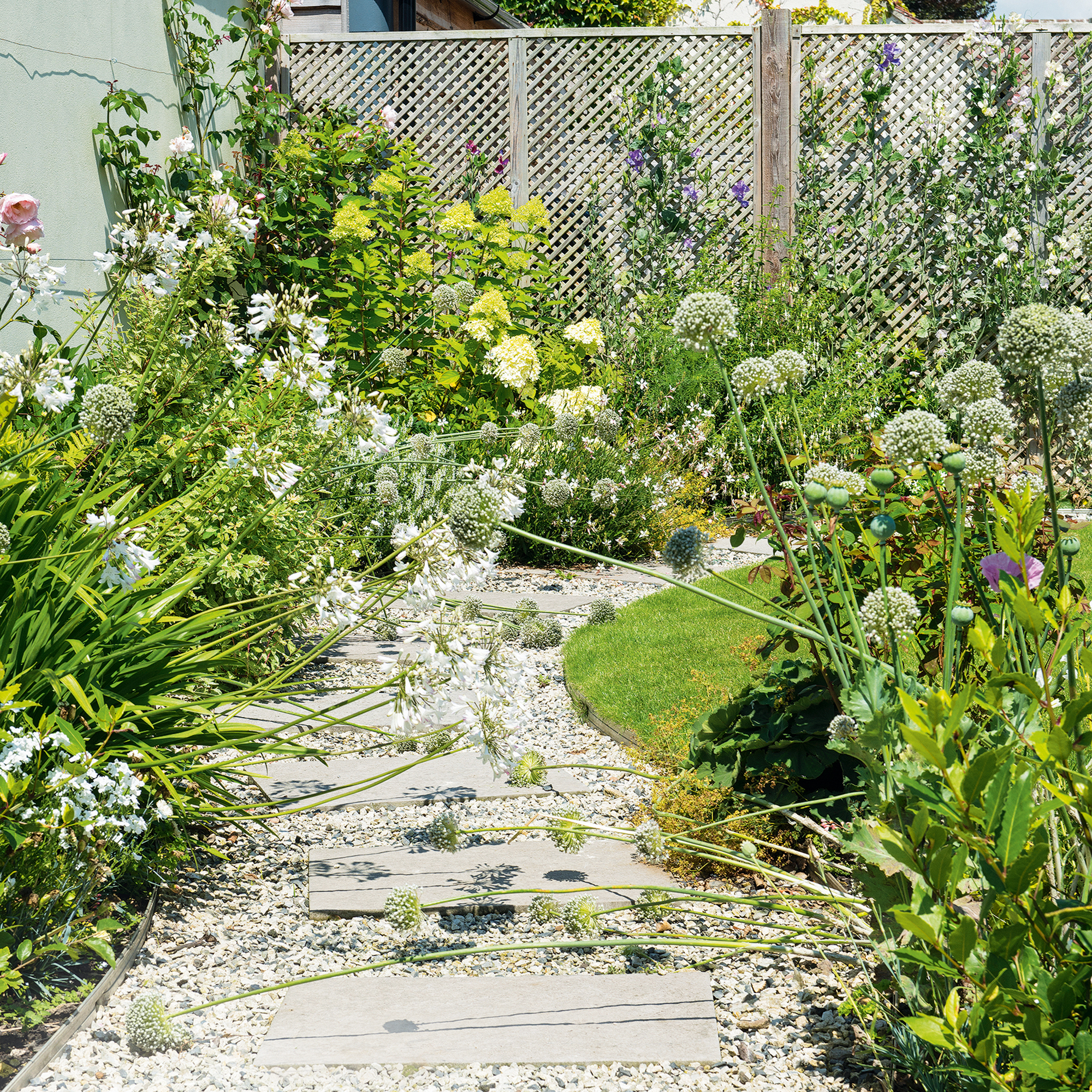
There are plenty of shade-loving bulbs that grow perfectly well in north-facing gardens.
'Many bulbs thrive in shadier spaces, so come autumn you can fill a border with hyacinths, snowdrops, crocuses, fritillaria, tulips, muscari and scilla,' advises Rachel Morgan. 'These will need to be planted in the autumn, ready for a bold, brash riot of colour come the spring.'
Bluebells, cyclamen, anemone and crocus are also shade-loving varieties that will give your garden colour year after year.
16. Plant shade-loving herbs for a cook's garden
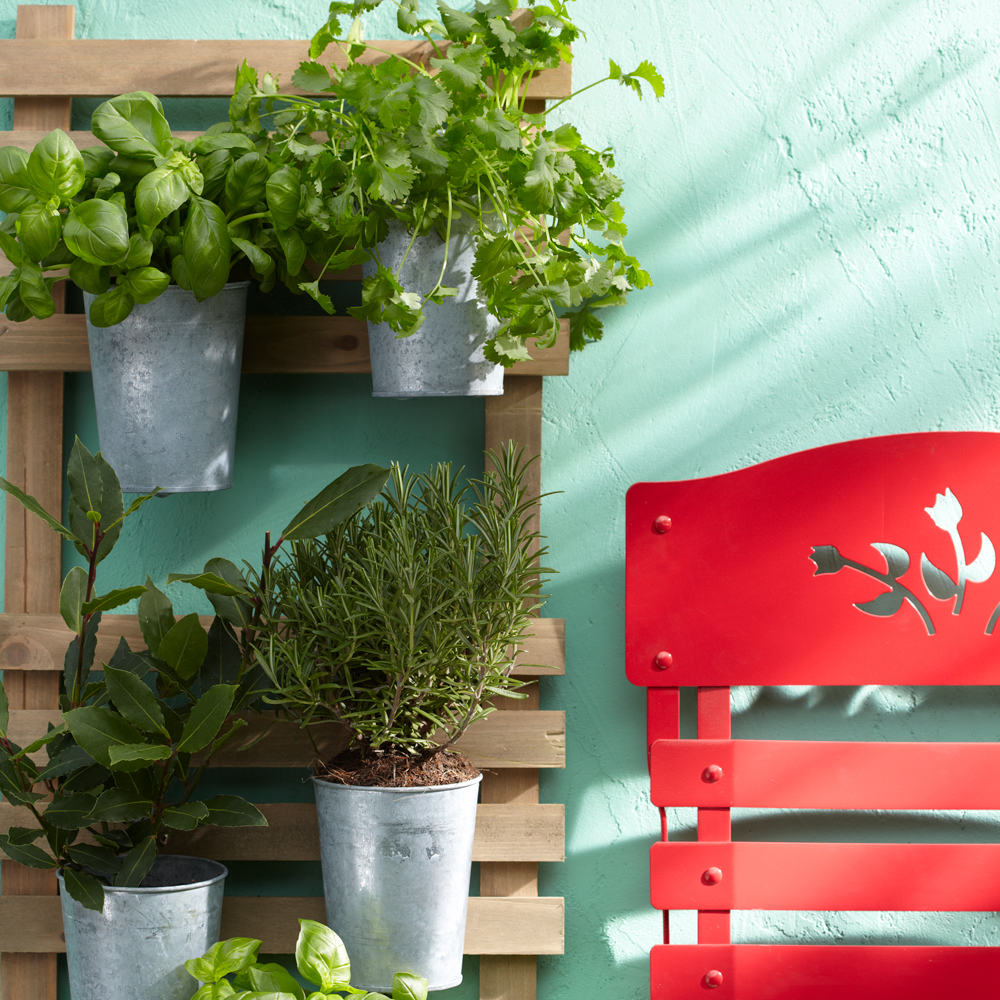
Marcus Eyles from Dobbies Garden Centres recommends growing a herb garden in north-facing outdoor spaces.
'Although Mediterranean herbs love full sun, there are several herbs that will thrive in partial shade, such as chives, coriander, parsley and rocket, keeping you supplied with homegrown pickings,' he says.
Daniel Carruthers, director at Cultivar Greenhouses adds, 'Try chives, and even mint – just make sure you plant it in its own pot, as it can grow so aggressively that it could take over your garden! Avoid sun-loving varieties such as rosemary and basil, as they won’t thrive as well in partial shade.'
17. Consider clever garden lighting
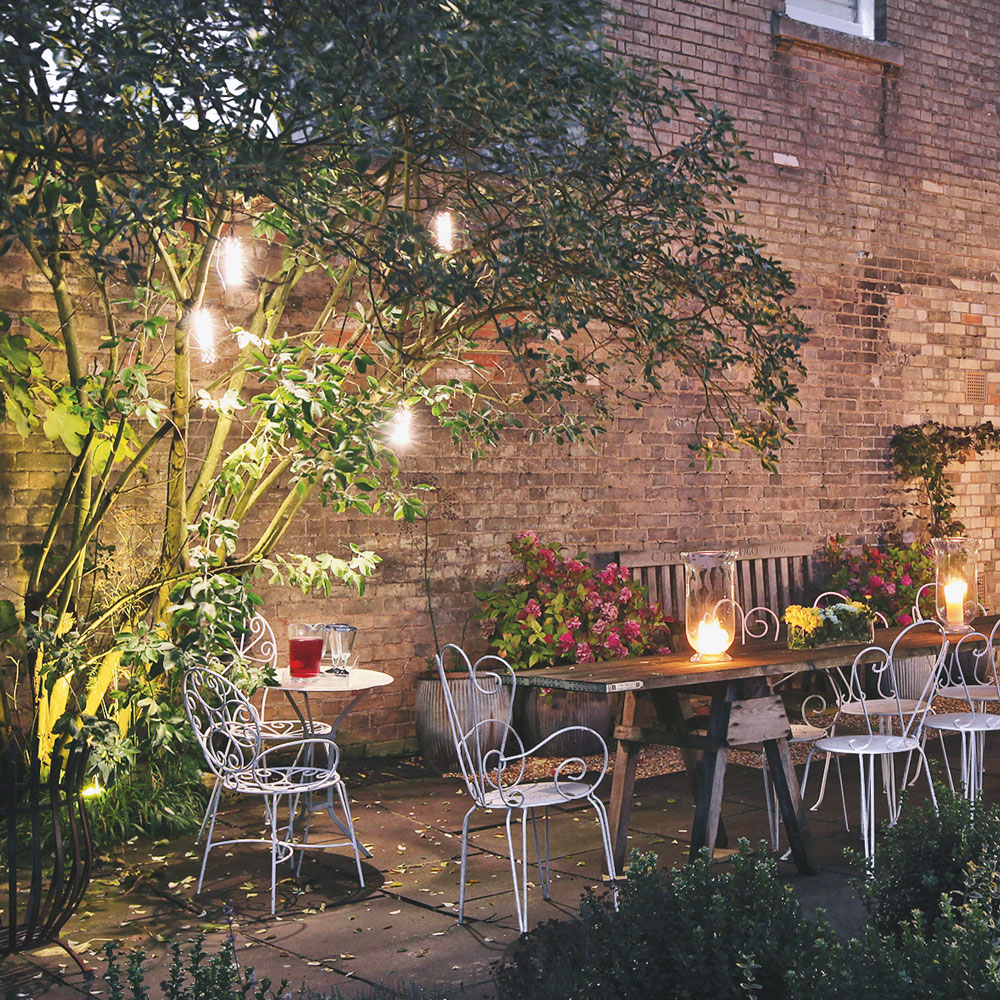
Help to illuminate the darker garden space in your north-facing garden ideas with thoughtful lighting. After dark is when this garden shines just as bright as that of a sunny south-facing garden.
'In a north-facing garden, clever garden lighting ideas are a must, from solar stakes to line a pathway to lanterns and candles,' advises Marcus from Dobbies Garden Centres.
18. Make the furniture moveable
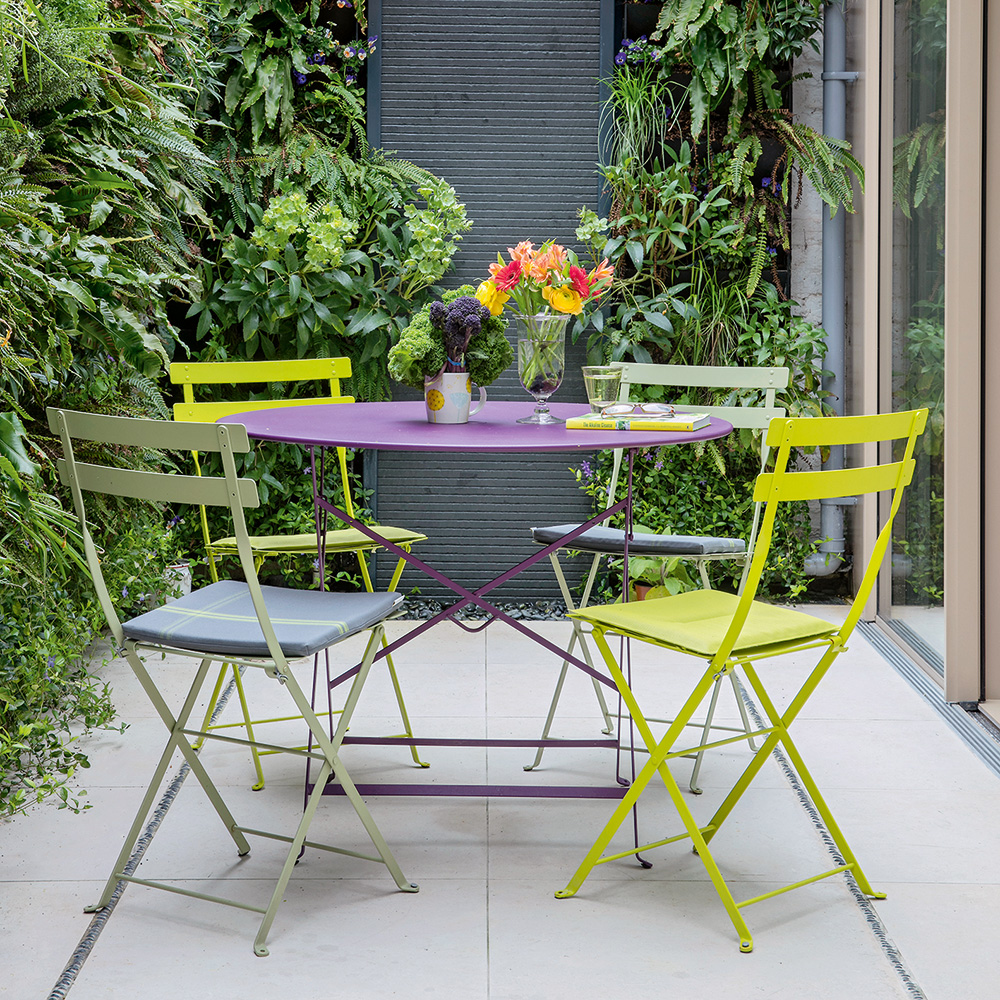
Make the most of any sun that the garden does get by having the freedom to easily move the furniture throughout the day – chasing the sun! A simple, lightweight set will enable you to move around the plot with ease to seek a slither of sunshine.
Kris Manalo from Atkin and Thyme advises, 'Opt for furniture that is easy to adjust so you can change its position throughout the day as the sun shifts, or keep your main table and chairs planted but introduce an easy-to-move piece such as a lounger alongside.' You'll be able to find a set for less using garden discount codes to help your styling stay on budget.
FAQs
Do you get any sun in a north-facing garden?
Despite being shady, north-facing gardens will get around three to four hours of direct sunlight each year.
‘Generally speaking, larger north-facing gardens get the sun in the late afternoons and evenings,' says Rian Habergham from Leisure Bench. 'This makes a north-facing garden ideal for those who work during the day and want to enjoy their gardens at night, as well as those who don't enjoy sitting out in the garden during the hottest periods of the day.
‘If you have a small north-facing garden that isn't very long, chances are you will get less sun than those do with larger gardens. The amount of sun north-facing gardens get depends on how shaded the garden is by the house. If your house is short and your garden is long, you will get more sun.’
What plants are best for north facing gardens?
When planning which plants work best for north-facing garden ideas, keep in mind that you want year-round colour and interest. A combination of shrubs, grasses and perennials would work best in this type of garden.The following plants will work great in a north-facing garden:.
‘Shade-loving plants are a great solution for north-facing gardens,’ adds Francesca Hadland, styling expert at Bridgman. 'Ferns, grasses and other foliage will provide a lush backdrop with an air of serenity. Bright white plants like hydrangea and agapanthus will also suit a north-facing garden, punctuating the space with eye-catching lightness.'
Thoughtful north-facing garden ideas are crucial if you want to make this shadier garden aspect as green, bright and productive as possible.