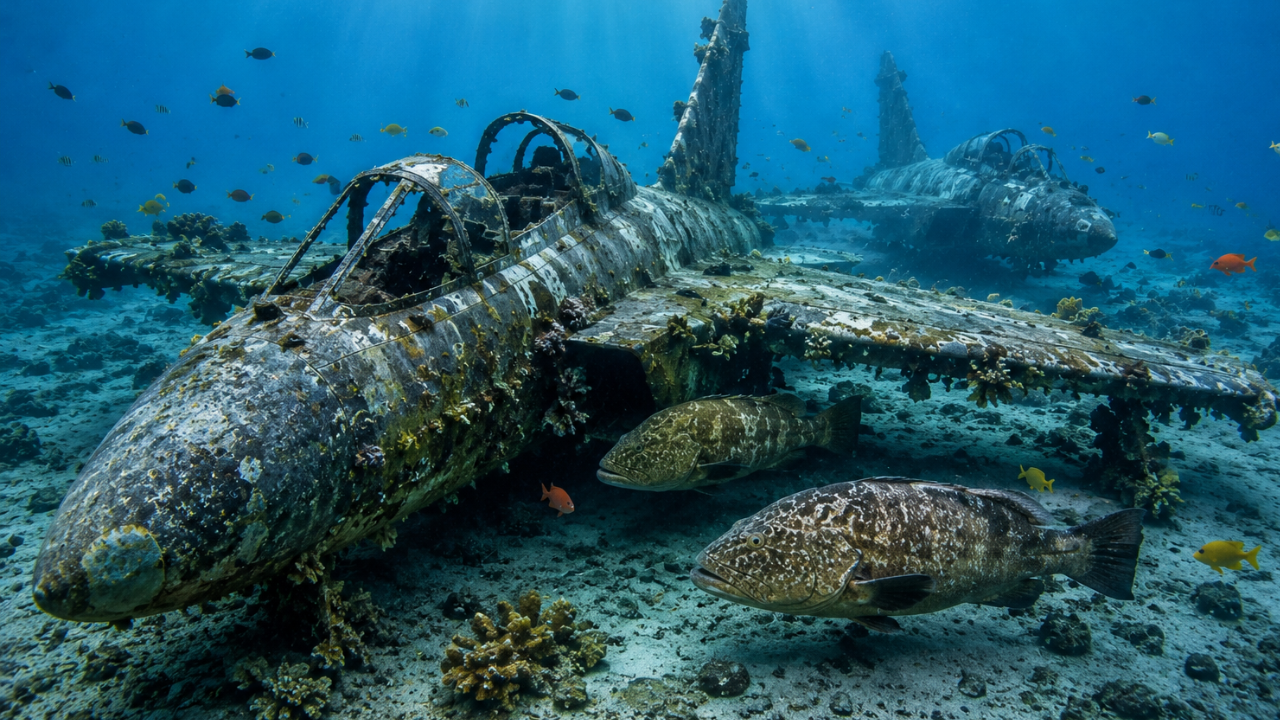
Off the coast of Morehead City, North Carolina, retired US Navy jets sit quietly on the seabed. Two F-4 Phantom fighter planes and two A-4 Skyhawk attack planes were sunk there in 1992, part of the state’s continuing effort to turn old hardware into new marine habitat. According to the North Carolina Division of Marine Fisheries , the agency has been working for decades on the construction of artificial reefs by sinking ships, parts of bridges, and retired military planes. Decades later, divers at the site often see grouper hiding under the wings of the jets, using the wreckage as a hidey hole.
Get breaking news anytime, anywhere. Download the TOI app now!
Why old military jets end up underwater
Disposing of a decommissioned plane is expensive, and storing it for years does not make it more valuable. So, agencies such as North Carolina's Division of Marine Fisheries remove the fuel, oil, and any other dangerous elements from the aircraft, tow it to the sea, and then drop it to the seabed. These jets joined concrete pipes and old bridge sections already resting at other reef sites along the North Carolina coast. The idea is simple: bare sand supports little marine life, but add solid structure and fish soon arrive.
Meet the fish that's moving in
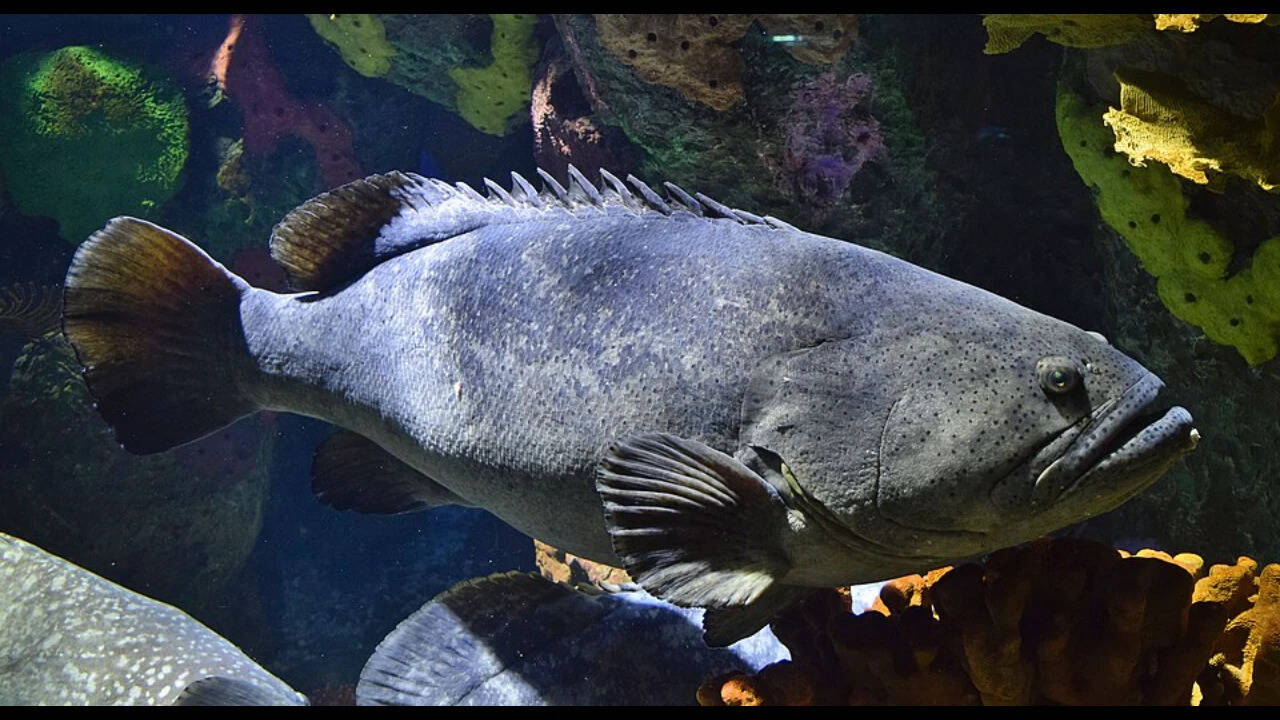
Grouper are large, slow-moving bottom-dwellers found throughout warm coastal waters, and several species along the North Carolina coast can grow to several feet long and live for decades. Unlike open-water fish that rely on speed to hunt, grouper are ambush predators by nature: they favour tight, shaded spaces where they can stay hidden and lunge at prey that swims past, rather than chasing food across open water. That biology makes them naturally loyal to a single structure once they find one that suits them, and many grouper species are also known to be slow to reach reproductive maturity, which is part of why fishing pressure can hit their populations especially hard and why stable, long-term habitat matters so much for the species' recovery.
How a jet turns into a reef
When a plane sinks into the water, it does not remain as plain metal for too long. The marine vegetation starts growing on its surface, attracting small fish. Later, bigger fish are attracted by the amount of prey around. In a few years, the plane becomes a miniature ecosystem in itself in the place that was empty sand before.
What the research says about grouper and reef wrecks
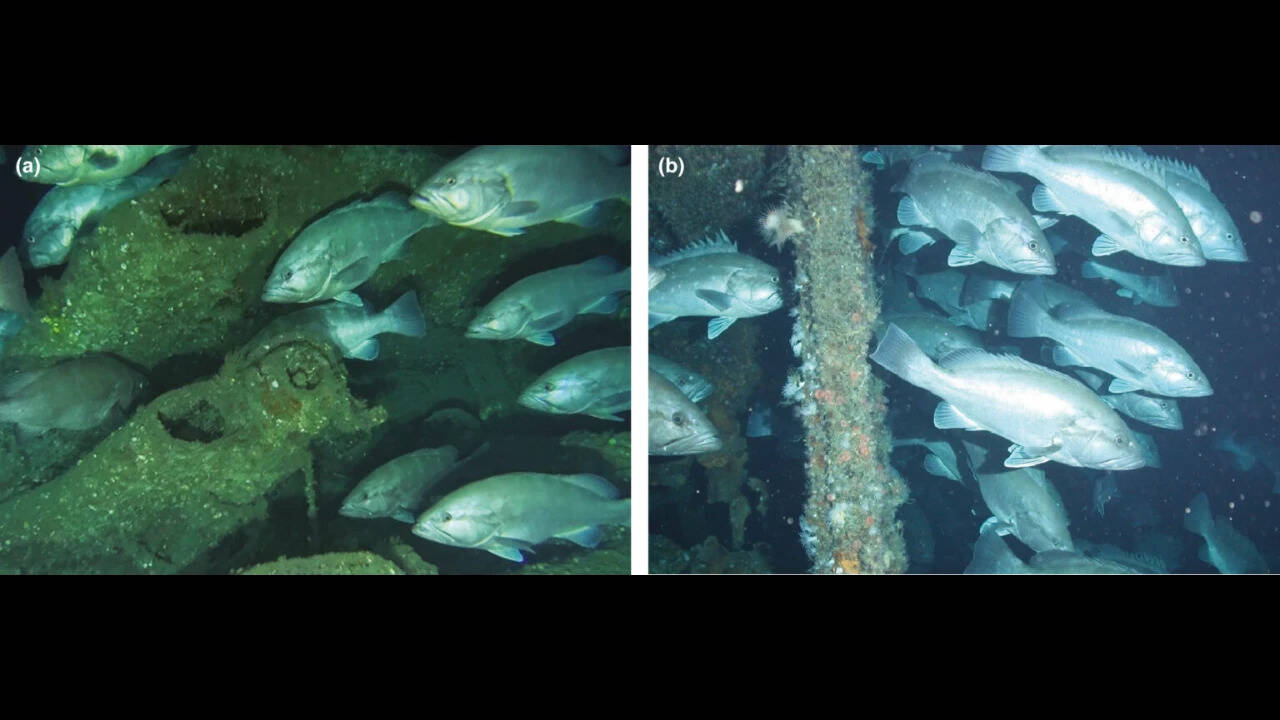
This pattern is not simply an observation made incidentally by divers. In 2021, the journal Fish and Fisheries featured research titled ‘ Study Illuminates Patterns in Atlantic Deep-water Grouper Hotspots ’ conducted by Avery Paxton et al. of the National Oceanic and Atmospheric Administration, reviewing four decades' worth of underwater surveys carried out along the southeastern coast of the US, from North Carolina to Florida. This study suggests that small and isolated features of the environment like shipwrecks and aircraft often tend to attract larger than normal quantities of grouper fish compared to neighbouring open reef areas. These locations are considered hotspots for the species.
The team pulled together 439 remotely operated vehicle transects, 235 human-occupied vehicle transects and 881 hook-and-line drops. They identified six grouper hotspots, including three shipwrecks, two artificial reefs and one natural boulder field, all of them isolated structures in 50 to 300 metres of otherwise sandy habitat; in one case, they counted 540 grouper on a wreck about the length of a football field.
In a separate study by the same lead author, titled ‘Artificial habitats host elevated densities of large reef-associated predators, ’ published in 2020, the question of how predatory fish utilise artificial versus natural reef habitats was explored, a different comparison from the 2021 study, which measured wrecks against open sandy seabed rather than against natural reefs. Comparative underwater surveys of thirty reef sites along about 200 kilometres of North Carolina coastline found that transient predators, such as jacks, mackerel, barracuda, and sharks, tended to be more abundant on artificial reefs. The same pattern didn't hold for resident predators like grouper and snapper. According to the paper, grouper did not always appear in greater numbers around artificial structures compared with natural reefs, but when they settled there, they tended to remain for long periods.
Why do grouper prefer wings and cockpits?
These fish are ambush predators rather than fast swimmers. An aeroplane wing creates a small, shaded overhang. The cockpit and landing gear create narrow spaces. These structures closely resemble the grouper’s natural habitat, which is why the fish are drawn to wrecks rather than open seabed.
A win for fish and fishers
This matters beyond simple curiosity. Grouper on the US East Coast face fishing pressure, and stable habitat can help support their populations. Artificial reefs such as military jets can give young and mature fish some protection while also remaining accessible to anglers and divers. Old aeroplanes, marine science and recreational fishing all work together for the same goal.
What this means for your next coast trip
If you’re planning a trip to the North Carolina coast, it’s good to know that some of the marine life you may see isn’t sitting on a natural reef but inside the wing of a fighter plane that had served its purpose decades ago. What started as decommissioned military material has become a notable conservation example, suggesting that sinking retired machinery can sometimes be more useful than scrapping it.