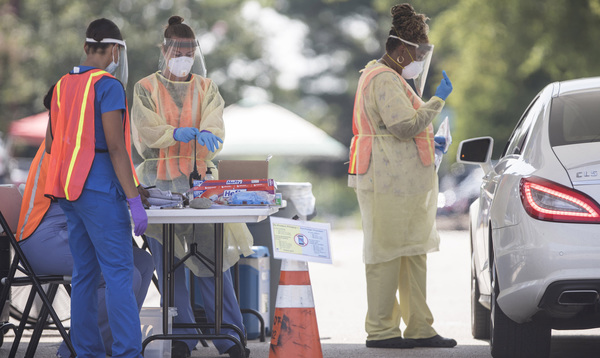
RALEIGH, N.C. — North Carolina reported another jump in hospitalizations Friday, once again breaking the state record.
There are now 1,571 people hospitalized with COVID-19, according to the North Carolina Department of Health and Human Services, up from 1,538 Thursday.
The state also reported an additional 3,688 cases of coronavirus Friday and 4,979 deaths. The deaths represent an increase of 43 from the day before.
The high rates of cases and hospitalizations come as the Thanksgiving holiday approaches and the coronavirus is surging in severity around the country. The Centers for Disease Control and Prevention advised Thursday that people should not travel for the upcoming holiday.
"We may be seeing more hospitalization increase because we are seeing these record high case rates across North Carolina, so we do have unfortunately a lot of reasons to be concerned as we head into this holiday season," said Dr. Mandy Cohen, secretary of the North Carolina Department of Health and Human Services, at a Friday news conference.
Cohen said that the state is hoping to avoid introducing further restrictions but will consider doing so based on increases in case numbers.
"We are concerned about our trends going in the wrong direction," Cohen said. "The governor and I continue to evaluate those trends, and we may need to take additional action. No one wants to go backwards, and I think that there are things that we can do right now to try to prevent that from happening."
On Friday, North Carolina reported 415 people hospitalized in intensive care, the highest number since the pandemic began. That number has climbed steadily over the last six days and increased by more than 100 patients over the last 10 days.
Friday's percentage of positive COVID-19 tests was 8.3%, but has been as high as 9% earlier in the week, nearly twice the 5% goal that North Carolina has set.
The high percent positive number means the virus is spreading throughout the state and is not a result of increased testing, Cohen said.
Cohen said the cases are rising quickly. For the first time on Nov. 11, the state reported an increase of 3,119 new cases for the first time. A week later, on Nov. 18, that number surpassed the 4,000 mark for the first time, recording 4,296 new cases.
The hospital information comes from 97% of the state's hospitals reporting. The health department notes that all dashboard data is preliminary and is routinely updated.
Hospitals in some parts of the state are feeling the strain, Cohen said Friday. She noted in particular that some smaller hospitals and some hospitals in the Triad region are becoming overwhelmed by the number of coronavirus patients.
Cohen also noted that the hospitalization numbers lag behind the case numbers, so the increase in hospitalizations over this week, as cases have surged, may be even more dramatic than the numbers reflect.
So far, the strain has been temporary, as hospitals have moved patients to other hospitals or surged support staff to other hospitals. She said some are reducing elective procedures to make room for more COVID-19 patients.
"All hospitals have been able to stay above water, if you will, because of the good work going on to collaborate and help each other out. It's hospitals helping hospitals to make sure that no one hospital gets overwhelmed," said Cohen.
Raleigh chefs Cheetie Kumar of Garland and Jason Smith of Cantina 18 and Harvest 18 joined Cohen on Friday's media call. The two chefs offered the pandemic version of Thanksgiving tips, reinforcing mask-wearing, hand washing and keeping Thanksgiving circles small at no more than 10 people.
"We want to spread holiday cheer, not the virus," Kumar said during the briefing. "Do a gut check. Try to act like you are contagious. That really changes how you do everything. It makes you think twice about taking risks. Limit hugs and handshakes. ... A hello and smile will have to do."
Among the tips, Cohen and the chefs encouraged people to host meals outside, to open windows and turn on fans if inside, to wear a mask whenever one isn't eating or drinking, to wear gloves when handling plates and food and to routinely sanitize surfaces.
This week, DHHS expanded the demographic data available on its North Carolina COVID-19 dashboard to show data for cases per 100,000 residents and total deaths by week.
The data shows that the disparity between cases between Black and white residents has shrunk over the course of the pandemic. In mid-July, there were 116 cases among Black people and 78 cases among white people per 100,000 residents. Last week, there were 143 cases among Black people and 146 cases among white people per 100,000 residents.
However, Black people still make up a disproportionate number of deaths from COVID-19. Twenty-nine percent of deaths statewide have been among Black people, despite making up 22% of the population.
Demographic information is not available for all cases since some people cannot be reached or may choose not to disclose this information, DHHS wrote in a press release. And, there may be a lag when the data are available, because demographic data are often obtained through local health departments investigations.