Afternoon summary
- Labour politicians has urged Lutfur Rahman to resign as mayor of Tower Hamlets in the light of towards PWC report exposing mismanagement and the questionable use of public money. (See 2.43pm.)
- The Ministry of Defence has put its programme to train Libyan soldiers at an army barracks in Cambridgeshire on hold after it fell into disarray. As Diane Taylor reports, almost a third of recruits have already been withdrawn and there have been a series of criminal charges and convictions for sex offences.
-
Ed Miliband has called for a zero-tolerance approach to anti-semitism. He did so in a Facebook post prompted by reports that incidents of anti-semitism are increasing. Here’s an extract.
The recent spate of incidents should serve as a wake-up call for anyone who thought the scourge of anti-Semitism had been defeated and that the idea of Jewish families fearful of living here in Britain was unthinkable.
Some have told me how, for the first time in their lifetime, they are scared for their children’s future in our country. Others have expressed a general unease that this rise in anti-Semitism could signal that something has changed – or is changing – in Britain.
I take these concerns very seriously because it is the responsibility of all to ensure that Britain’s traditions of respect and tolerance are upheld.
We need a zero-tolerance approach to anti-Semitism in the UK and to reaffirm our revulsion to it in all its forms.
- Peter Mandelson has sought on to distance himself from the Labour government’s secret peace process deals with Sinn Fein to allow IRA fugitives or “on the runs” back to Northern Ireland. As Henry McDonald reports, Mandelson told a parliamentary committee that he was “not in the business of of sending secret side letters to one side of the Good Friday Agreement or the other, making promises that went beyond the terms of the Good Friday Agreement.” One of the architects of New Labour, Mandelson was Northern Ireland Secretary between 1999-2001 during a fragile period in the peace process. He told the Northern Ireland Affairs Committee at Westminster, which is investigating a much criticised covert deal to allow 200 IRA ‘on the runs’ back home, that he had advised Tony Blair not to bring in legislation to grant amnesties to the fugitives as this would have further undermined unionist support for the Good Friday Agreement.
- MPs have backed a call for the law to be tightened to ban abortions on the grounds of gender. By 181 votes to one, they supported Fiona Bruce’s abortion (sex-selection) 10-minute rule bill motion. The Bruce bill has almost no chance of becoming law, but the vote shows that a future legislative move would attract significant parliamentary support Bruce, a Conservative MP, said:
Sex-selective abortions are happening in the UK and there is widespread confusion over the law. That is why this bill is needed ... Successive health ministers and even the prime minister have been very clear. They state that abortion for reasons of gender alone is illegal. The prime minister has described the practice as simply appalling. But they are being ignored.
That’s all from me for today.
Thanks for the comments.
A Rochester byelection round-up
And here’s a Rochester and Strood byelection round-up.
-
Anoosh Chakelian at May2015 (a New Statesman election website) describes her visit to Rochester. Mark Reckless told her that he was getting more negative reaction as a Ukip candidate than as a Tory.
While I walk around Rochester with Reckless, he admits he’s had more “strong negative reactions” among constituents than he did as a Tory. Indeed, I hear from a resident who claims to know his builder that, a week before he defected, Reckless had his builder fit a special fire extinguishing attachment to his letterbox, in case he was posted any explosive devices.
As if on cue, a young father in a checked shirt strides over to Reckless and me, dragging his bored seven-year-old along with him. “I hope you don’t get in. You don’t represent the people of Rochester,” he shouts. “You say you’re not a racist party, but you think Lenny Henry should be deported! You talk about Bongo Bongo Land. It’s a dangerous party, stirring up hatred.”
Reckless splutters, “I wholly dispute your characterisation of Ukip.” But the man carries on: “If you don’t like this country, go and live in Canada, go and live in Australia.”
-
Greg Hands, the Conservative deputy chief whip, claims that he did not meet a single Ukip voter when canvassing in Rochester.
Very good response to our team in Rochester today. Not a single person we met definitely voting UKIP. Looks encouraging for @KellyTolhurst!
— Greg Hands (@GregHands) November 4, 2014
A Scottish Labour leadership election round-up
Here’s a Scottish Labour leadership election round-up.
- Nominations have closed for the leadership and deputy leadership elections. There have not been any surprise, last-minute entrants, and so the candidates are: Sarah Boyack, Neil Findlay, Jim Murphy for leader; and Katy Clark and Kezia Dugdale for deputy leader.
Simply electing a new leader, even a relatively well-known one such as Jim Murphy, will not resolve Labour’s difficulties on its own. When YouGov asked its respondents how they would vote in the next Holyrood election if Mr Murphy were Labour’s Scottish leader, just 29% said that they would vote Labour, only one point up on the party’s current level of support. What will matter is how the new leader uses the position. And maybe one place to start will be to convince people that the party north of the border is willing and able to think for itself – for at the moment only 17% of Scots think it has much freedom to propose different ideas from those already being promulgated by the party at Westminster.
Updated
Labour politicians are calling on Lutfur Rahman to resign as mayor of Tower Hamlets. This is from Rachael Saunders, leader of the Labour group on Tower Hamlets council.
It is a cause of sorrow and shame for this great borough that Luftur Rahman as Mayor has taken us to the point of government intervention. He should consider his position. Tower Hamlets deserves better.
There are other statements from Tower Hamlets Labour figures in this news release.
Lunchtime summary
- Eric Pickles, the communities secretary, has announced that he is sending in commissioners to take control over certain functions at Tower Hamlets council. He is using his powers to intervene following the publication of a report from auditors PWC identifying irregularities in the way the council awarded grants and contracts and sold assets. The council, which is run by the independent mayor, Lutfur Rahman, said PWC did not find any evidence of fraud. In a statement to the Commons, Pickles said he did not know whether or not the PWC report amounted to evidence of fraud, but that he was sending it to the police anyway. He said the report exposed cronyism “risking the corrupt spending of public funds”. His decision to intervene was backed by Labour, and Tower Hamlets was strongly criticised by MPs from all sides.
- Nick Clegg has announced that Lynne Featherstone will replace Norman Baker as crime prevention minister at the Home Office. The Lib Dems also announced that Jenny Willott is resigning as a whip (she faces a tough battle to hold her Cardiff Central seat), following Mark Hunter, who resigned as Lib Dem deputy chief whip last month. Lady Northover will replace Featherstone as international development minister. Tom Brake will take over as a whip, in addition to his role as deputy leader of the Commons, and Lorely Burt has also been made a whip. Lady Garden has been made a government whip in the Lords. The mini reshuffle was announced as Baker said he resigned yesterday after facing a “constant battle” to introduce policies in the face of a Tory “lurch to the right” in pursuit of Ukip voters. Tory sources have been claiming that Baker only spent two days a week in the Home Office anyway.
- A court ruling has opened the prospect of 5m people being eligible to collect backdated holiday pay. As Rupert Neate reports, the employment appeal tribunal ruled that employers must include overtime when calculating workers’ holiday pay after test cases brought by the Unite union against the engineering company Amec and industrial services firm Hertel. The ruling could pave the way for payouts for up to a sixth of the UK’s 30 million workers. Unions welcomed the decision but companies warned that they face a multibillion-pound bill which could put some out of business.
-
David Gauke, a Treasury minister, has said the EU’s demand for Britain to pay a £1.7bn surcharge could be based on questionable calculations. Giving evidence to the European scrutiny committee, he said:
The European Court of Auditors issued a report in December of last year where it raised questions about the efficacy of the commission’ scrutiny in this area, whether the GNI [gross national income] data was sufficiently examined by the commission, and questioned how effective it had been in ensuring that in practice there was equal treatment of member states. What is clear is that for this system to work fairly there needs to be a consistent approach with regard to the statistics of all member states and if, for example, the UK’s approach is out of line with other member states, that could result in an unfair treatment.
He also confirmed that the government would not pay the sum owed by the 1 December deadline.
Eric Pickles' statement - Extracts
Eric Pickles’ Commons statement presented the case against Tower Hamlets in much clearer terms than the PWC report whose findings he was summarising. Here are the key extracts.
On the overall findings.
[The report] paints a deeply concerning picture of; obfuscation, denial, secrecy, the breakdown of democratic scrutiny and accountability, a culture of cronyism risking the corrupt spending of public funds.
On the misuse of grants
PWC found the Mayoral administration’s grants programme handed out taxpayers’ money with no apparent rationale for the grant awards.
There was no objective, fair or transparent approach to grants which the Council’s so-called Corporate Grants Programme Board was supposed to ensure.
There was no proper monitoring.
Grants were systematically made without transparency.
The officer evaluations were overruled.
Across Mainstream Grants, 81% of all officer recommendations were rejected.
Over £400,000 were given to bodies which failed the minimum criteria to be awarded anything at all.
On improper land disposal
On land disposal, properties were sold to third parties without proper process.
Poplar Town Hall was sold to a company involving a person who had helped the Mayor with his election campaign, against internal advice, and the winning bid was submitted after other bids had been opened.
A number of other property transactions similarly had dubious processes.
On improper political spending
Taxpayers’ money was spent on unlawful political advertising for the Mayor.
Ofcom ruled that the spending was in breach of the Communications Act 2003 and the Code of Broadcast Advertising.
There was a lack of any documentation or monitoring of the use of media advisers.
So taxpayers’ money could be improperly and unlawfully used to pay for the Mayor’s political activities.
On the irregular handling of contracts
Irregular practices took place in the awarding of contracts.
For example, PwC identified cases where one of the Council’s officers recalls that during a meeting, the Mayor allegedly annotated a list of suppliers to indicate which suppliers he did not wish to be selected.
The statement is now over. I’ll post a summary soon.
Sir Richard Shepherd, a Conservative, says he cannot understand why the police concluded that there was no evidence of criminality in the light of the explanation of the reports findings set out by Eric Pickles. How can the two views be reconciled?
Pickles reads out what the report said about the awarding of a contract.
Back in the Commons Eric Pickles says that if Lutfur Rahman were to resign, “he wouldn’t be missed”.
Tower Hamlets has responded to the PWC report.
This is from Lutfur Rahman, the mayor.
In April 2014, Eric Pickles announced that he was concerned about potential fraud and the Evening Standard ran these claims on its front page. These allegations have been rejected by PWC. The report highlights flaws in processes. These are regrettable. We will learn from this report and strengthen our procedures accordingly. I was always confident wild claims about fraud would not be substantiated. Both my officers and I want to get on with our jobs serving all residents in Tower Hamlets.

And this is from a council spokesperson.
Whilst the PWC report identifies some process and governance issues that needed to be improved the council notes that no evidence of criminality or fraud has been identified by the government appointed forensic auditors.
In our view there is no evidence that these flaws of process are ‘regular or endemic’ meaning that there is no failure to comply with our best value duty.
We await the government’s reaction to the report but we urge the secretary of state to act proportionately and to acknowledge the steps we have already taken to tighten up processes as well as the high performing nature of the council’s services.
Nick Raynsford, the Labour former communities minister, says he supports Pickles’ intervention. As a minister, he was involved in a similar intervention in Hackney. It led to lasting improvements, he says.
Here’s an extract from Pickles’ opening statement.
[The report] paints a deeply concerning picture of obfuscation, denial, secrecy, the breakdown of democratic scrutiny and accountability, and a culture of cronyism risking the corrupt spending of public funds ...
PWC found the mayoral administration grants programme handed out taxpayers’ money with no apparent rationale to the grants awarded. There were no objectives, fair or transparent approach to grants, which a council’s so-called corporate grants programme board was supposed to ensure. There was no proper monitoring - grants were systematically made without transparency. Officer evaluation was overruled. Across mainstream grants, 81% of all officer recommendations were rejected. Over 400,000 was given to bodies which failed the minimum criteria to be awarded anything at all ...
Executive power is unchecked and executive power has been misused.
Jim Fitzpatrick, the Labour MP for Polar and Limehouse, says the Tower Hamlets mayor, the independent Lutfur Rahman, and his colleagues are either in denial or were lying to PWC. What does Pickles think? And will Pickles reconsider charging Tower Hamlets taxpayers?
Pickles says the PWC report cost so much because Tower Hamlets did not cooperate. The mayor could make a contribution out of his own pocket, he says.
Pickles does not address the first question.
Mike Freer, a Conservative, asks Pickles if he will consider reintroducing surcharging for councillors who spend money wrongly.
Pickles says he will not be doing that in the lifetime of this parliament.
Labour’s Rushanara Ali, MP for Bethnal Green and Bow, asks how the new officers for the council will be appointed.
Pickles says the council has two weeks to respond to his statement.
Pickles is replying to Benn.
He says he has not chosen the commissioners yet.
The council will pay their costs, he says.
There will be progress reports to MPs, he says.
Pickles says he does not know whether the PWC contains evidence of criminality. But a copy of the report will be sent to the police “for their information”.
He says the council has said it is strengthening its procedures as a result of what has happened. If he were mayor of Tower Hamlets, he would be holding his head in shame, Pickles, says, because what happened was “shameful”.
Hilary Benn, the shadow communities secretary, is responding for Labour.
He says Pickles was right to order an audit. And he says the findings of the report are very troubling.
Benn asks when Pickles will name the commissioners.
A file was sent to the police, but they found no evidence of criminality. Does the PWC provide new evidence of criminality? Or is that aspect of the investigation now closed.
Pickles says he is satisfied that the council is failing to comply with its best value duty. A
As a result, he is writing to the council asking it to make representations on an intervention package he is proposing.
The package will have to stop the council spending money wrongly and ensures it complies with best practice.
Pickles says he is sending in three commissioners to ensure that these reforms take place. They will be there until March 2017.
The commissioners will be report to the department every six months, he says.
The council will have to get the permission of councillors before it disposes of property, he says.
The commissioners will take charge of appointing an electoral registration officer and a returning officer.
The council will also be asked to make written undertakings, saying it will not make any new agreements on grants until the intervention package has been agreed. It will also have to agree not to make new appointments until that is agreed.
If the council does not give those undertakings, Pickles says he will use “urgency powers” to take control.
Pickles says the council has 14 days to respond to his proposals.
The report has cost just under £1m. The council will pay the cost.
If the council had not been so obstructive, it would have been cheaper.
But the irregularities apply to a budget worth £1.4bn, he says.
Pickles says intervention like this is rare. The intervention in Doncaster in 2010 showed how measures like this can turn a council around.
Municipal corruption undermines local democracy, he says.
Pickles says Newham council shows there is an alternative to the Tower Hamlets model.
Generally, councils have a good record of integrity and probity, he says. He is proud of them, and will take whatever steps are necessary to protect their reputation.
There can be no place for rotten boroughs in this country, he says.
Eric Pickles statement on Tower Hamlets
Eric Pickles is making his statement now.
He says the PWC report paints a picture of obfuscation, denial, secrecy, the breakdown of democratic accountability, a culture of cronyism and irregular spending of public money.
Grants were improperly awarded by the council, he says. In 81% of cases recommendations from officers were ignored.
PWC concluded that the governance arrangements at the council were not capable of responding to the problems at the authority.
Executive authority at the council was unchecked, Pickles says.
Concern has been raised about the ability of the electoral registration officer and the returning officer to conduct elections, he says.
A report into the conduct of this year’s elections showed there were significant lessons to be learnt.
There is a clear picture that there has been “a fundamental breakdown of governance” at Tower Hamlets, he says.
The Tower Hamlets investigation was carried out by auditors PWC. As Patrick Wintour reports, the inquiry found systematic failings in the conduct and governance of Tower Hamlets council.
Here’s an extract from Patrick’s story.
PWC reports that the council’s response to the identification of issues raised in the report “suggests a tendency towards denial or obfuscation rather than an inclination to investigate concerns raised.
“Despite its public assertions of support for the inspection, at various stages [the council] raised a number of obstacles to our progress which have significantly delayed the provision of information or documentation and which in large part led to our request for an extension of the timetable for the inspection.
“The authority tended to pronounce allegations to be baseless and/or politically motivated without having conducted what we would consider to be an adequate investigation into the issues raised.”
The council sought a judicial review to block the investigation process and PwC claims that some files have been withheld. It states: “In relation to the matter of grant-making, we conclude that the authority is failing to comply with its best value duty.”
It finds a “lack of transparency generally over the rationale for decisions as to grant awards. Where application processes exist, the evaluation of these applications has been to a significant extent overridden … without any clear rationale.
“Grants have been awarded to organisations which were ruled ineligible or which did not meet the required evaluation score.”
It cites one process whereby “one member in particular … intervened to make significant changes to the officer recommendations”.
Updated
Eric Pickles, the communities secretary, has now published the auditors report into allegations of fraud at Tower Hamlets. The report is here (pdf). It is 202 pages long.
It concludes that the council’s “current governance arrangements do not appear to be capable of preventing or responding appropriately to failures of the best value duty of the kind we have identified.”.
Pickles is making a statement to the Commons at 12.30pm. In it, he will say what action he intends to take against the council.
Matthew Ashton, a politics lecturer at Nottingham Trent University, has sent me a line about Norman Baker’s resignation. He thinks what’s particularly interesting is the impact on Theresa May’s leadership prospects and he makes the rather obvious point that antagonising the Lib Dems won’t do May any harm in the eyes of Tory members. (See 9.59am.) But he goes on to make a more striking claim about the Conservative party.
This could actually play to her advantage. Many within the Conservative Party hate the Liberal Democrats with a passion, and the fact that Theresa May hasn’t been playing ball with them can only be seen as an advantage in their eyes. Despite their constant references to discipline and loyalty, the Conservative Party is one of the few political organisations in the world where not being a team player can be seen as a strength rather than a weakness.
“The Conservative Party is one of the few political organisations in the world where not being a team player can be seen as a strength rather than a weakness”. Is that true? It is not the way David Cameron sees politics, and you can cite Michael Heseltine as an example of who someone may have become party leader if he had been seen as more of a team player. Churchill wasn’t a team player either; he did get the top job, but only thanks to Hitler, and an existential threat to the UK.
You could argue, though, that Margaret Thatcher is a figure whose story does support the Ashton thesis. And perhaps Ted Heath, although he was much more of a team player before he was elected leader than he ever was afterwards.
In a “First thoughts” article for Comment is free, my colleague Simon Jenkins says that, by fighting for a change in drugs policy, Norman Baker has “sacrificed his career for a worthy cause.”
IFS criticises Treasury over how figures presented in annual tax statements
HM Revenue and Customs is going to start sending people annual tax statements this week showing how their tax money is being spent. George Osborne, the chancellor, has been criticised for deciding to present the figures in such a way as to show “welfare” as the biggest cost.
Today the Institute for Fiscal Studies has joined in, saying this presentation is not helpful. It explains why in an analysis on its website. Here’s the conclusion.
There are different ways of reporting how our taxes are spent, and there is a balance to be struck between the amount of detail presented and clarity of message. Lumping a quarter of total spending into one bucket labelled “welfare” may not strike the most helpful balance, especially when it includes such diverse items as spending on social care, public service pensions, disability benefits, child benefit and unemployment benefits.
And here’s some Labour reaction to Norman Baker’s resignation.
Here’s the official party reaction from Diana Johnson, a shadow home office minister.
As for the Lib Dems, this resignation has nothing to do with principle. They will be judged on their actions in Government where their record is one of failure having backed the Tories all the way. If it weren’t for their support and votes, nothing David Cameron and Theresa May have done would have been possible.
And here’s a tweet from Labour MP John Mann.
Useless Norman Baker, invisible and silent Minister for child abuse resigns. His only act was to delay Wanless report
— John Mann MP (@JohnMannMP) November 3, 2014
John Gummer thinks Norman Baker is resigning because he is worried about losing his seat. (See 10.56am.)
Baker represents Lewes, where he had a majority of 7,647 over the Conservatives at the last election. In a recent survey of seats the Lib Dems are likely to win in 2015, Iain Dale concluded Lewes was a probable Lib Dem hold.
And here’s some Twitter reaction to Norman Baker’s resignation from Conservatives.
From John Gummer (now Lord Deben)
Could Mr Norman Baker's resignation have less to do with drugs policy and more to do with fighting the GE in Lewes? I only asked!
— John Deben (@lorddeben) November 4, 2014
From Steven Norris, the former transport minister
Norman Baker was a good transport minister and most were sorry to see him go. Clegg's mistake was to move him. The result was inevitable
— Steve Norris (@StevenJNorris) November 3, 2014
From Bernard Jenkin
David Cameron should appoint a Conservative to replace Norman Baker.
— Bernard Jenkin MP (@bernardjenkin) November 4, 2014
(That’s not the way the coalition works. Since Baker is a Lib Dem, Nick Clegg gets to replace him with another Lib Dem.)
From Chris Heaton-Harris
Current scene at Home Office. All from Norman Baker's pram supposedly... pic.twitter.com/I9YnN6sFg2
— Chris Heaton-Harris (@chhcalling) November 3, 2014
From Tim Loughton, the former children’s minister
Norman Baker was of course the minister with the cross-governmental lead on child sexual exploitation. Now how many other people knew that?
— Tim Loughton MP (@timloughton) November 3, 2014
And here are two blogs on Norman Baker’s resignation that are worth reading.
this resignation also reminds us of Theresa May’s fearsome abilities as a micromanager. The Lib Dems are trying to portray her behaviour as anti-coalition, when in fact it is simply her way of operating with all those under her. In the Home Office, where she manages to emerge unscathed even from big rows, that sort of cautious nitpicking is probably quite handy as it stops stomaching blowing up without senior ministers noticing. But there is a question about whether May would be able to let go sufficiently if she did become Tory leader. You can just about micromanage one department, even if it infuriates your juniors, but it is impossible to micromanage the whole of Whitehall.
If Nick likes the idea of mischief-making, he could opt for a more radical choice. Perhaps Julian Huppert — a persistent liberal thorn in the side of the home office — might like a tilt? (Though his Cambridge seat is perhaps even more marginal than Jenny’s.) Or how about Tim Farron, shortly to stand down as party president, and guaranteed to put his liberal imprint on the post in the time remaining.
Other options include installing a soon-to-retire MP so that those fighting re-election are not tied-up (Ming Campbell QC?) or a Lib Dem peer (Brian Paddick has the on-the-job experience to face-down Tory taunts that Lib Dems are soft on crime).
Here is some reaction to Norman Baker’s resignation from political journalists on Twitter.
Can we all calm down over implications of Norman Baker please? This is not a Coalition story. It's a Theresa May story.
— James Kirkup (@jameskirkup) November 4, 2014
Best line in Baker resignation letter: "...*for the time being at least*, my time is better spent out of ministerial office." #Illbeback
— James Kirkup (@jameskirkup) November 4, 2014
Pauline Neville Jones, ex JIC, and Norman Baker are v different people. But their frustrations at May's hands-on approach led both to resign
— James Forsyth (@JGForsyth) November 4, 2014
Shame for LibDems and govt that Norman Baker was ever moved from transport, where he wanted to stay and was doing good work on rail fares
— James Chapman (Mail) (@jameschappers) November 4, 2014
SingalongaNormski. Here's the kind of music Norman Baker wants to spend more time on: http://t.co/5mzrYhobpa
— Paul Waugh (@paulwaugh) November 4, 2014
Norman Baker says working with May was 'a constant battle'
Norman Baker has given a pooled interview to BBC News. In it, he repeated the points he made in his Independent interview, and his resignation letter, about finding Theresa May very difficult to work with.
But he also sounded like someone who had just had enough, and who had been worn down by an opponent with more stamina. At the end Norman Smith asked him what advice he would give to his predecessor. “Don’t give in,” he replied. But, arguably, that’s exactly what he’s done himself.
Here are the main points.
-
Baker said working with Theresa May was “a constant battle”.
Clearly it was like walking through mud. The home secretary was reluctant to let me have my head. It was a constant battle to try to get things through. And I think that was unfortunate.
-
He said he was resigning because he needed a break. This is what he said in response to the first question, about why he was quitting.
I feel, actually, I need a break. Four and a half years of ministerial office is a long, long time. It’s particularly onerous if you are the only Lib Dem in the departments I’ve been for four and a half years. I just think we don’t always have to cling to office as ministers. If you think there’s a time to go, there’s a time to go. I want a break. I want to spend more time with my family, more time in my constituency, more time doing stuff I want to do about my music.
-
He said May did not accept she was in coalition.
The difficulty is she believed she was running a Conservative department in a Conservative government and the Lib Dems were almost there by default. And that did not make for good coalition relations.
But he said he thought May was “a formidable, intelligent, competent home secretary”.
- He said when he was a transport minister, Conservative transport secretaries had been willing to accept they were in coalition, unlike May.
-
He rejected Damian Green’s claim that he tried to act as a Lib Dem home secretary. (See 8.57am.) That was not true, he said. But he had taken an interest in cross-departmental matters, he said.
But we are in a coalition government. Therefore it was right that I took an interest in matters across the department, which is no different from how I behaved at the Department for Transport.
- He rejected claims that the coalition was falling apart. “No, it’s not breaking apart,” he said. It was generally working “very well”.
- He said he hoped May would be careful not to antagonise his successor. She would not want two Lib Dem ministers to resign, he said.
- He said he would tell his successor not to give in. This is what he said when asked what advice he would have for the Lib Dem taking his job.
Be firm. Make sure you promote Lib Dem policies. Be fair. Be courteous. But don’t give in.
Updated
Theresa May favourite to succeed Cameron, Tory members' poll suggests
This month’s ConservativeHome poll of Conservative party members shows Theresa May as their favourite to succeed David Cameron as party leader. She is narrowly ahead of Boris Johnson.
Presumably being denounced by the Lib Dems for being unwilling to make concessions to them on home affairs will only improve her standing when the next set of figures come out.
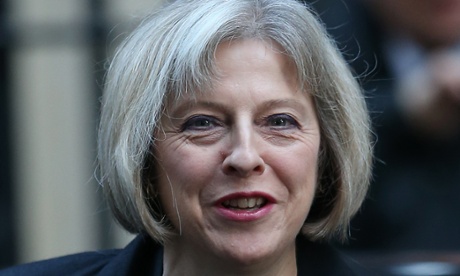
This picture was taken as May arrived at Downing Street for this morning’s cabinet meeting. She doesn’t seem too upset to be shot off Norman Baker.
The Telegraph’s Christopher Hope has identified four possible candidates as possible replacements for Norman Baker.
LibDem source: Duncan Hames, Jenny Willott and Stephen Williams favourites to replace @NormanBakerMP. Brian Paddick is an "outside bet".
— Christopher Hope (@christopherhope) November 4, 2014
There’s another obvious candidate: Jeremy Browne, who was Home Office crime prevention minister until he was sacked, and replaced by Norman Baker in October last year. Nick Clegg decided to get rid of him not because he was incompetent, but because he got on too well with May; the Lib Dems wanted someone a bit more radical in the Home Office who could show the party was standing up to the Tories on civil liberty issues. Baker fulfilled this role - perhaps (in the light of his resignation) too successfully.
Browne has the time to serve as a minister because he’s announced that he is not standing for election again and so he will not be worrying about saving his seat. But his relationship with Clegg probably rules out a recall. This is what he tweeted last week.
The Prime Minister just told me that he was sorry I'm standing down. First party leader to say that to me since I announced it. Appreciated.
— Jeremy Browne (@JeremyBrowneMP) October 29, 2014
Norman Baker has not given an interview to the BBC yet, but he has spoken to the Independent, which broke the news of his resignation last night.
Here’s an extract.
[Theresa May and her advisers] have looked upon it as a Conservative department in a Conservative government, whereas in my view it’s a Coalition department in a Coalition government.
That mindset has framed things, which means I have had to work very much harder to get things done even where they are what the Home Secretary agrees with and where it has been helpful for the Government and the department.
There comes a point when you don’t want to carry on walking through mud and you want to release yourself from that.
Norman Baker has arrived at Lib Dem HQ.
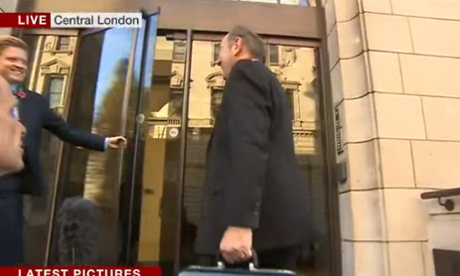
All he had to say to waiting reporters was that the coalition was “fine” and that it was a lovely morning.
According to BBC News, he is due to give a broadcast interview later.
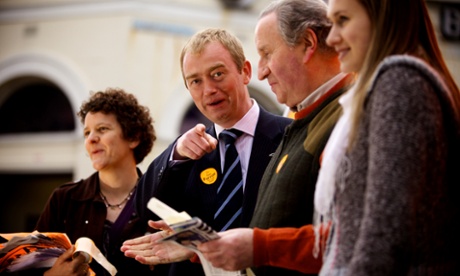
Tim Farron says Theresa May's stance 'an insult to the electorate'
Tim Farron, the Lib Dem president, was also on the Today programme this morning talking about Norman Baker’s resignation. He said Theresa May was at fault for not being willing to compromise with the Lib Dems.
I’m not here to lay into Theresa May, but I think there is a sense within the Home Office – it is sensed around the rest of the government and on both sides of the coalition – that Theresa May behaves as though the Conservatives won the last election and they didn’t. It’s important to remember that we should respect the will of the electorate ... [The Conservatives] didn’t win the last election and it’s an insult to the electorate to act as though they did.
Farron also said that, overall, the coalition was still working well.
Across other departments of government are working stably. We have many disagreements – David Laws and Nicky Morgan will disagree on a number of matters in education; Norman Lamb will disagree with Jeremy Hunt on many matters – but you still work in a collegiate fashion ... The evidence that the Coalition is working well is that this is the only time this has happened in four and a half years. This is the exception that proves the rule.
Alan Travis’s article about how Norman Baker’s resignation was prompted by Theresa May’s unwillingness to compromise with her coalition colleagues is well worth reading. As Alan points out on Twitter, this could have wider implications after 2015, if no party has an overall majority and the Tories are wondering whether she would make a good leader.
Westminster commentariat missing bigger picture with Baker resignation - T.May unable to work in coalition in era of hung parliaments
— Alan Travis (@alantravis40) November 4, 2014
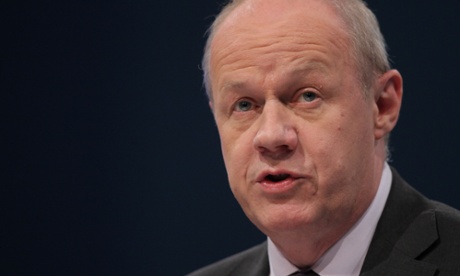
In his resignation letter (see 8.39am) Norman Baker said being a Lib Dem minister in the Home Office was like “being the only hippy at an Iron Maiden concert”. On the Today programme Damian Green, the Conservative former Home Office minister, said that an alternative musical simile was more appropriate.
I think the more appropriate musical analogy is that he was a guitarist who was only interested in his own solos while the rest of the band was trying to play a close harmony number.
Baker’s problem was that he was not willing to compromise with his colleagues, Green said.
Norman’s problem, and it was a problem not shared by previous Lib Dem ministers in the Home Office - Lynne Featherstone, Jeremy Browne, were perfectly effective minister - Norman’s problem was that he came in and announced, he gave an interview to his local paper, saying ‘I am the Lib Dem home secretary’, he regarded himself as being on a par with the home secretary and asked for papers from other ministers. He wanted to check what everyone else was doing. The world doesn’t work like that. If you are a minister of state, in the end, you work to the secretary of state in that department.
I was there working with other Liberal Democrat ministers, and ministers met collegiately, and decided things collegiately. What you can’t do is just go off on your own, which is what quite often Norman wanted to do, and say, ‘look, I believe this, so this is what the Home Office is going to do’. In the end, the home secretary has to approve policies that ministers put out ...
If we all agreed on everything, politics would be easy. But ministers are taking difficult decisions, rational people can come at it from different angles and what you do is that you argue out and agree compromise. That’s how governments all over the world work all the time. It can be frustrating, it doesn’t matter if you’re in a coalition government or a government of one party, sometimes you don’t get your own way. If you can’t accept that then you probably shouldn’t be a minister.
I’ve taken the quotes from PoliticsHome.
Nick Clegg's reply to Norman Baker
And here’s Nick Clegg’s reply to Norman Baker.
Dear Norman,
Thank you for the brilliant job you have done as a Minister over the past four and a half years, first at the Department of Transport and more recently at the Home Office.
In both posts you have proved yourself as one of the most effective ministers in Government: always determined to deliver a more liberal agenda for Britain, by consensus where possible but by confronting vested interests whenever necessary.
However complex the issues have been, or challenging the Coalition relations have proved to be, you have handled the political relationships within Government with great skill, always focussing on how to achieve liberal reform wherever you can.
I fully understand the reasons you want to take a break after four and a half years in demanding Ministerial posts – but I very much hope that if the Liberal Democrats are in Government after the next election, you will once again make yourself available for Ministerial office.
On a personal level, it has been a real privilege to work alongside you over the past four and a half years.
With very best wishes,
Nick
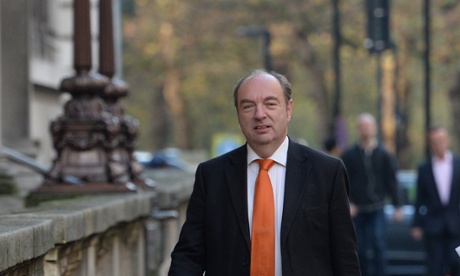
Norman Baker's resignation letter
Here’s the text of Norman Baker’s resignation letter, sent to Nick Clegg.
Dear Nick,
I am writing to confirm my request, which I first raised with you in August, to take a break from ministerial office when a convenient moment arises. I understand this is likely to be next week.
You will know that I have spent four and a half years in ministerial office, three and a half at the Department for Transport and the last year at the Home Office. I have enjoyed this time very much, and while I feel I have been able to discharge my duties effectively while also giving proper attention to my constituency, this combination has been very demanding and has squeezed the time available for my family and my outside interests, including my music.
You will recognise that it has been particularly challenging being the only Lib Dem in the Home Office, which I see a newspaper the other day likened to being the only hippy at an Iron Maiden concert. Despite these challenges, I am pleased with what I have been able to achieve, not least to have been the first minister with responsibility for drugs to have put prejudice aside and published an evidence-based approach to this important issue, despite repeated Conservative efforts to block release.
I am also pleased, amongst other things, to have been able to create a cross-departmental commitment to tackling FGM, to have nursed into law a new more effective approach to anti-social behaviour, and to have launched a ground-breaking Government document that promotes alternatives to animal experiments.
However, in stark contrast to the Department for Transport, I regret that in the Home Office, the goodwill to work collegiately to take forward rational evidence-based policy has been in somewhat short supply.
I have concluded, therefore, that for the time being at least, my time is better spent out of ministerial office.
You will of course continue to have my full support in the run-up to, and beyond, the next election which I anticipate is likely to produce another hung parliament. You have been, and are, an outstanding leader of the Lib Dems and I have been proud to have served in your team.
Best wishes,
Norman
It’s amazing it has taken so long. There have been various ministerial resignations since the coalition was formed four and a half years ago but, until Norman Baker walked out of his job as a Home Office minister last night, there had not been a case of a minister resigning purely because he couldn’t stomach his coalition partners.
Here’s the Guardian’s overnight story. And my colleague Alan Travis has written a very good analysis. Here’s an extract.
As first Lynne Featherstone, then Jeremy Browne and now Norman Baker found to their cost, Theresa May’s Home Office has never really recognised the existence of the coalition.
As Baker points out in his valedictory interview: “They have looked upon it as a Conservative department in a Conservative government, whereas in my view it’s a coalition department in a coalition government.”
Indeed some may go further and say there have been times, particularly over crime and immigration, when Theresa May’s team barely appeared to be willing to work with David Cameron’s Downing Street operation, let alone Nick Clegg’s side of the business.
The atmosphere within the department is said to have deteriorated even further after the departure earlier this year of May’s special adviser, Fiona Cunningham, after her role in the row with Michael Gove over the government’s approach to tackling extremism.
Whitehall sources last week talked of an increasing “bunker mentality” with May’s advisers regularly being heard shouting at civil servants while refusing to engage with the media on anything but their own terms.
The Baker resignation does not mark the end of the coalition. Nick Clegg, whose own relationship with Theresa May has been fairly abysmal, has reacted in a conciliatory way, and he is expected to announce a replacement for Baker today. Still, it’s an interesting moment for coaliton relations. I will be covering the reaction this morning.
Otherwise, there is quite a lot on. Here’s the agenda for the day.
10am: Lord Mandelson, the former Labour Northern Ireland secretary, gives evidence to the Commons Northern Ireland affairs committee on “on the runs”.
10.30am: Matthew Hancock, the energy ministers, and Ofgem give evidence to the Commons energy committee on network costs.
11.30am: George Osborne, the chancellor, takes questions in the Commons.
2.30pm: Lord Patten, the former Hong Kong governor, gives evidence to the Commons foreign affairs committee on relations with Hong Kong.
2.45pm: Paul Kennedy, the interception of communications commissioner, and others give evidence to the Commons home affairs committee on the Regulation of Investigatory Powers Act.
3.30pm: Liz Truss gives her first major speech as environment secretary.
As usual, I will be also covering all the breaking political news from Westminster, as well as bringing you the most interesting political comment and analysis from the web and from Twitter. I will post a summary at lunchtime, and another at the end of the day.
If you want to follow me on Twitter, I’m on @AndrewSparrow.