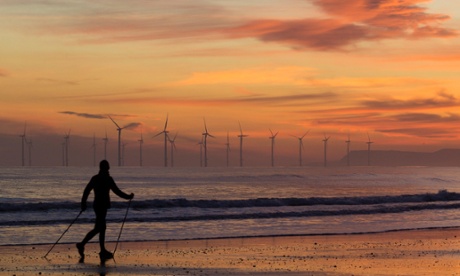
Walking is simple, free and, in terms of fitness benefits, hugely underrated. Getting outdoors for a brisk constitutional can reduce the risk of suffering a chronic illness, such as heart disease, type 2 diabetes or a stroke. The psychological benefits of stepping out can’t be discounted either – raising your pulse and breaking into a gentle sweat will leave you feeling good for hours afterwards.
Over the past decade, Nordic walking has transformed this everyday exercise from a mainly lower-limb activity into a unique total-body workout. If you’ve seen people in the park clutching ski poles, they’re not out testing equipment for an Alpine adventure. Nordic walking poles are designed to harness the power of your whole body to propel yourself forward. By planting the pole – slightly shorter than a ski pole, with a rubber tip – in a way that takes the weight off your knees and ankles, and enables you to push off the ground slightly, every step feels energised.
Ideal exercise for all ages
“Nordic walking is ideal for all ages and levels of fitness,” says exercise specialist Annette Burgess.
“Gentle wellbeing walks using the poles are perfect for those with joint problems, who are recovering from injury or are overweight. More vigorous workout walks will challenge even the fittest. However, you’ll probably feel less tired than you would just walking because you’re spreading the exercise workload across your entire body.”
Indeed, a study published in Research Quarterly for Exercise and Sport shows that Nordic walking brings a significant increase in oxygen use and caloric expenditure compared with regular walking, but without greatly increasing perceived exertion. Additional benefits include improved posture, gait and balance, stronger back and abdominal muscles, and enhanced body awareness.
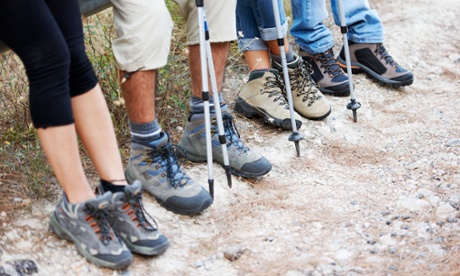
The principle behind Nordic walking is nothing new. Hikers, trekkers and cross-country skiers have been using poles to walk or ski on grass for decades. The first poles developed for fitness walking arrived in the late 1980s.
Hitting your stride
About 6 million people worldwide now take part in Nordic walking. Classes have sprung up throughout the UK and Nordic Walking UK’s website (nordicwalking.co.uk) has a directory of instructors, most of whom offer taster sessions, short introductory courses and group walks to build skills and speed.
“Our programmes are based on the statistic that 30% of UK adults don’t want to exercise indoors,” says Gill Stewart of Nordic Walking UK. “Nordic walkers here want to get outdoors and enjoy themselves. Also, unlike other countries, more younger people are taking it up.”
While Stewart downplays the importance of impeccable technique, a few basics are useful: “Swing your arms from your shoulders with your elbows straight – don’t bend your arms as you would when running. It’s like a soldier marching, but without the stiffness. Treat the poles as an extension of your arms – imagine you have turned into a four-legged animal. Most important of all – be natural. And that can be the hardest thing!”
Structured workout
Nordic Walking UK uses a system of “gears” one to four to grade the level of activity. In first gear, you concentrate on swinging from the shoulders – but every gear gives a great all-round workout.
You don’t need access to wide open spaces to enjoy Nordic walking – you can practise in the street as easily as in more rural locations. Nor is any specialist clothing required – comfortable kit plus a pair of walking shoes or supportive trainers will do fine. Most instructors will lend you a pair of poles to start, then you can pick up a set for less than £30.
“The World Health Organisation recommends we walk 10,000 steps a day to maintain basic health and cut the risk of disease,” says Burgess. “This level of activity will keep our heart and lungs working efficiently. The benefit of Nordic walking is that it is more than walking – it’s like walking 10,000 steps – and doing 10,000 tricep extensions and abdominal crunches at the same time.”
Best foot forward
- Regular walking at 3mph burns about 220 calories per hour.
- Nordic walking at the same speed burns about 325 calories per hour.
- According to the Cooper Institute, Nordic walking can burn up to 46% more energy and raise the heart rate by an extra 15% compared with regular walking, while engaging 90% of the human body’s muscles.