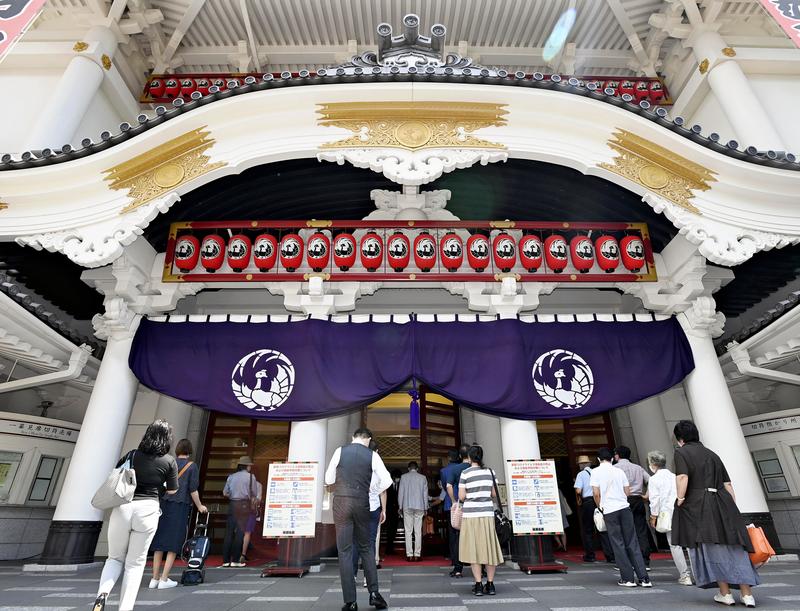
On Aug. 1, the Kabukiza Theatre in Tokyo reopened for public performances after being closed for five months due to the coronavirus outbreak. The first play that was performed was "Renjishi" (Two lions). Playing the spirits of the lions, Ainosuke Kataoka and Kazutaro Nakamura demonstrated the dynamic "keburi" scene, but there were no shouts from omuko specialists to cheer on the actors.
Shouts such as "Matte-mashita!" (We've been waiting!) and "Matsushima-ya!" (a prestigious kabuki family) also help actors sense the timing of their moves and give a boost to the performance. However, to avoid spreading respiratory droplets, shouts from the omuko were banned, which is unprecedented in the history of the Kabukiza Theatre since it opened in 1889. "Without the omuko shouts, we're very disappointed," Ainosuke said, expressing concern.
What encouraged the performers instead was great applause from the audience. The applause was so loud that the sound of the accompanying shamisen could not be heard. Tadashi Abiko, the vice president at Shochiku Co., which organized the performance, said, "I felt the power of the audience as they concentrated on the stage. The performers on stage and the audience were mentally bound together, which often happens during stage performances."
Given the coronavirus, the Kabukiza Theatre sought possible ways to hold performances. This presented a challenge for the kabuki world, which places importance on tradition. Ultimately, they kept a one-seat space between audience members, on either side and in front and behind, and left seats along the hanamichi walkway open. Shamisen players and other instrumentalists wore special black masks.
Four plays were performed that day and each play lasted about an hour. Every time a play finished, all audience members, performers, stagehands and other staff were changed in order to prevent the virus spreading far even if someone in the theater was infected with the virus.
The staging was also changed for the coronavirus era. Near the end of the play "Yowanasake Ukinano Yokogushi, Genjidana," there is a famous scene in which lovers hug each other and say, "I will never let you go for the rest of my life." Instead of hugging, they reassured each other of their love by holding each end of a tenugui cloth.
"The concession stand does not sell bento lunch boxes and there are no omuko shouts, which makes me a little sad. But when I heard the loud sounds of actors stomping on the stage, I almost cried thinking that I was [finally] watching a live performance," a 37-year-old company employee from Tokyo said.
Since the number of seats was reduced, the performances will incur losses. However, Abiko said: "We have to keep kabuki culture alive. We would like to seek new ways to perform kabuki plays while ensuring safety for both audiences and all staff concerned."
Officials in other fields are also making various efforts. "Daichi," a stage play written and directed by Koki Mitani and put on in July at the Parco Theater in Tokyo, called itself the "social distancing version" and the story unfolded to allow actors to keep a distance from each other. After the play was over, there was an announcement asking the audience to leave swiftly.
For classical music performances, cheers like "Bravo!" are banned.
Research is underway to reduce infection risks by analyzing droplet spread and other subjects. In these difficult circumstances, those concerned are making efforts to deliver performances to their audience.
Concerned about the coronavirus? Look for information and contact numbers here if you suspect you have contracted the virus and are exhibiting symptoms.
PLEASE NOTEThe Japan News is providing this story for free to help all readers keep informed about the coronavirus.
Read more from The Japan News at https://japannews.yomiuri.co.jp/