Angus Deaton is the winner of 2015's Nobel Prize for Economics, with the committee praising his "analysis of consumption, poverty, and welfare".
“To design economic policy that promotes welfare and reduces poverty, we must first understand individual consumption choices,” the academy wrote. “More than anyone else, Angus Deaton has enhanced this understanding. By linking detailed individual choices and aggregate outcomes, his research has helped transform the fields of microeconomics, macroeconomics, and development economics.”
During a call at the press conference, Deaton declined to comment on whether his work on gender inequality and other issues could lead to fixing those problems. But historically the recognition that the prize brings has brought economists' ideas to the fore, and allowed them to become more involved in policy making.
Deaton describes his research as focusing on “the determinants of health in rich and poor countries, as well as on the measurement of poverty in India and around the world”, on his page on the Princeton University website. He is the Dwight D. Eisenhower Professor of Economics and International Affairs at the university’s public and international affairs and economist departments.
Deaton is one of the few 2015 Nobel laureates who won’t have to share his prize with anyone. All of the award winners will actually receive their award on December 10, at events in Stockholm and Oslo.
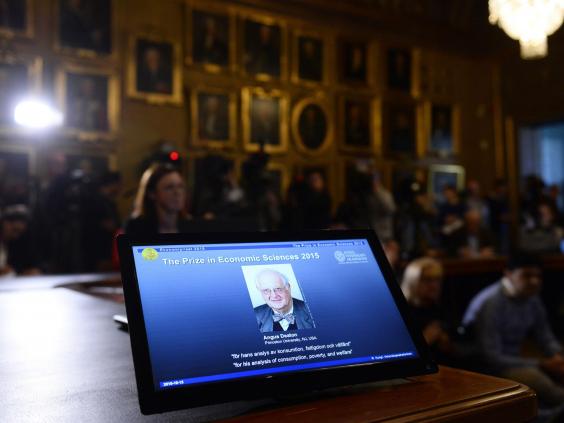
He is also the last winner to be announced — though his prize isn't strictly a Nobel but rather the "Sveriges Riksbank Prize in Economic Sciences in Memory of Alfred Nobel".
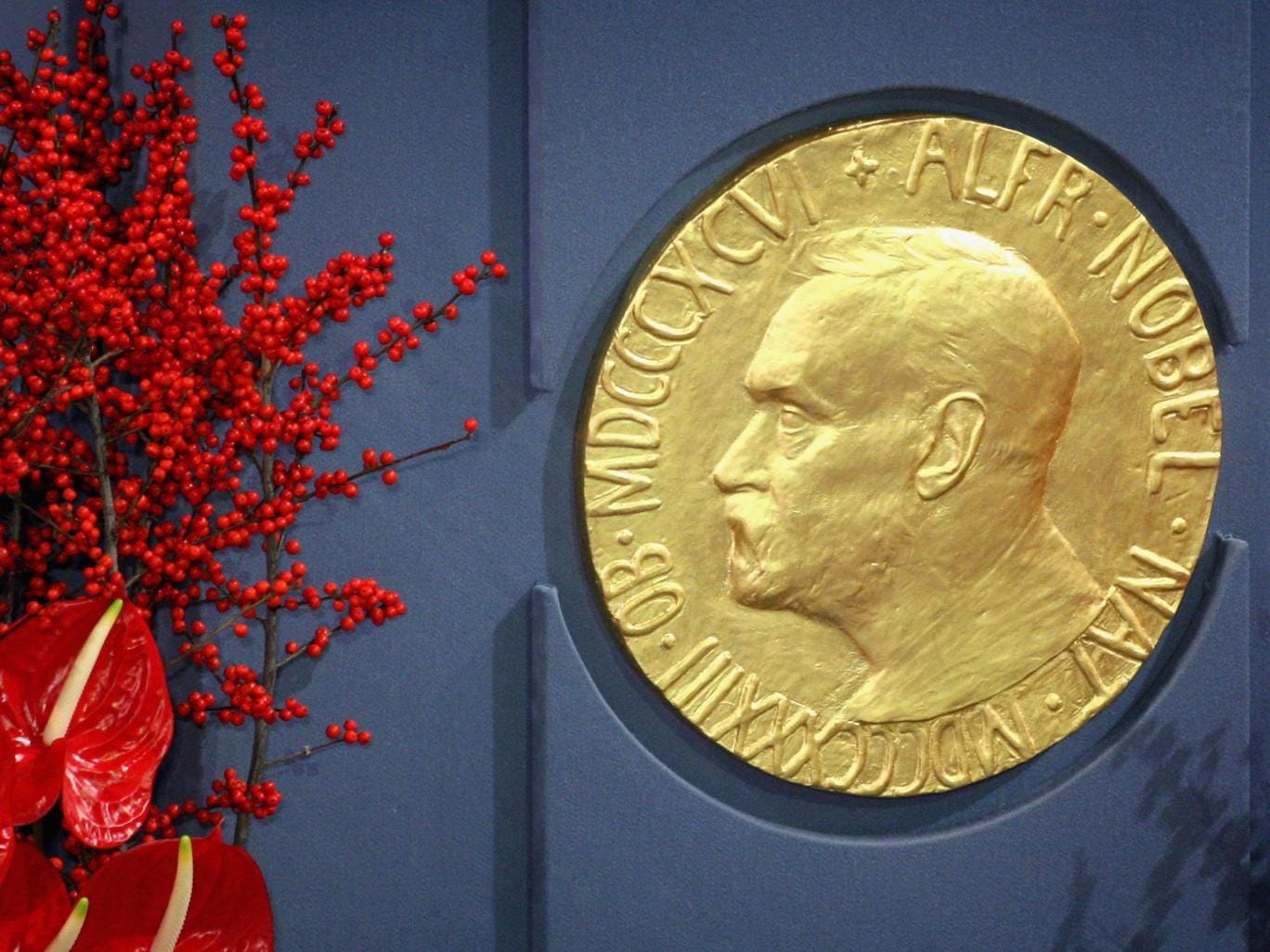
The rest of the Nobel Prizes were created by Swedish industrialist Alfred Nobel in 1895. The prize in economics was added by Sweden's central bank in 1968 as a memorial.