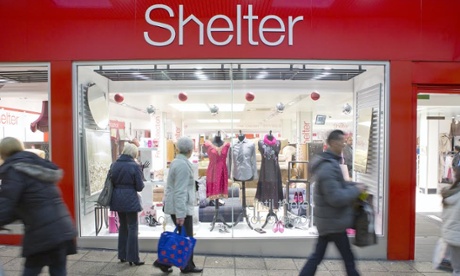
Chris Coe, Shelter’s managing director of retail and commercial, is passionate about charity retailing and believes Shelter can be a force on the high street and bring in funds they so desperately need to support the vital work they do. He’s very clear about how he sees the future for Shelter’s retail arm: “I want us to take a revolutionary approach to charity retailing. But, that can only happen if we get the right people on board – from top to bottom.” We talk to Kerry Rankin, Shelter community shop manager in Prestwick, Scotland.
What made you decide to work in this sector?
It was a circuitous route really. When I had my first child, I took a career break before taking a role at Shelter as an assistant shop manager. Then, after I had my third child I set up my own riding stables business, which I ran for 11 years before deciding to return to Shelter – and I’ve been running the shop in Prestwick for the past two years.
Tell us about your role as community shop manager at Shelter
It’s not just about running the shop, although obviously that’s the main focus. It’s also about trying to attract volunteers and get the word out about Shelter’s cause and what we want to achieve at every opportunity. I’ve always liked a challenge, and this role offers me just that, because no two days are the same. You really don’t know what’s going to come through the door next.
What’s the best bit about the job?
My team of volunteers are amazing. One lady has been volunteering for 13 years and she’s knitted a blanket every week for those 13 years, selling them to raise money for Shelter. She’s become a bit of a celebrity in the area – people bring in wool for her to knit the blankets and we reckon she’s raised somewhere in the region of £3,000 so far. Our customers are great too. There’s a real buzz around the shop and we make it our job to make them feel welcome by providing them with a truly personal service.
And the biggest challenges?
Trying to recruit and retain dedicated volunteers – and the right volunteers. It’s crucial that we find people who can fit into our existing team. So interacting with the community is vital. That’s why we spend a lot of time networking in the community to get the word out. We recently set up a food bank which, as well as resulting in much needed food donations, led to us recruiting two excellent volunteers. Making sure donated goods are of high quality and that you attract a variety of goods so that there is always enough in the shop to entice people can be tough too. Sometimes though, you unexpectedly strike gold. For example, just today someone brought in a golf club and we discovered a similar one on an auction site selling for around £35, so it was a real find. We also had a trombone donated recently that turned out to be worth £500, so there was real brass in that particular brass!
Does each Shelter shop have a clearly defined aim?
I’d say there are three main aims really. Getting people to give the gift of time, eg volunteer. Getting people to make a donation, and getting people to subscribe to Gift Aid. Gift Aid’s particularly important as it makes a lot of money for the charity, so we need to be able to explain this both to volunteers (so that they can then explain it to customers) and to customers so that they understand how vital it is. For example, a volunteer today explained Gift Aid to a number of customers and was able to achieve it on three sales, which is great for the shop and great for the self-esteem of the volunteer.
And what makes a good Shelter community shop manager?
Well, you don’t have to come from a retail background – as I have shown. You do, however, need to be confident, creative and inspiring – someone who can lead by example and help others learn. Good customer service skills are important too.
What do people need to know about working for Shelter?
I would describe Shelter as a laid-back charity – by that I mean they allow you to be yourself and to run the shop as your own business within a framework of safeguards. The managing director has only been in the role for a year, but has already created a culture where people can express themselves and their creativity. If you have an idea for your shop, you’re encouraged to explore it. Also, staff are motivated and empowered – we want to achieve the best results for Shelter because we want to make a real difference to homeless and badly housed people
Shelter is currently recruiting for community shop managers in a variety of locations to support their planned expansion. To see their current vacancies, please visit www.shelter.org.uk/jobs
Content on this page is paid for and provided by Shelter