MIAMI _ This is normally the happiest and busiest time of year for Lenin Fraga, Robert Lopez and Oleg Chernobrodsky. They own South Florida limousine companies, and spring has always meant weddings, bachelor and bachelorette parties, proms, graduations, cruisers and convention-goers.
But this spring, they are feeling more than a bit anxious as the coronavirus crisis has stalled their industry, leaving them with cancellations, parked vehicles, laid off drivers, and little to no source of income.
Fraga, the owner of Doral-based American Transportation and Limo Services, said his company typically brings in $250,000 to $300,000 per month from March through May. This April, it made just over $3,000. He was forced to lay off his 20 drivers, and his fleet of 21 vehicles sits unused in a warehouse.
Lopez has been equally impacted. His Majestic Limousines business, based out of the Biltmore Hotel in Coral Gables, does 1,200 rides most spring months. This April, he got four requests.
Meanwhile, Chernobrodsky, owner of Miami Limo Coach, is "in crisis mode" as his five party buses have been parked since mid-March. Asked how his company was faring, he let out a long sigh, and proceeded to count all the cancellations he got in March. "Let's see, 1, 2, 3, 4 ... .21, 22, 23 ... 51, 52, 53, 54 ... 54 cancellations, and that doesn't even count all the people who would have used us in April and May. We came to a grinding halt. It's a real disaster."
All three owners say that amid the talk about troubles in the tourism industry, their business has been forgotten.
"We are a ginormous industry that is just as devastated as hotels, airlines and cruise lines, but nobody talks about us," said Lopez. "We depend completely on tourism, people that fly, go to the airport, groups, conventions. And the thing that really destroyed us is that this thing happened in the middle of our season and we are a fully seasonal business.
"Even when things do open up, we're dead in the water anyway, because most people don't come to South Florida in the summer. We have to wait until January or February for our business to come back. As for business travel, I don't know how long it will take corporate America to get going because it's such a huge wheel to get turning."
Fraga echoes Lopez's concerns. Sixty% of his business comes from conventions, hotels and cruise ships. He has a contract with InterContinental Hotel to operate its shuttle buses. Forty% is from weddings, proms, parties and wealthy local customers who like private rides.
"We did leisure and corporate, but both are dead," Fraga said. "I can't just sit and wait. Even if tomorrow they say the city is open, people are not going to start traveling and corporate is going to be very, very down and limited. It's going to take at least a year to get back to some sort of normalcy.
It's not like hair places or restaurants where it will be slow but I think people are still going to go. Right now, people are not going to travel."
His company's last big job was in early-March, when they drove the Brazilian President Jair Bolsonaro and his delegation for 14 days. Bolsonaro's press secretary tested positive for COVID-19, but Fraga said none of their drivers got sick.
"The guy that was infected, we drove him on a daily basis, and none of our drivers got anything," he said. "I shook hands with the president twice. We didn't get any symptoms, and we self-quarantined.
That was our last gig and that saved our lives because that was a very nice contract we did with them. I am still using those funds to get by."
Eric Kolodny is general manager at VIP Miami Limo, which also has been hurt badly by the virus-related travel shutdowns.
He had reservations from two Fortune 500 companies that were going to hold their annual meetings in Miami. Both canceled. "That right there was a loss of six figures," Kolodny said. The only business he is getting these days is from clients who are using his drivers for deliveries and to run errands.
"We cater to a lot of high-end clients, celebrities, dignitaries and VIPs, discreet people, and they haven't been traveling, either," Kolodny said. "The airline transfers are a giant base of our business _ people coming from overseas, plus the cruise lines. That's all done. There's no revenue. There's nothing to speak of. Nobody needs us right now.
"We were having such a great season with Art Basel and the Super Bowl, we were all on top of the world, and now this."
Lopez called it "a desperate situation" and worries about how long it will take the travel industry to rebound.
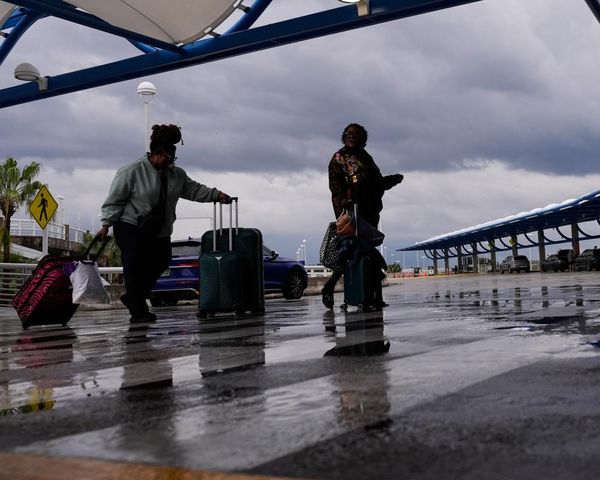
"It's really, really bad. Tons of people that come here to Port Miami and Port Everglades to go on cruises and we're the ones who take them from the airport. Corporate travelers, business people, they want to be met in the airport as Miami can be quite confusing. People going out to restaurants, clubs, events on weekends. We lost all those rides."
The National Limousine Association (NLA), the main trade group representing the interests of the chauffeured transportation industry, recently collaborated with The American Bus Association, The American Ground Transportation Association, The Global Business Travel Association, The Near Airport Parking Industry Trade Association, The Transportation Alliance and The United Motorcoach Association to request $12 billion of federal aid.
"Ground transportation stands, on a global scale, among the most necessary services, on par with more visible industries also struggling in the current global landscape, such as airlines and hotels," said Robert Alexander, President of the NLA. "We will do everything in our power to sustain our industry so that, as a nation, we can continue to move forward during this pandemic, as well as when COVID-19 decelerates. However, we cannot do this without immediate aid from our Congressional leaders."
The national ground transportation industry is responsible for three billion passengers a year and hundreds of thousands of drivers.
Fraga said he got 60 to 90-day extensions on his vehicle loan and mortgage payments, but that will expire by summer. Desperate for new sources of revenue, he has begun a large vehicle-cleaning business with the $35,000 portable car wash he purchased in January. It was taking nearly three hours to wash his buses, and with the machine, they can be washed in 15 minutes. He bought a trailer for the machine and is offering the washing service to other companies that have fleets of large vehicles.
He applied for a Paycheck Protection Program loan from the federal government a few weeks ago but has not heard back yet. He also applied for, and received, a $10,000 loan from the Economic Injury Disaster Loan Program (EIDL).
So far, he has two customers, and he is hoping to get a contract with Amazon, which likes to keep its growing fleet of delivery trucks shiny. Fraga also applied to become an independent contractor with Amazon, which would mean his drivers, who are contract workers, could get back to work.
"I am very concerned for my drivers. They are desperate," Lopez said.
Chernobrodsky, who estimates he lost more than $50,000 in March cancellations, had to borrow money from friends to make ends meet.
Lopez, whose company has been in business for 30 years, had six convention groups cancel � including groups of 120, 200, 90 people.
"Those conventions are our bread and butter," he said. "We also had big weddings canceled or postponed, and those required four and five cars each. Now, we should be in the middle of prom season, and all the proms are canceled, so that business dried up. It's a big, big loss. You're talking about hundreds of thousands of dollars that we won't make this spring.
"This is an industry has already suffered so much with Uber, they're choking us, and now something like this and the first thing people think is hotels, airlines, cruise lines and of course, it's hard and that's horrible, but people forget about an industry that moves so many people here in South Florida. We just hope we won't be forgotten."