Empires make great art. It's a historical fact. The most ambitious public sculptures, the finest architectural ensembles, the richest paintings are almost always produced by and for world powers. It was true of ancient Rome and it was true in the 20th century, when American quasi-imperial might was manifested in the rise of abstract expressionism and the glory of the Empire State Building.
I had a wicked thought when I saw Moctezuma at the British Museum: I was fascinated by the Conquistadors. This mighty exhibition ends with Spanish history paintings that glorify one of the most brutal imperial acts in history, the conquest of Mexico. And yet, these works reminded me of everything I love about Spanish art.
Spanish art became great when the Spanish empire became vast. In the middle ages and early Renaissance the achievements of Spanish Christian craftsmen are outshone by the wonders of Islamic Andalusia. But the rise of imperial Spain made it a centre of art – first by attracting emigres such as El Greco, then by stimulating home-produced talents such as Velázquez and Zurbarán. In Velázquez's early painting Christ in the House of Martha and Mary in the National Gallery, you see a chilli, native to the Americas, on the kitchen table next to the traditional Spanish eggs and garlic – it's a little clue to the way imperial trade stimulated Spanish art.
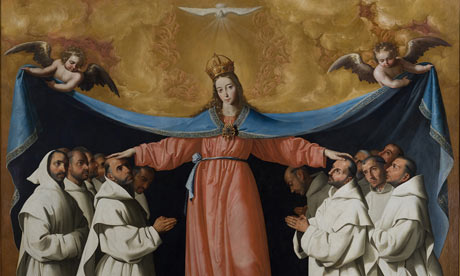
The National Gallery is about to feed my appetite for Spain's bad old days with The Sacred Made Real, an eye-popping display of religious sculpture and painting that bleeds with the religious intensity of the age of the Inquisition. It explores the uncanny realism Spanish artists brought to scenes of the crucifixion and the saints: the statues have pale skin and red wounds painted on their spindly limbs to grab your attention; to shock and stupefy. In paintings by Zurbarán, that same hallucinatory mimesis creates some of art's strangest effects. Above all, it is Zurbarán's paintings that I am looking forward to in this show.
It takes you into a very mad, dark place – into the psyche of an empire that massacred and persecuted peoples from Peru to the Netherlands in pursuit of a vision of Catholic order. It also reveals one of the world's most marvellous visual cultures. Everyone hates empires, but who would be without their achievements?