I like to knit to detective dramas. When people ask why I like them so much, I don’t usually give that as my answer, but it’s true. I like the structure of a detective show, the way you can predict the shape of them: the murder, the discovery of the body, the hunt for clues, the interrogation, the red herring, the second death and so on. But only very rarely do I find a detective drama so engrossing that I put my knitting down for fear of adding an extra armhole. And that is what happened with No Offence.
In the first few moments of the opening episode, we see a couple arguing in the back of a taxi, our sense of unease growing as she boots him out into the street. Is the cab driver going to attack her? Is this the last we will see of her, or her boyfriend? Nope, neither. We’re instantly wrong-footed as she flips her police ID at the driver, and tells him to keep an eye on her stuff while she chases after a wanted man she has just clocked outside. She ditches her high heels and pelts down the street after the suspect. He races up an alley and she follows without hesitation. As he exits the alley, he looks back to see how close behind she is. He trips, falls, lands in the road. His head is instantly crushed by a double decker bus. Cue opening credits.
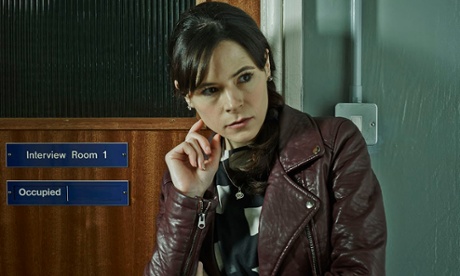
Paul Abbott is no stranger to the police procedural, having written for Cracker. But the sheer energy he has brought to No Offence moves it up a notch. Well, the energy and the colour-blind, gender-blind writing. DC Dinah Kowalska (subtly played by Elaine Cassidy) isn’t the female lead, she’s just the lead, the one in the ensemble on whom we are most closely focused. Her boss, DI Deering (played by Joanna Scanlan with so much delicious relish that you can taste it through the screen), is not a female boss, any more than Deering’s boss (played by Colin Salmon) is a black guy. They’re just people, who work for the same organisation.
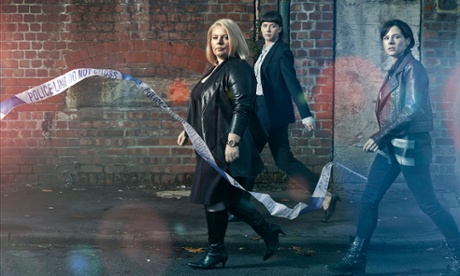
The constant refrain of those who fear that quotas will ruin drama is that programmes would look weird if they were cast according to box-ticking. The role should go to the best person, they plead, as though it were the case that there is a list somewhere of actors, starting with the very best one, and going down in objective order to the absolute worst (I’m imagining that list beginning with Judi Dench and ending with Tommy Wiseau, but feel free to construct your own). In fact, as actors will wearily admit after auditioning 10 times for the same role and then not getting it, most professional actors can act.
The issue of casting isn’t about finding the best actor, it’s about finding the actor who will work best in the show, given the constraints of time and budget and more: who will work well with other actors you already have, with the scripts you’re expecting to receive when the writer finally turns them in, with the director who has a particular vision for the project, with the production company that is making it, and with the channel that is paying for it. So there are plenty of opportunities for “the best” actor to be cut for someone who is a bigger name, or who gets on with the director, or who the channel like, and so on. Abbott has done the improbable, and come up with a perfect cast which is as diverse as the city in which it is set: Manchester.
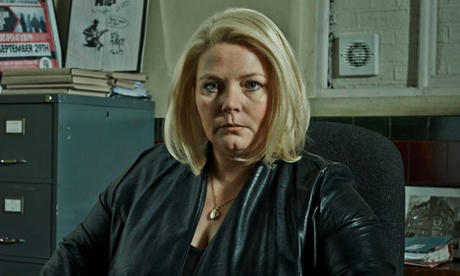
DI Deering is a glorious monster of a boss: she reminds me of Warren Clarke’s Dalziel, always clever enough to catch out any hapless sergeant or constable who might try to sneak something by her, yet kind enough to pretend she didn’t know all about the surprise birthday party the team throw her. Scanlan is a tremendous actor: more than able to turn her considerable comedy talents down a notch to play a straight character who can be funny, rather than a funny character.
No Offence isn’t billed as an equal opportunities drama, any more than The Killing or The Bridge or Broadchurch were. But because it is, I watch it without that nagging doubt in the back of my mind that plagues me when I try to watch, say, True Detective. After three episodes, it became clear that there were scarcely any women in its world, and the ones who were present were wives, prostitutes or dead prostitutes. I could never shake the sense that if the writers couldn’t imagine women having a job (other than prostitute), they probably couldn’t imagine a story good enough to keep me engrossed for a whole season. Paul Abbot had me at the double decker bus, and I’m hoping hard for a second series.