ELIZABETH CITY, N.C. — The district attorney for Pasquotank County will not bring criminal charges against sheriff’s deputies who shot and killed Andrew Brown Jr. in Elizabeth City — a move that led to increased tension and protest over police violence.
District Attorney Andrew Womble announced the news while discussing the state’s investigation at a news conference in the county’s public safety building Tuesday.
Womble said Brown’s death “while tragic, was justified” because his actions caused three deputies to “reasonably believe it was necessary to use deadly force to protect themselves and others.”
Brown died April 21 after being shot by sheriff’s deputies who came to his house to serve arrest and search warrants related to drug charges.
On Tuesday evening, roughly 80 protesters gathered outside the sheriff’s office, accusing Womble of lies and calling video snippets selectively edited.
“Nothing’s changed,” said Kirk Rivers. “If it did anything, it made you realize you have to go harder. We have to do more.”
Rivers then called on protesters to avoid spending any money in Elizabeth City on Wednesday.
Pasquotank County Sheriff Tommy Wooten, in a video statement posted on Facebook, said the three deputies involved will keep their jobs, but be “disciplined and retrained.”
“This was a terrible and tragic outcome, and we could do better,” Wooten said.
Law enforcement involvement began in the weeks prior to the shooting when a detective with the Dare County Sheriff’s Office received information from a reliable confidential source that Brown was selling drugs in Dare County, Womble said. The detective contacted Pasquotank County and confirmed Brown’s identity and that he was a known drug dealer, Womble said.
The two felony arrest warrants for the sale of controlled substances and search warrants came as a result of undercover buys from Brown of cocaine and heroin that was laced with fentanyl, Womble said.
The morning of the incident, the deputies were briefed on Brown’s criminal history and interactions with law enforcement, Womble said. He noted Brown’s resisting arrest charges and convictions for assault, assault with a deadly weapon and assault inflicting serious injury dating back to 1995.
Womble said deputies were told that Brown was not known to carry weapons. There were no weapons found in the vehicle.
Brown’s felony record did not play into Womble’s assessment of his threat to officers, but “the fact he was dealing heroin and fentanyl that is killing people on a daily basis was not lost on me,” the district attorney said.
Brown was sitting in his car in his driveway, attempting to flee, when he was shot by deputies who arrived at the scene in full tactical gear.
Womble described a 44-second encounter in which seven deputies blocked Brown in his driveway, trying to serve the warrants. He showed video clips and photos from body camera footage to help explain the incident.
Brown ignored orders to raise his hands and get out of his car, and he struck a deputy with the vehicle while trying to escape, Womble said.
“Deputies immediately perceived a threat,” the district attorney said, adding, “The Constitution simply does not require officers to gamble with their lives.”
The officers used deadly force when “a violent felon used a deadly weapon to place their lives in danger,” Womble said.
He said the officers were threatened when Brown backed away while Deputy Joel Lunsford had his hand on the door of Brown’s vehicle, pulling the deputy off his feet onto the hood.
“I believe they would have been within their rights to shoot at that moment,” Womble said, noting that Lunsford “clearly yells.”
Womble said Lunsford also had to brace himself as he spun to the left to get out of the way.
Womble said the officers were not required to wait for injury and the threat alone justified deadly force.
Multiple shots were fired into the car, but Womble saw no evidence that the number of shots fired was excessive. Fourteen casings were recovered in the driveway and yard and one ricocheted, hitting a neighboring house.
Womble said officers were waiting across the street in unmarked cars near the spot where Brown crashed into a tree. As Brown’s car headed toward one of the unmarked vans, deputies also fired in that direction, Womble said.
The district attorney explained that the fatal shooting was justified because of the severity of the crime at issue, Brown’s actions to actively resist arrest, and the immediate threat he posed to officers by driving his car as they surrounded him.
“My review of the incident indicates there is no evidence that deputies who fired the fatal shots acted in any manner that is inconsistent with the threat they perceived,” Womble said, “and certainly no evidence that the deputies acted in any way contrary to or in violation of North Carolina law.”
A private autopsy commissioned by Brown’s family showed he was hit by at least five bullets, with the fatal wound from a shot into the back of his head. But at Tuesday’s press conference, Womble said Brown was shot twice, in the shoulder and the back of the head, with shrapnel wounds elsewhere. He said the first bullet entered the front windshield of Brown’s car.
Womble said the final autopsy report and toxicology reports have not been filed. But he said the medical examiner who conducted the autopsy found a baggie of an “off-white, rock-like substance,” which he said was consistent with crystal meth.
Womble said the videos shown to the media Tuesday were some of the same ones shown to the family but that they were truncated before officers removed Brown from the car. Womble said he wanted to spare the family the pain of having his body on display if the videos were shared by the press.
Seven deputies were initially placed on administrative leave following the incident. Sheriff Wooten then put four deputies who did not fire their weapons back on active duty.
Among the mistakes in this case, Wooten said in his video Tuesday, were that two deputies didn’t turn on body cameras and that emergency medical services were not on standby near the scene. Wooten said he will bring in national experts to better implement best practices and “ensure my team has top-notch training.”
Wooten said he and the county will ask the judge to allow him to release the video to the public as soon as possible. He said he will also release portions of the investigative reports.
“This should not have happened this way at all,” Wooten said to Brown’s family. “While the deputies did not break the law, we all wish things could’ve gone differently.”
It’s customary in North Carolina for the State Bureau of Investigation to look into shootings by law enforcement. The agency then turns over its findings to the local district attorney to determine whether charges are warranted.
As Tuesday’s press conference reached an hour, protesters could be heard outside the sheriff’s office. Elizabeth City council member Gabriel Adkins called for thousands to protest downtown Tuesday evening.
Elizabeth City Town Manager Montre Freeman said the city, as it has done for weeks, asked for additional law enforcement from neighboring agencies to be available if needed.
”There is a defeated spirit out there right now,” Freeman said, based on conversations he had had Tuesday afternoon with people he met on the street. “I’m at a loss as to where we go from here.”
Glendora Brothers, a lifelong Elizabeth City resident who was marching Tuesday evening, said Womble was disingenuous in his explanation of the officers’ actions.
”We are not fools, and we’re not ignorant,” she told the crowd, to applause.
Marchers chanted the names of the officers, one by one, saying, “You can’t hide, you committed homicide.”
A few people in businesses raised their fists or chanted in solidarity as marchers passed. A chorus of car horns rang out down Ehringhaus Street.
At the press conference earlier, Womble said he expects some will be unhappy with his decision but he made it based on facts and law rather than public opinion. He said he resisted calls for a special prosecutor because he was elected to do “exactly” this job, and an outside investigator was not.
Asked what recourse the public has if unhappy with his decision, Womble said, “The ballot box.”
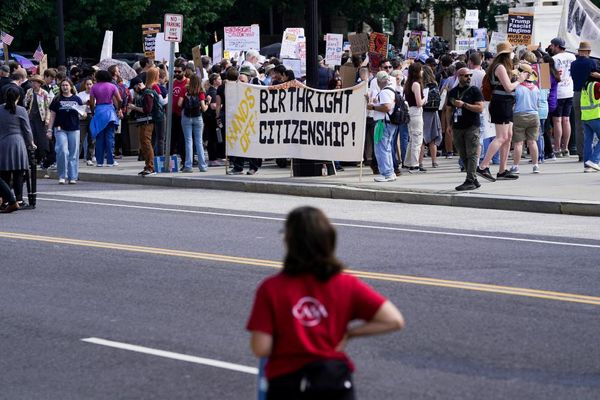
The shooting sparked peaceful protests night after night in the city, with local residents marching alongside activists from across North Carolina and the nation. Protesters have demanded that the video footage from deputies’ body cameras and a police vehicle’s dash camera be made public.
The official requests were initially denied by a judge but could be reconsidered following the outcome of the state’s investigation. Brown’s family and an attorney were allowed to view a portion of the footage under that judge’s order.
North Carolina Attorney General Josh Stein tweeted Tuesday extending his “deepest sympathy” to Brown’s family and others who are grieving. He also said the body camera footage needs to be made public.
“The trust in our criminal justice system that is currently fractured will only be more difficult to repair w/o complete transparency,” Stein wrote in a second tweet. “Now that the investigation has concluded, it is imperative that the court authorize the release of the full video to the public immediately.”
Gov. Roy Cooper, in a statement, said, “Federal officials should continue to thoroughly investigate the shooting of Andrew Brown Jr. in Elizabeth City. Public confidence would have been better served with a special prosecutor and by quickly making public the incident footage. Our state should pass specific laws to increase transparency, confidence and accountability in the justice system.”
Womble has not spoken to Brown’s family because his relationship with their attorneys has been poor, he said.
Attorney Bakari Sellers, one of the national lawyers who had represented the family, tweeted that Brown was not using his vehicle as a weapon.
“The ‘contact’ was minimal at best & initiated by officers,” the tweet said. “He was beyond law enforcement when multiple shots were fired, including kill shot to the back of head. 4 officers didn’t shoot, didn’t feel life was in danger.”
Sellers and the other civil rights attorneys involved in the case — Ben Crump, Harry Daniels and Chantel Cherry-Lassiter — sent out a statement following the press conference, calling it Womble’s “attempt to whitewash this unjustified killing.”
“To say this shooting was justified, despite the known facts, is both an insult and a slap in the face to Andrew’s family, the Elizabeth City community, and to rational people everywhere,” the statement said.
They said the car was moving away from officers and that four of the seven deputies did not fire their weapons, clearly indicating that they did not feel their lives were endangered. They demanded more answers and immediate intervention by the Federal Department of Justice.
“We demand that the court release the full video and State Bureau of Investigation report that will help shed some much needed daylight on this case and bring a small measure of justice to this family and this community,” the statement said. “Because we certainly got neither transparency nor justice today.”
Reverend Al Sharpton, who delivered Brown’s eulogy, said in a statement that Womble gave a “bizarre and unconvincing defense” of his decision to not charge the officers involved. Sharpton and the National Action Network are asking U.S. Attorney General Merrick Garland and the federal government to intervene.
“It is obvious that there are political motivations behind the DA’s nonsensical and unjustifiable decision,” Sharpton said, “and we intend to continue fighting for justice in this case.”
The Rev. William J. Barber, a Goldsboro pastor and co-founder of the National Poor People’s Campaign, said Womble’s decision was not a surprise but that “does not make it acceptable to our communities.”
Barber said Womble has behaved like a defense attorney for the officers involved in the shooting, and he said federal investigators need to look at the case and at the practices within the sheriff’s office.
When asked during the press conference whether officers could have allowed Brown to escape and then picked him up later, Womble said, “They could not simply let him go.”
Barber said that remark indicates Womble regards a warrant as “a license to kill.”
“Far too many killings of Black men and women have been ruled justifiable only to be proven later that they were not,” Barber said.