BALTIMORE _ More than two years after the indictments of the officers in its Gun Trace Task Force, the Baltimore Police Department still has not conducted an internal review about how the crooked officers went undetected for years, the city's police commissioner testified Tuesday.
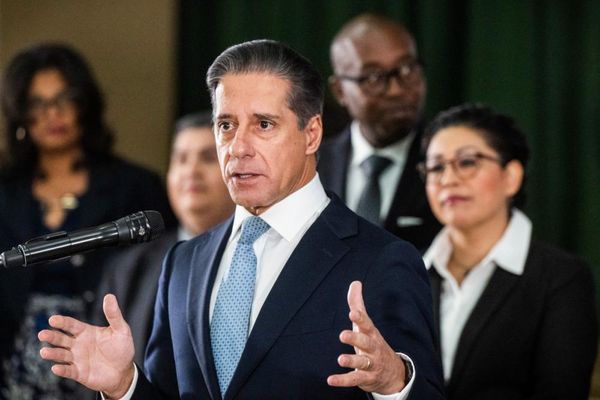
Speaking in Annapolis, Baltimore Police Commissioner Michael Harrison told the Commission to Restore Trust in Policing that ? despite pledges from past commissioners to investigate ? his agency has done no internal review into how the corruption was allowed to fester for so long. Harrison said the lack of an internal probe was in part because the U.S. Department of Justice is conducting a similar investigation, but also due to concern that a public airing of more wrongdoing could encourage civil lawsuits against the police department.
Commission member Gary W. McLhinney, assistant secretary for the Maryland Department of Public Safety and Correctional Services and a former Baltimore police officer, pressed Harrison about the status of an internal review.
"Was there something we missed from recruitment, hiring, all the way through? Red flags?" McLhinney asked.
"We have not done a deep dive to make the assessment of what happened with these individuals that was missed," Harrison said.
The police commissioner noted the agency is under a federal consent decree to reform its Police Department. The judge overseeing the consent decree, James K. Bredar, has asked the Justice Department investigate what went wrong, Harrison said.
Harrison also added that City Solicitor Andre Davis told Bredar the city has to be "extremely careful" due to a flurry of lawsuits it's facing over the task force's illegal actions. Harrison said both he and Davis want to investigate further, but have to be mindful of the fiscal impact on the city.
"We're already engulfed with litigation with GTTF and it's going to bring about a more enhanced issue with litigation that could be expedited exponentially if we are publicly talking about and uncovering what happened and how this all came to play," Harrison testified.
McLhinney took issue with those comments.
"If Judge Davis is telling you we shouldn't look into the reasons behind individual officers doing what they did, and red flags we missed, because of potential civil litigation, to me that's problematic," McLhinney said. "We have a much bigger issue here in dealing with the fallout from GTTF than his concerns of possible litigation."
In an interview after the hearing, Davis said the Police Department would conduct such a review, but the city needs to determine what is the best way to do it to limit legal exposure.
"A complete review is necessary and appropriate. The commissioner doesn't disagree with that. I don't disagree with that," Davis said. "We have to be careful as we do this analysis that we not put our client, the Police Department itself, in a disadvantageous legal position. We have to figure a way to do a really thorough investigation, while at the same time protecting our clients."
While he awaits the results of the DOJ investigation, Harrison said he was taking a number of steps to reform the department, including hiring Deputy Police Commissioner Brian Nadeau from the FBI last month to oversee integrity in the agency, and implementing an early warning and intervention system to catch bad cops.
McLhinney asked Nadeau about internal affairs conducting more random or targeting "integrity checks" of officers.
Nadeau said the unit that previously conducted such integrity tests currently has no employees.
"I don't know how long that's not been occurring," he testified. But Nadeau added that he planned on bringing back the unit.
Nadeau also said 88 officers are on administrative suspension. He said he was reviewing the cases to see which ones could be put back in service.
The state commission was created to look into the Baltimore Police Gun Trace Task Force scandal, in which eight officers were convicted of federal racketeering charges. Those sentenced so far are serving up to 25 years in federal prison.
Convicted officers who became government cooperators outlined how the officers regularly violated citizens' rights, conducted illegal searches, tracked people without warrants, stole drugs and money, and took unearned overtime pay. Some of the crimes took place over the better part of a decade.
The ringleader, Sgt. Wayne Jenkins, admitted to an array of crimes, including lying about drugs that police had planted on an innocent man. Jenkins also stole and resold dirt bikes, conspired with a Baltimore County bail bondsman to sell $1 million worth of drugs Jenkins had taken off the street, and carried around tools and masks to carry out robberies.
Harrison also presented the commission with his crime plan for Baltimore, which includes new performance goals to ensure response times of 10 minutes or less for the highest priority calls and the creation of "focused patrol areas" called "micro-zones."
Commission member James Robey, a former Howard County police chief, said he was impressed with the plan.
'You've hit on all the issues here that need to be addressed," Robey said.