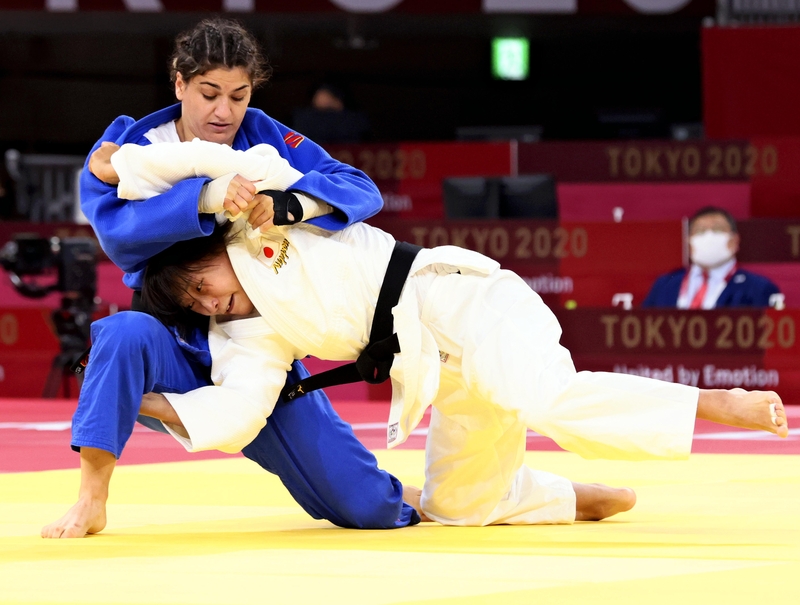
Junko Hirose lost out on a bronze medal in the 57-kilogram division of women's judo at the Tokyo Paralympics, failing to repeat her third-place finish at the Rio Games.
Hirose, 30, was only 26 seconds from victory over the world's top-ranked Zeynep Celik on Saturday. Hirose has never defeated the 25-year-old Turkish judoka, and she had prepared thoroughly to take her on.
At the beginning of the match, Hirose fended off Celik's attempt at a shoulder wheel and tried a shoulder throw. At the two-minute mark, Hirose earned a waza-ari point by carrying out a corner drop when Çelik again attempted a shoulder wheel.
Hirose tenaciously resisted Celik's uchi-mata technique as the clock ran down, but with just 26 seconds left, Chelik tied the score with a side drop, sending the match into overtime. Forty-six seconds later, Chelik earned a waza-ari point with another side drop and won the match.
"I gave it my all," Hirose said with a disappointed expression afterward.
When she was a fifth-grade elementary school student, Hirose came across a judo manga titled "Awasete Ippon" that inspired her to take up the sport.
"I wasn't good at ball sports or running, but I thought I could do a sport that not many people were doing," she said.
Hirose honed her judo skills during high school and participated in inter-high school competitions. After that, however, she stopped practicing judo to enjoy college.
Her eyesight eventually began to deteriorate due to an intractable disease, leading her to take up judo for the visually impaired. "After I became unable to do things that everyone around me can do, I sought something that I can work hard on," Hirose recalled.
In judo for the visually impaired, the two competitors grip each other's judo wear when starting their match. Able-bodied judo involves fighting for grips, and Hirose said she had been told not to put too much power into her grip. However, she soon found this didn't work in para judo. When she gripped her opponent loosely, she was immediately thrown.
"You have to figure out when to apply pressure and how to get your opponent off balance. I realized they're different sports," said Hirose, who is now familiar with both kinds of judo.
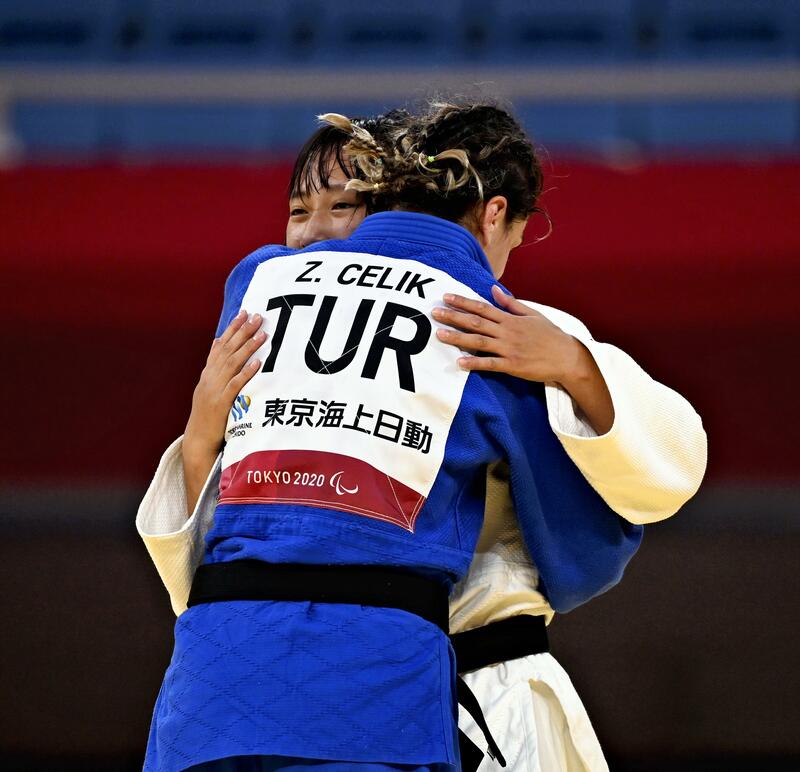
On Saturday at the Tokyo Games, Hirose lost in the quarterfinals, but in the repechage, she defeated her opponent in just seven seconds. The bronze medal contest was her fourth match of the day. After their fierce battle, Hirose and Cherik embraced in the center of the tatami, congratulating each other on a match well fought.
Hirose's husband Haruka, 42, is also her coach and represents Japan in the men's 90-kilogram division at the Tokyo Paralympics. The couple had aimed to both win medals, but it was not to be.
Before she became disabled, Hirose had practiced judo hard and couldn't enjoy the sport, she said. But her mindset changed after her husband urged her to "enjoy judo, so you can keep doing it for a long time."
They went through their tough training encouraging each other and smiling.
Hirose said even though she lost, she could keep looking forward, as Haruka told her: "This isn't the end of your life. Take it easy."
"When I get disappointed, Haruka is always there for me and helps me enjoy judo. I gave my all [to the Games]," Hirose said. "I want him to compete to the fullest as well."
Read more from The Japan News at https://japannews.yomiuri.co.jp/