My recent book is called Talking To My Country. It could just as easily have been called The Things We Hear, because in Australia, when it comes to race issues we too often suffer from selective hearing.
Herald Sun writer Andrew Bolt is someone I know and respect and we have vigorous and generous conversations. He has written an article which claims my view of Australia is too black and white. He says I speak too often of “my people” and not “our people”. Wrong. I speak of both.
Yes, my people are Indigenous people – more precisely Wiradjuri and Kamilaroi people. This is my ancestry, we share deep bonds of culture and kinship and history. I speak of my people as a Jewish person or a Greek person or an Irish person or a Chinese person may speak of “my people”. This is the beauty of our country, our identities can be layered and multifaceted and we can still be proudly Australian.
Take my speech on racism. Andrew Bolt quotes my references to how racism has impacted on my people. But he fails to mention an essential point of the speech: “we are better than this”. We, Andrew. Not my people or your people but we. As I said, the people who have stood with us – the soldiers who in the trenches of Tobruk served with my grandfather, a man who so believed in the power of “us” that he fought for a country that denied him citizenship, the people who voted in the 1967 referendum to bestow the full extent of citizenship on Indigenous people, my white grandmother, and my wife. We are better than this.
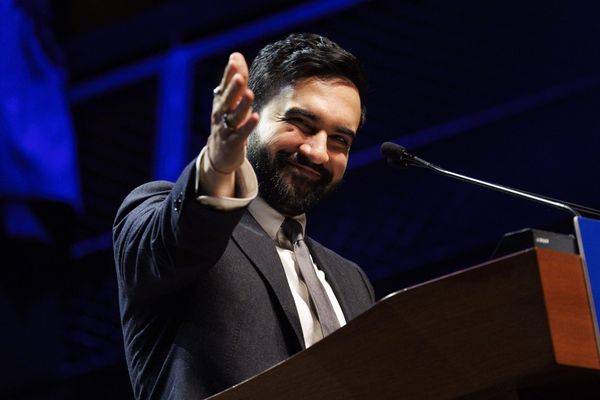
In my address to the National Press Club just last week I spoke of my family and how it has suffered and endured in a country that has at times in its history wished we would disappear. These histories leave a deep wound that sits in the souls and is worn on the bodies of Indigenous people – my people.
I spoke of how I walk with my people, but also of how I walk with my Irish ancestor John Grant, an Irish rebel banished to Australia but who made a new life and whose blood runs through my veins.
I spoke of how this history is our history – ours, all Australians. Take this excerpt from the speech:
So here we are all of us in this country – our country. Tethered to each other – black and white – the sons and daughters of settlers, the more recent migrants, refugees looking for haven and my people with tens of thousands of years of tradition. I have to accept you. You are in me and I am part of you. You can turn away from our plight but while you do our anthem will ring hollow. And I don’t believe that is who we are.
All of this is our story. These are events and faces and memories all set against the drama of this land. Our lives are pages of a history still being written, a story of a place and its people, the sins and the triumphs and how all of it has formed us.
Our history. We. Us. It has not always been easy for Indigenous people to identify with Australia because for most of our history we have been told we are not Australians. But, like my grandfather, I have always looked for a way in.
To ignore our history is to miss how it continues to shape the lives of Indigenous people. Our dispossession and suffering sit at the heart of the malaise that grips too many Indigenous communities.
Andrew Bolt says it is our violence and alcohol and drug addiction that kills us 10 years sooner than other Australians. Yes, it extracts a terrible price. Poverty in any community can be destructive. Poverty coupled with the legacies of our history is a potent mix.
But again, he is selective. Statistically, fewer Indigenous people consume alcohol than the rest of the population. But it is binge drinking that is excessive. Drinking born of a sense of hopelessness. We know this can lead to disproportionate rates of violence.
Andrew and I have discussed this and I share his concerns as he shares mine and we agree often on what is needed to improve the lives of Indigenous people. You and me Andrew: both of us Australians concerned for the plight of our fellow Australians.
He points to Queensland Liberal/National senator Jo Lindgren as an example of someone who is inclusive. Yes, she is. But senator Lindgren also identifies herself as an Indigenous person. She also speaks of “her people” the Munnunjarlli and Jaggera peoples. Because in the words of the prime minister Malcolm Turnnbull in his closing the gap speech earlier this month:
“A person’s right to shape their own identity – and for that identity to be respected – is central to the well being of all peoples.”