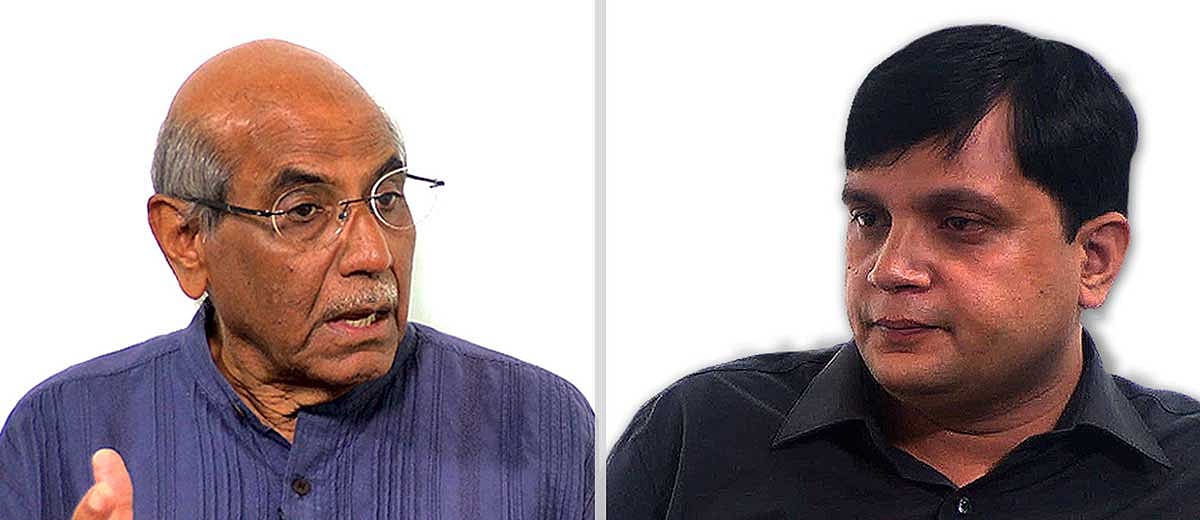
Having navigated India’s strategic efforts through choppy waters of Indo-US nuclear deal, climate change mitigation talks on high tables of international diplomacy and assignments across world capitals, India’s former foreign secretary Shyam Saran in his new book How India Sees the World- Kautilya to the 21st Century has embarked on a journey to trace the wellsprings of strategic thinking and statecraft in India and sharing his personal insights into some major foreign policy issues of his distinguished diplomatic career.
In a point of departure from attributing modern practice of diplomacy to western texts, Saran discovers a wealth of diplomatic insights in ancient Indian texts like Kautilya’s Arthshastra and Kamandaki’s Nitisara. Though he doesn’t see the book as a conventional memoir, he draws on his experiences as a career diplomat to look at some major trends and events in India’s engagement with the world against the backdrop of India’s post- Independence history.
He reflects on that quest in post-Cold War era and how it was central to Indo-US civil nuclear deal. Calling himself ‘biased’ in evaluating the deal, he argues that the deal can be credit with expanding India’s diplomatic space, breaking the nuclear wall and diversifying energy options for India.
Being a part of past rounds of climate change mitigation talks, he stresses on multipolarity in dealing with the global challenge and why India should take credit for doing far more than other developing countries for its climate change mitigation policies at home.
Talking about India’s neighbours, he identifies China as the biggest challenge and how India needs to understand various facets of this challenge. In wake of Doklam stand-off and its resolution, Saran argues that incremental nibbling at low-cost targets has been part of the Chinese strategy and needs to be reckoned with while emphasising that India needs to challenge the perception about the inevitability of China’s hegemonic rise.
On Pakistan, he bats for increasing costs for Pakistan’s hawkish stand against India while arguing that suspension of talks will not work as a deterrence for Pakistan. Use of soft power and people-people- contact find place in his prescriptions for dealing with the hostile neighbour on our western borders.
On Nepal, where he had an ambassadorial stint, he calls out Nepal’s political elite’s triumphalism over China as misplaced and dwells on how India should take note of new imperatives in leveraging historical Indo- Nepal ties.
Saran advocates a greater role for internationalism and multipolarity in a world which is increasingly facing global challenges like climate change, cyber security, epidemics, terrorism while lamenting that insular forces of nationalism are asserting themselves at the same time.
In a world of information technology-led public communication, he assesses the costs and benefits of what’s now called Twitter diplomacy. He also reflects on the role of media in foreign policy discourse. While acknowledging the role of media in building perceptions and contributing to information about issues of international engagements, he argues why diplomacy shouldn’t be vulnerable to pulls and pressures of public opinion and media commentary.
Amid all this, as an Indian Foreign Service officer of 1970 batch when the service attracted top rankers among civil services recruits, he reflects on why service is no longer the top pick of new generation of civil servants.
Newslaundry is a reader-supported, ad-free, independent news outlet based out of New Delhi. Support their journalism, here.