Nixon on screen, from the Checkers speech to Frost/Nixon and Watchmen
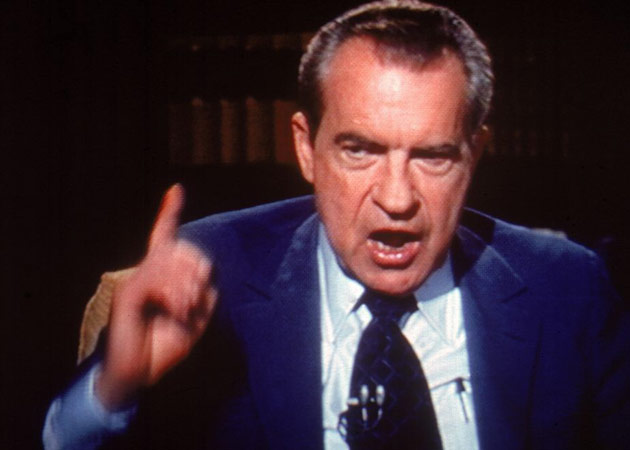
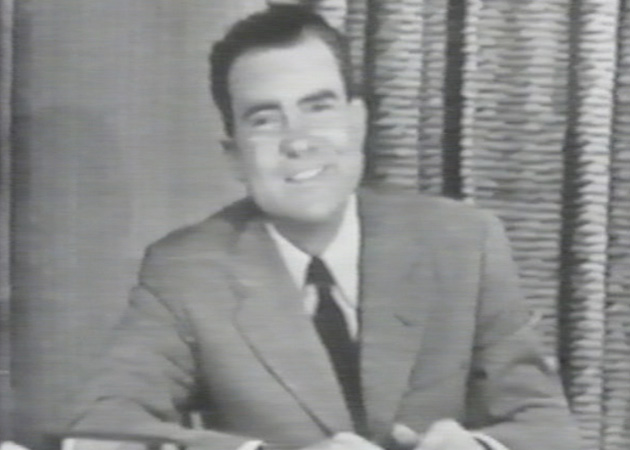
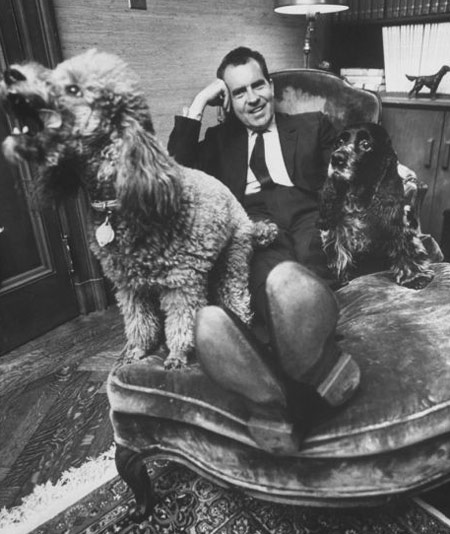
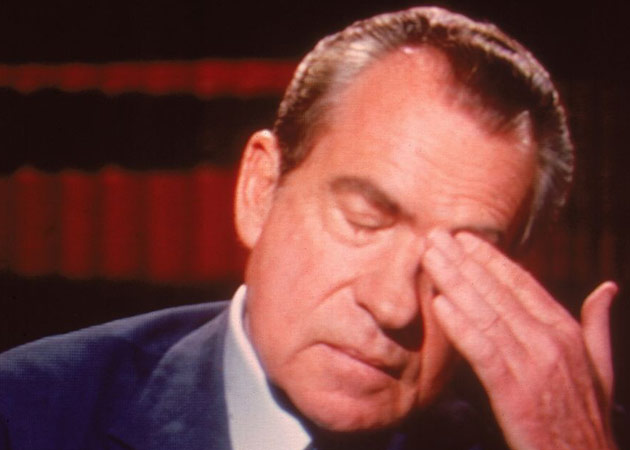
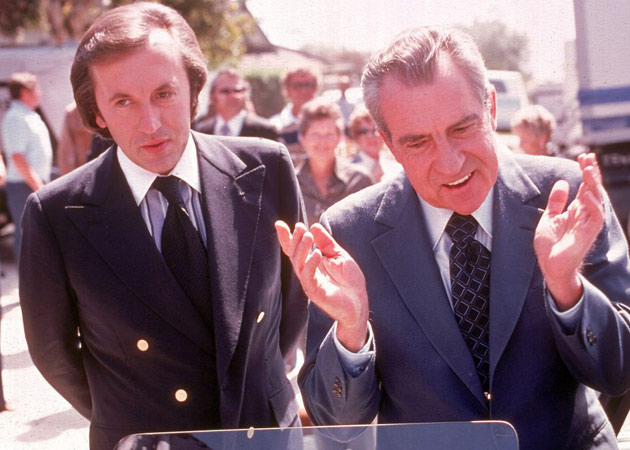
Richard Nixon being interviewed by David FrostPhotograph: GettyBoth television and shadiness were associated with Nixon’s career from early on. In 1952, when running as vice-president, he was accused of taking kickbacks, but offered a bravura televised self-defence that cannily exploited the young mediumPhotograph: Public domainThe scandal was dispelled and Checkers the cocker spaniel - pictured here with poodle Vickie - became a household namePhotograph: Getty
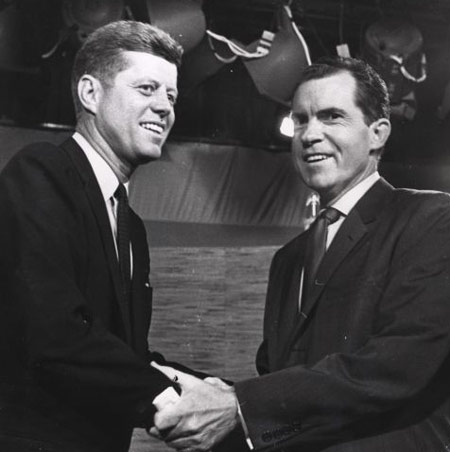
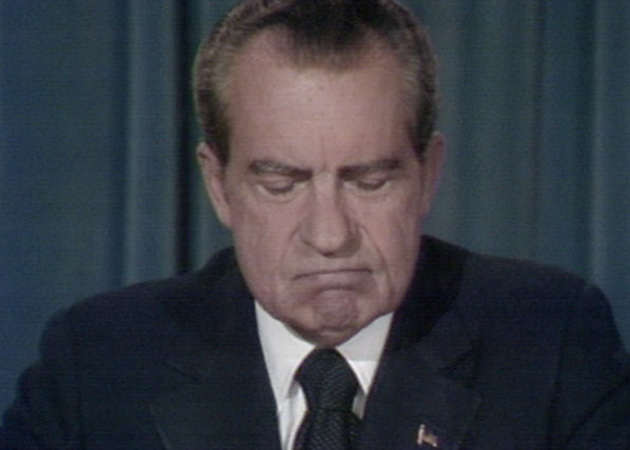
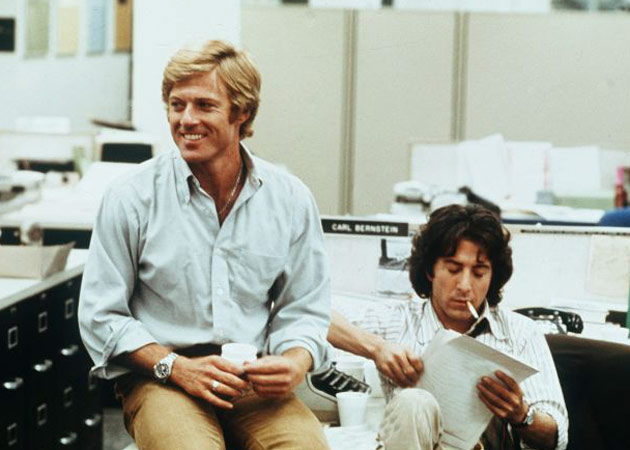
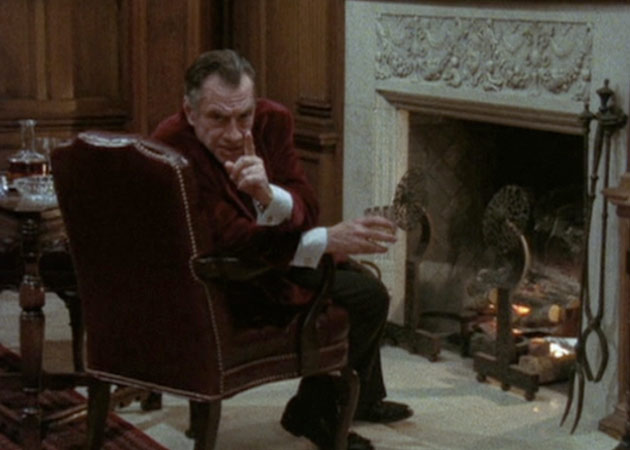
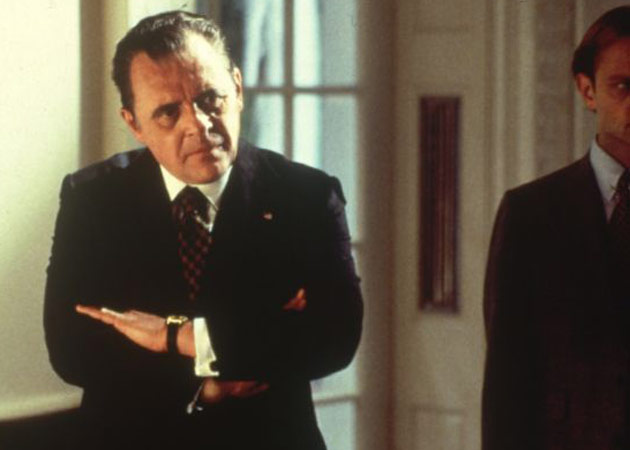
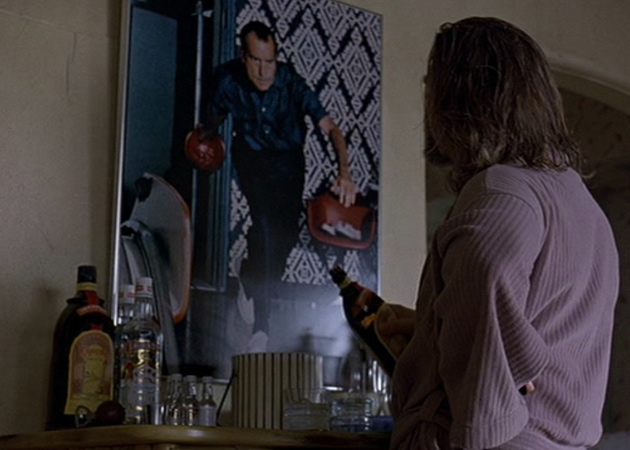
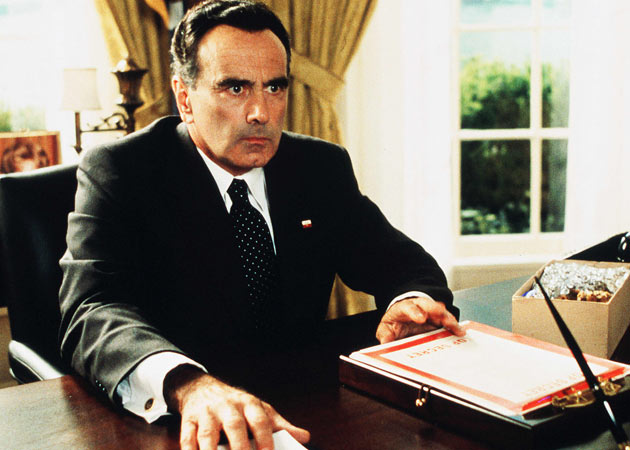
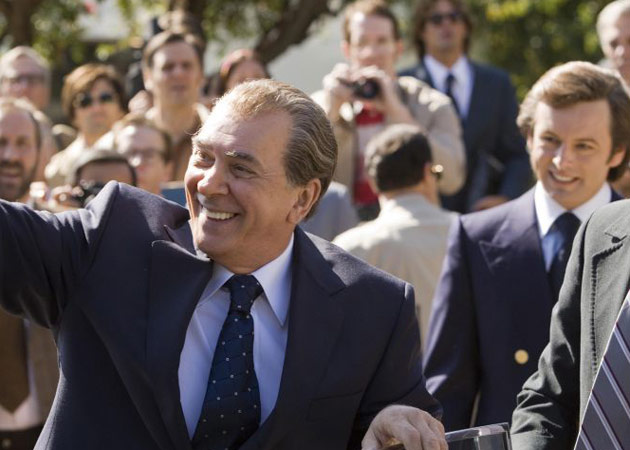
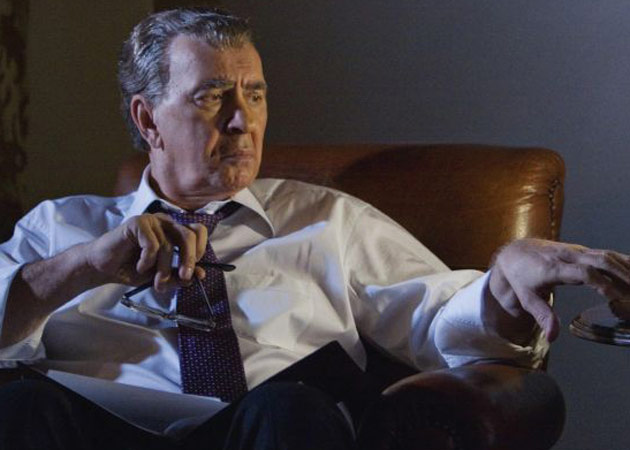
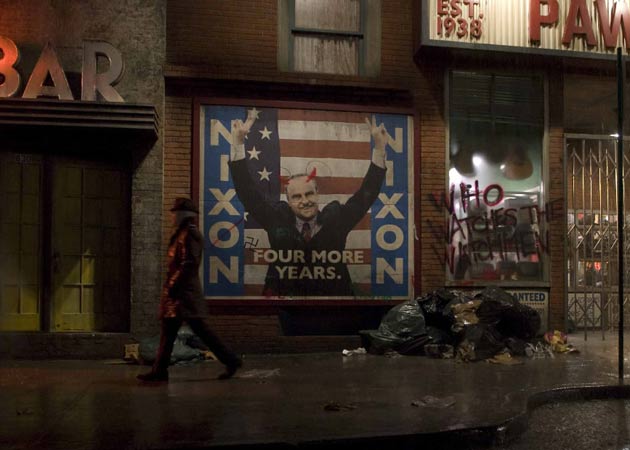
Television proved to be another in the long line of those that betrayed Dick Nixon, goddamit. The 1960 presidential race that pitted Nixon against John F Kennedy saw the advent of televised debates in which Kennedy’s smooth, handsome presence proved more effective than his unshaven, sickly and sweaty opponent. Although Nixon probably won on points, the race tilted towards JFKPhotograph: Public domainAlthough a 24-hour news cycle wasn’t even a glint in Ted Turner’s eye when Nixon resigned in 1974, his last stand offered compulsive viewing for a nation all but paralysed by governmental scandal – from the burning indignation of his formal resignation address ...Photograph: Public domain... to his defiant two-fingered salute as he boarded the chopper that bore him awayPhotograph: GettyThe Washington Post's Watergate coverage by Bob Woodward and Carl Bernstein was the basis for All the President's Men (1976), starring Robert Redford and Dustin Hoffman. Although Nixon hangs over the scandal like a bad smell, he is only glimpsed in onscreen news broadcasts, preparing to address Congress and taking the oath of office for a second timePhotograph: KobalIn 1977, Nixon agreed to a series of interviews with David Frost, apparently under the belief that they could yield respect and credibility for the disgraced former president. Instead, they became known for the moment in which, in unforgiving closeup, Nixon admitted to failing the American people. The episode is the basis for Peter Morgan’s play, Frost/Nixon, now a movie by Ron HowardPhotograph: GettyBased on a stage play, Robert Altman’s chamber piece Secret Honor (1984) stars Philip Baker Hall as a broken, paranoid and self-pitying Nixon. Ostensibly preparing a tape-recorded legal defence of his actions, Hall’s Nixon regularly lapses into fury, sentimentality, despair, even suicide. Altman insisted Hall reprise his stage role and it proved to be the actor’s big-screen breakthrough. He was 53Photograph: Public domainOliver Stone is to understatement what Richard Nixon was to candidness and transparency in Nixon (1995). Stone’s biopic aims to deliver a Shakespearean psychological portrait of a man consumed by tragic, self-defeating ambition and bitterness at the Kennedy clan’s success – and partially succeeds, thanks in no small part to Anthony Hopkins’ extraordinary performance as Tricky DickyPhotograph: KobalThe Big Lebowski (1997), the Coen brothers’ oddball paean to Raymond Chandler, White Russians and weed, is a compendium of crazy contrasts – like, for example, the poster of Richard Nixon bowling that hangs above the Dude's mantelpiece. The photo – which is genuine – was taken at the White House lane, and was reportedly intended to make Nixon seem more personable. If so, it failedPhotograph: Public domainIn the comic caper Dick (1999), two ditzy high-schoolers (Kirsten Dunst and Michelle Williams) visit the White House and strike up an unlikely friendship with Nixon – played by Dan Hedaya, whose hangdog scowl makes him perfect casting. Surprisingly, the president initially seems cuddly and approachable, especially after eating the girls’ pot brownies, but turns out to be ... Well, the clue’s in the namePhotograph: KobalReprising his successful stage performance, Frank Langella brings bearish physicality and a disarming twinkle to his depiction of Nixon as a sly but not unsympathetic operator in Frost/Nixon (2008)Photograph: KobalEntering into a series of interviews with David Frost (Michael Sheen) under the impression that his interlocutor will be easy prey, he is forced to confront both his guilty conscience ... Photograph: Getty... and the power of the TV closeupPhotograph: KobalIn Zack Snyder’s forthcoming Watchmen, as in the graphic novel by Alan Moore and Dave Gibbons on which it’s based, Nixon has overturned the 22nd amendment and stayed in office long beyond the conventional two terms. In the comic book, to which Snyder has declared he has been faithful, Nixon is seen huddled, paranoid, over the nuclear button – the ultimate index of a broken societyPhotograph: PR
Sign up to read this article
Read news from 100’s of titles, curated specifically for you.