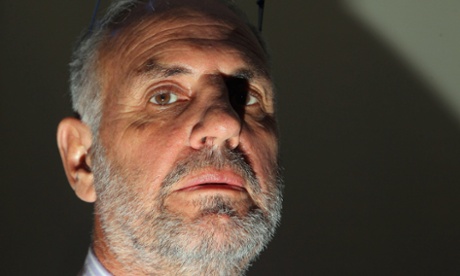
A 45-year-old Perth man who used a euthanasia drug to take his own life was clearly competent and there was no misconduct by controversial doctor Philip Nitschke in failing to intervene, a tribunal has heard.
Nitschke, the director of the pro-euthanasia group Exit International, sat before the Northern Territory medical tribunal in Darwin on Tuesday, appealing for the return of his right to practise medicine.
Nitschke had his registration suspended in July following an allegation in an ABC7.30 report that the doctor had counselled a depressed but otherwise healthy man, Nigel Brayley, to take his own life after the pair met briefly at an Exit International workshop in Perth.
Brayley killed himself with an illegally imported euthanasia drug after police changed their investigation of his wife’s death to a murder inquiry.
Using emergency powers to suspend Nitschke, the South Australian division of the medical board of Australia said it acted in order to “keep the public safe while other investigations or processes continue”.
On the second day of the tribunal on Tuesday, submissions by the medical board alleged Nitschke had a duty to intervene when Brayley told him he intended to kill himself.
But Nitschke’s lawyers have maintained that he was not Brayley’s doctor and was not bound by any duty. They used the example of where a doctor cannot force treatment on a patient who refuses a blood transfusion for religious reasons.
The medical board’s lawyer, Lisa Chapman, argued that misconduct was not limited to doctors within a doctor-patient relationship.
“It’s not a matter or saying ‘I’m going to decide when I wear that hat.’ The legislative scheme is that you wear that hat all the time,” Chapman said.
Arguments around the definition of rational and irrational suicide and the impact that has on the duty of a doctor were also extensively explored.
On Tuesday, Nitschke’s lawyer, Peter Nugent, argued that emails between Nitschke and Brayley showed that his client did assess the man, despite having no professional obligation. When they met a second time, Nitschke suggested to Brayley that he should seek further help but Brayley made it clear that he did not want to follow that advice, Nugent said.
It was clear from a number of factors – including Brayley’s apparent intelligence and coherent communications via email – that he was competent and was making his own rational decision, Nugent said. Brayley also indicated in emails to Nitschke that he had sought professional medical help, including with an employee assistance program.
His final note said the reason for his suicide was “the ongoing harassment of the WA police, crimes squad and ... one particular detective” over his wife’s death.
“Whether there is any truth to the rumours of police concerns that he may have played a part ... Mr Brayley’s perception was that he certainly was a subject in the investigations,” Nugent said.
Nugent maintained that Nitschke had offered help to Brayley but it was refused.
“If Mr Nitschke had sought in some way to restrain Mr Brayley he would have committed a trespass on him. If the board says Mr Nitschke should have done more, and the doing more would have constituted a criminal act, it cannot be right that his registration be suspended.”
The chair questioned the relevance of points made by Nugent which rested on information obtained after Brayley’s death, such as the police investigation. “You haven’t taken us to any of the material on which your client did the assessment. You’ve taken us to the post mortem material.”
However, the medical board claimed that public statements by Nitschke relating to his meetings with Brayley were inconsistent, and did not mention the second meeting.
“[Nitschke] has had an opportunity before this tribunal to place before you sworn evidence regarding his meetings with Mr Brayley and he’s chosen not to do so,” said Chapman, adding that Nitschke also had an opportunity to say he made an assessment based on the email, as asserted by his lawyers this week, but did not do so.
“It’s unsatisfactory because Dr Nitschke now wants to heavily rely on this second meeting in his favour, and my submission is that it is unsatisfactory,” she said.
Nugent told Guardian Australia outside the hearing that the tribunal had not focused on the email from Brayley “which refers to the very meeting they’re suggesting may not have occurred.”
“It’s very clear what actually happened. There was the [Exit International] workshop, and then a meeting at the town hall a short time afterwards. And it was at the second meeting – a short meeting, sure – where Philip made the suggestion that maybe [Brayley] would wish to speak to someone else and get some kind of counselling or assistance.”
It was revealed on Monday that the medical board has referred 12 other matters of alleged professional misconduct by Nitschke to the tribunal, to be heard at a later date regardless of whether Nitschke is successful with the current appeal or not.
The hearing continues.
• For information and support in Australia call Lifeline on 13 11 14, Mensline on 1300 789 978 or Beyond Blue on 1300 22 4636.