Nissan Motor Co., Renault SA and Mitsubishi Motors Corp. announced Wednesday plans to strengthen their alliance. They decided to review the alliance based on their reflections that the existing cooperative relationship has not produced the results they had expected. All three companies are facing an increasingly tough business environment due to the spread of the coronavirus, making reforms urgent.
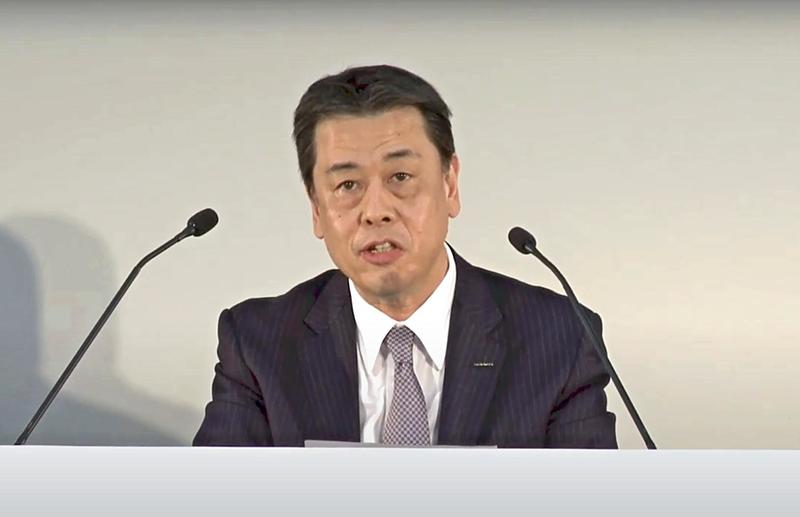
"Now is the time to do this, when we are facing the coronavirus crisis," said Nissan President and Chief Executive Officer Makoto Uchida in an online news conference on Wednesday.
Key to the new partnership strategy is a framework of designating the so-called "leaders" and "followers" for projects. In the framework, the equipment and technologies of competitive "leaders" in certain areas will be shared to more efficiently develop new cars. By clarifying the responsibilities and roles of each company, the alliance hopes to deepen their cooperative relationship.
In 2017, the coalition of the three companies set goals in their first partnership strategy, including "more than 14 million units annually sold" and to have "the economic effects of the partnership reach 10 billion euros (about 1.17 trillion yen)."
The goals were set out under the leadership of Carlos Ghosn, who was the top executive of the three companies, but only the figures in the goals remain, without many achievements to speak of.
It is difficult to say the alliance has had a strong effect.
The alliance "has pursued its expansion strategy too much," said Mitsubishi Motors Chairman Osamu Masuko.
Many people have made similar comments. There have also been complaints the projects the companies were working on were prolonged.
"It has been rather costly," said a senior official of the alliance.
The new strategy calls for increasing the models to be developed and produced under the new framework of the alliance to comprise nearly half of the total by 2025. The new strategy is apparently based on lessons learned from the high-cost structure of the past. The strategy has made it clear the alliance will promote cost reduction by focusing on items that are easy for each company to work together on and that can achieve results.
However, cooperation in development and production has been announced many times in the past. In some cases, coordination was difficult because each company had its own plan based on its own vision. Unlike the days when the authority of the three companies was concentrated in the hands of Ghosn, the three companies now play their respective roles independently, and even more attention is being paid to their effectiveness.
"They have established a structure that places maximum emphasis on efficiency, but they have finally reached the starting line," said Takaki Nakanishi of Nakanishi Research Institute Co. "I think coordination from now will be their biggest challenge."
Read more from The Japan News at https://japannews.yomiuri.co.jp/