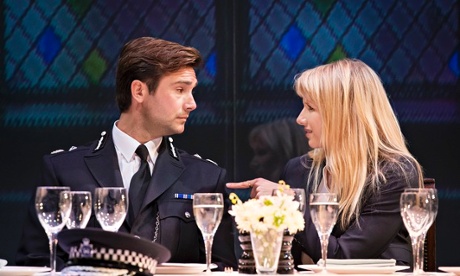
There’s nothing like a good scandal – particularly where artists are concerned. Over the centuries, writers, singers and painters have turned to history, headlines and gossip for inspiration. The latest succès de scandale is Richard Bean’s new play Great Britain, inspired by the phone-hacking scandal, which transfers from the National Theatre to the West End in September. Here are nine other works of art that turned the secrets of the boardroom and the bedroom into entertainment for the masses.
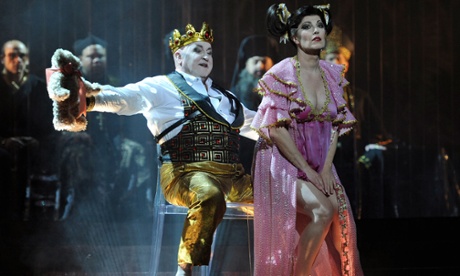
1. Salome and Herod
The Bible reported the scandalous goings-on in the first century court of Herod II, who lusted after his stepdaughter (usually identified as Salome) and ended up giving her the head of John the Baptist on a plate. Over subsequent centuries Salome has inspired more works of art than any other scandal queen: Byzantine mosaics, paintings by Cranach, Titian and Moreau among others, and a play by Oscar Wilde, himself no stranger to scandal (see below). Richard Strauss based one of his greatest operas on Wilde’s play, and as soon as cinema was invented, film-makers fell over themselves to get Salome on screen. Theda Bara and Rita Hayworth both played the dirty dancing girl.
2. Edward II and Piers Gaveston
Fourteenth-century frolics in the court of Edward II inspired Christopher Marlowe’s masterpiece, one of the greatest history plays in English theatre. The King was married to Isabella of France, but like many a royal before and since, he already had a relationship with someone else, in Edward’s case the young nobleman Piers Gaveston. Given the lack of a phone-hacking tabloid press at the time, we don’t know the details, but Edward’s affection for Gaveston was enough to send the Queen and the barons into a rage that ended with Gaveston’s execution after a show trial in 1312. Marlowe’s account of the affair and its aftermath have cemented the idea of Edward and Gaveston as gay martyrs.
3. Lancelot and Guinevere
Sir Lancelot may not actually have existed – the scholarly jury’s still out on that one – but that hasn’t stopped his affair with Queen Guinevere from becoming one of the most retold scandals of all time. It’s a typical story: he was young, handsome and too good to be true, she was the boss’s wife, and when King Arthur wasn’t looking they got busy all over Camelot. Secrets and lies did their work, and before you knew it the Round Table was in pieces and the lovers were dead. English audiences know the story best as the centrepiece of Thomas Malory’s Le Morte d’Arthur, and it went on to feature in dozens of films and shows, from Camelot to Spamalot.
4. Oscar Wilde and Lord Alfred Douglas
Oscar Wilde was a superstar writer and no stranger to London’s secret gay nightlife. Alfred Douglas, alias Bosie, was the pretty young son of an aristocratic family. They met in 1891 and embarked on an amour fou – particularly fou as the penalty for homosexual activity was imprisonment and hard labour. Bosie’s father, the repulsive Marquess of Queensberry, spoiled the fun by accusing Wilde of sodomy, setting the ball rolling for a series of trials that landed the writer in prison. Wilde turned the scandal into high art – The Ballad of Reading Gaol, one of his greatest poems – and it has subsequently inspired films such as The Trials of Oscar Wilde and the Stephen Fry/Jude Law Wilde.
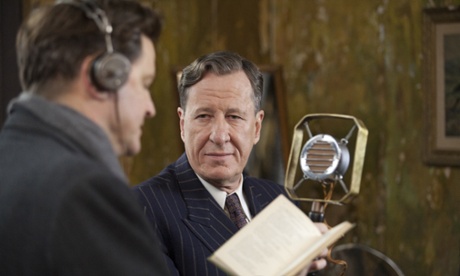
5. Edward VIII and Wallis Simpson
Scandal doesn’t get much juicier than Edward, Prince of Wales’s affair with the divorced, married Wallis Simpson. They met in 1931 and became lovers three years later; the Prince had already had a string of mistresses, while Wallis had sowed her wild oats far and wide. All might have been well if the Prince’s father, King George V, hadn’t died in 1936 at the height of the affair, forcing the heir to choose between love and duty. Film and TV producers can’t seem to leave the story alone. The 1978 series Edward and Mrs Simpson gave a full and frank account of the scandal, it was an important part of The King’s Speech and, more recently, Madonna worked her special brand of directorial magic in the 2011 film W.E..
6. The Duchess of Argyll
The woman born Margaret Whigham in 1912 was notorious for her marriages, affairs and voracious sexual appetite when she married the Duke of Argyll in 1951. She hadn’t been faithful to either of her previous husbands, and saw little reason to change. The suspicious, drunken Duke broke open his wife’s private desk and found photos of the naked Duchess giving oral pleasure to an anonymous, cropped friend – the “headless man” of newspaper headlines. The divorce trial was a sensation, and the Duchess lived until 1993 on the notoriety. In 1995 she rode again in Thomas Adès’s opera Powder Her Face, libretto by Philip Hensher, which set her amours to music and even includes a blowjob aria.

7. The Profumo Affair
Showgirl Christine Keeler’s affair with John Profumo, Secretary of State for War in Macmillan’s government, was without doubt the greatest scandal of the 1960s. Keeler’s messy love life involved gangsters and Russian officers; it was only a matter of time before the scandal broke, and Profumo, after denying everything, made a clean breast of it in 1963 and resigned. Keeler became even more notorious in a series of trials, and served nine months in prison for perjury. Her fame was resurrected in the 1989 film Scandal, an elegant and sympathetic account of her career, starring Joanne Whalley-Kilmer and John Hurt.
8. Watergate
Watergate confirmed what some people had believed for a long time: American politics was rotten to the core. In a wheeze worthy of House of Cards, President Nixon’s administration burgled the opposition’s headquarters, stole cash, secretly taped conversations and used the FBI, the CIA and the IRS as a kind of private army. Needless to say, Tricky Dicky denied all knowledge, and sacrificed senior staff members left, right and centre. In 1974 he was forced to resign – the only US president to do so. Carl Bernstein and Bob Woodward, two of the journalists who investigated the scandal, wrote a shattering book All the President’s Men, which inspired a film starring Robert Redford and Dustin Hoffman.
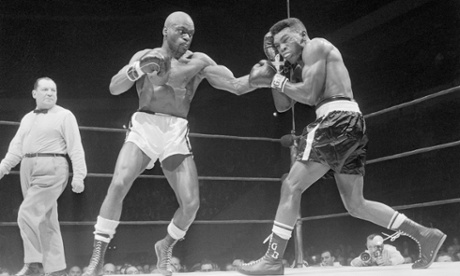
9. Rubin “Hurricane” Carter
Bob Dylan was so incensed by the shabby trial and wrongful imprisonment of boxer Rubin “Hurricane” Carter that he wrote one of his best and angriest protest songs about it, Hurricane (1975). The story started in 1966, when Carter and a friend were arrested in connection with a triple homicide in New Jersey: forensic evidence was at best patchy, but Carter was convicted anyway, and spent the best part of 20 years in prison. Dylan’s song gave publicity to Carter’s case, but it took another 10 years for him to be released. The story was also told in a novel by Nelson Algren, and a film starring Denzel Washington.
Great Britain transfers to the Theatre Royal, Haymarket, London, on 9 September 2014.