
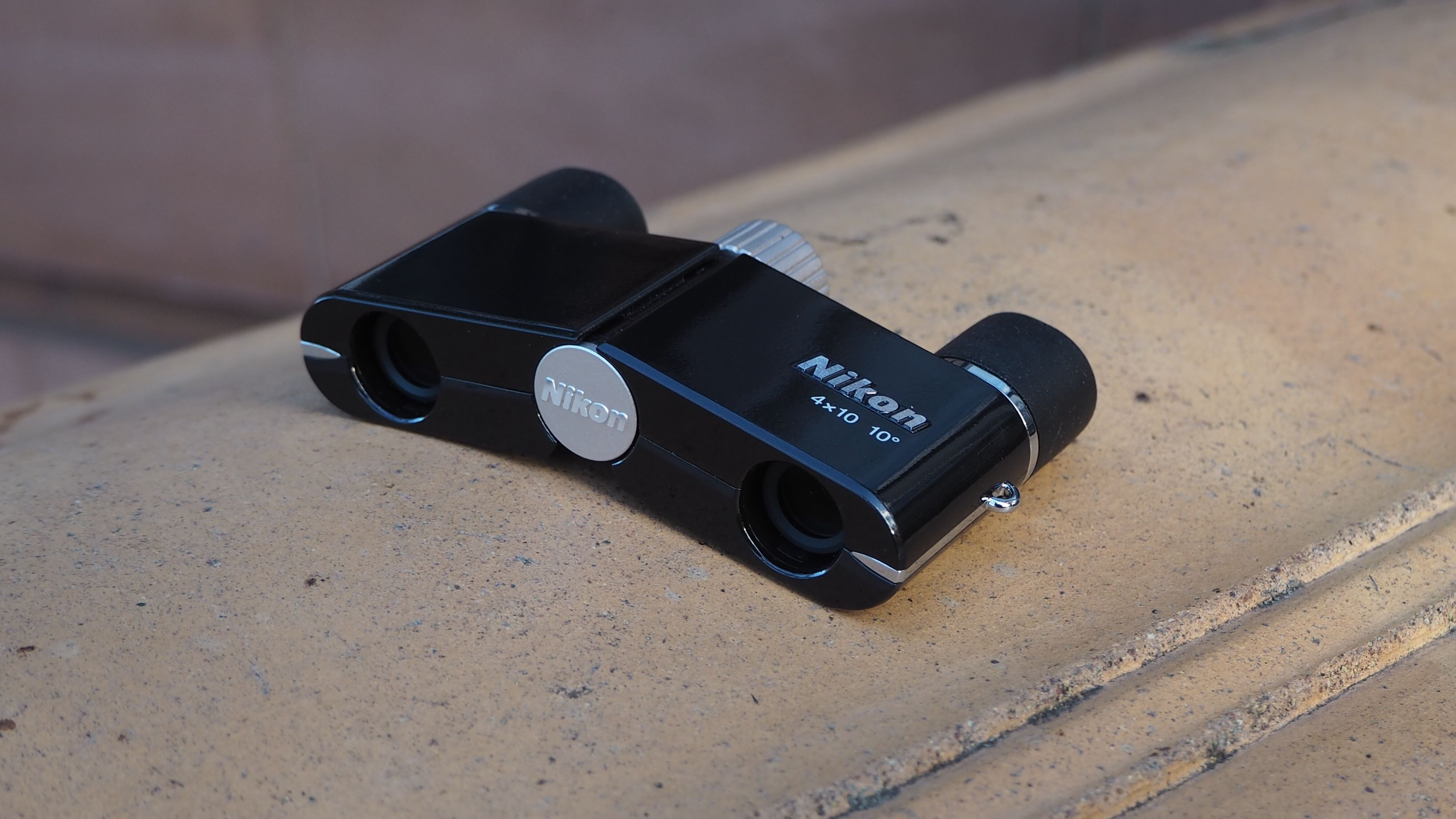
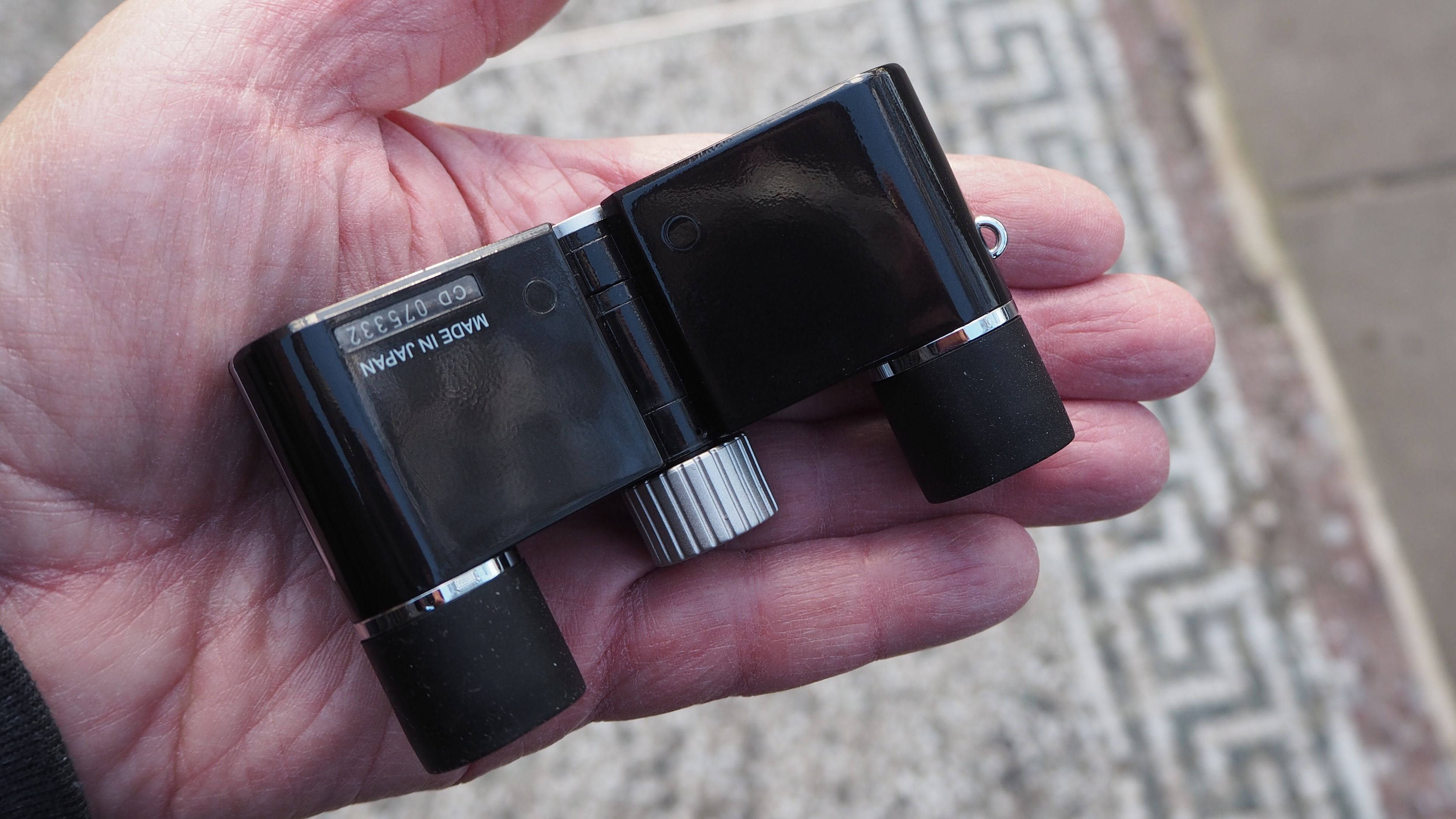
Just in time for panto season, Nikon’s 4x10D CF binoculars have arrived on the DCW test slab. With their dinky, almost business-card-sized length and width, plus 19mm ‘thickness’ comparable to my thumb, they could also be described as opera glasses.
Availability is currently offered in black, ivory-white, or amber-brown, though I have also seen wine-red, navy, and champagne-gold alternatives online. I was sent the black option for review, which would be the colorway I’d personally choose, especially for surreptitious use in a theater setting where I don’t want to be a distraction and annoy my seated neighbours.
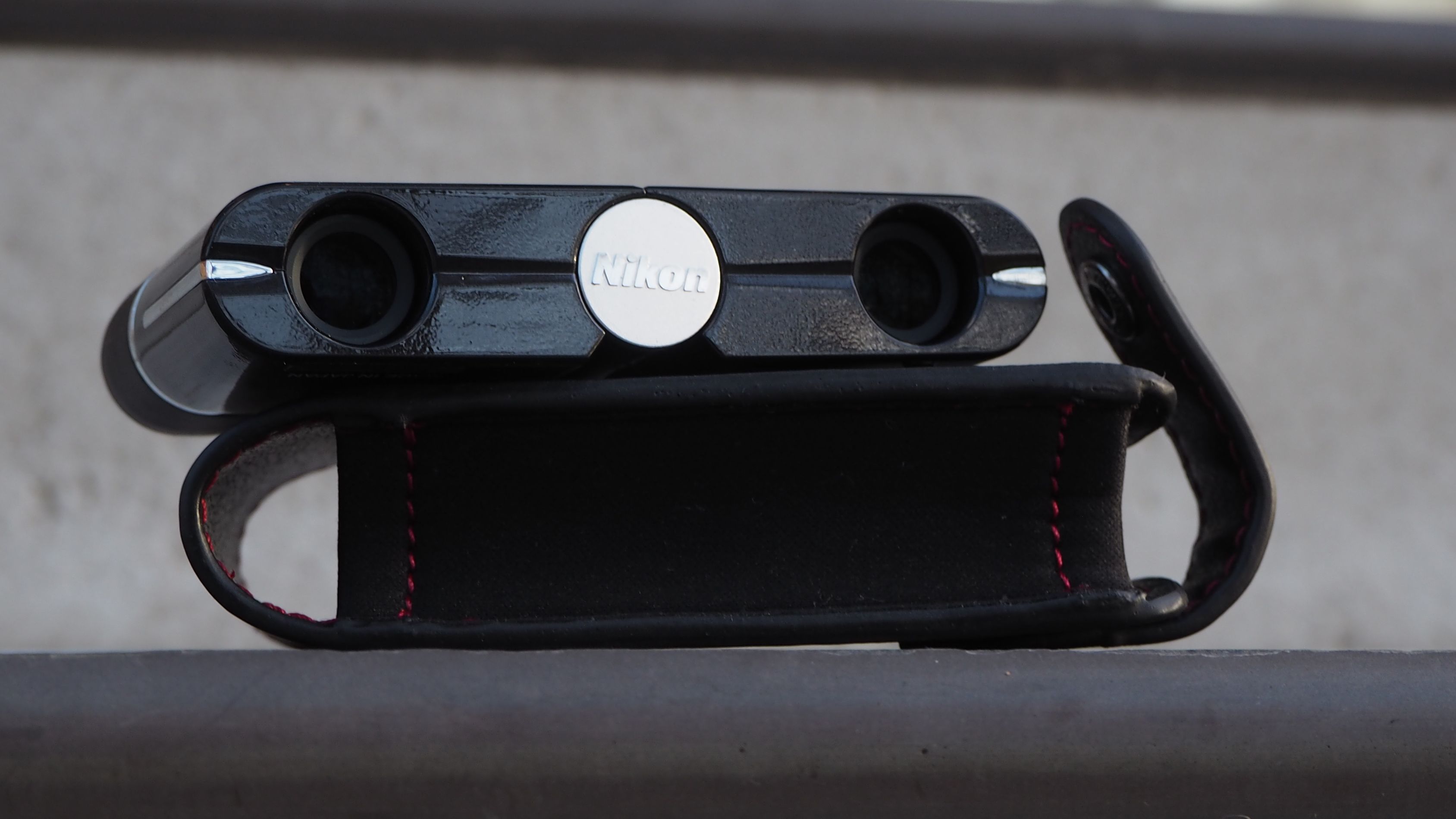
Like opera glasses, they’ve obviously been designed to fit easily into a pocket or handbag. There's no need for a thick supporting neck strap here, as with binos designed for birdwatchers. However, Nikon has been thoughtful enough to include a very slender wrist strap for threading through a left-hand lug, which is useful for avoiding mislaying your investment when watching a show in a busy venue.
When folded to their narrowest proportions, the 4x10D CF will fit within the tub of an overpriced theater ice cream, so alternatively they’ll slip into a pocket without a second thought.
And yet, has achieving such a compact, lightweight construction compromised performance? Is the asking price fair, or would it be better spent on a pre-theater dinner and taxi ride home, or a cheaper, near-doppelganger from a lesser-known brand?
Nikon 4x10D CF: Specifications
Magnification |
4x |
Objective lens size |
10mm |
Field of view at 1000m |
175m |
Eye relief |
13.7mm |
Minimum focus distance |
1.2m |
Dimensions |
52 x 93 x 19mm (2 x 3.7 x 0.7in) |
Weight |
65g |
Nikon 4x10D CF: Price
Having handled and used these binoculars before looking up the price, I was surprised to find them retailing for a manufacturer’s suggested $224.95 / £199 / AU$299. Okay, so we’re getting Nikon's optical expertise here and are paying a premium for it, rather than the cost of a budget, no-brand offering. But they do feel very highly priced in the current market.
For example, alternatives such as the Carson 4x10 Operaview, which are even lighter at 62g, can be had for a third of the asking price of these Nikons. As ever, it pays to shop around. Discounts, should they come over time, may help tip the balance more in favor of a purchase for those reassured by a more widely known brand with a long and illustrious heritage.
Nikon 4x10D CF: Design & Handling
With a roof prism design and multi-coated lens and prism construction, the chief claim here is that these are Nikon’s smallest and lightest binoculars to date, at a ‘thickness’ of 19mm and a mere 65g in weight.
The design is more low-key than your typical opera glasses, which tend to opt for more obviously classical styling and gold-rimmed lenses. By contrast, Nikon’s effort is distinctly modernist and practical rather than posh. Although the house lights reflected in the glossy, lacquered look of my review sample as I took my seat, spotlighting an understated elegance.
The slick finish hides some more disappointingly plasticky elements, including the focus dial. This is readily adjustable in the dark and offers just the right amount of resistance. But it still looks a little like it has tumbled out of a Christmas cracker when examined in less forgiving daylight.
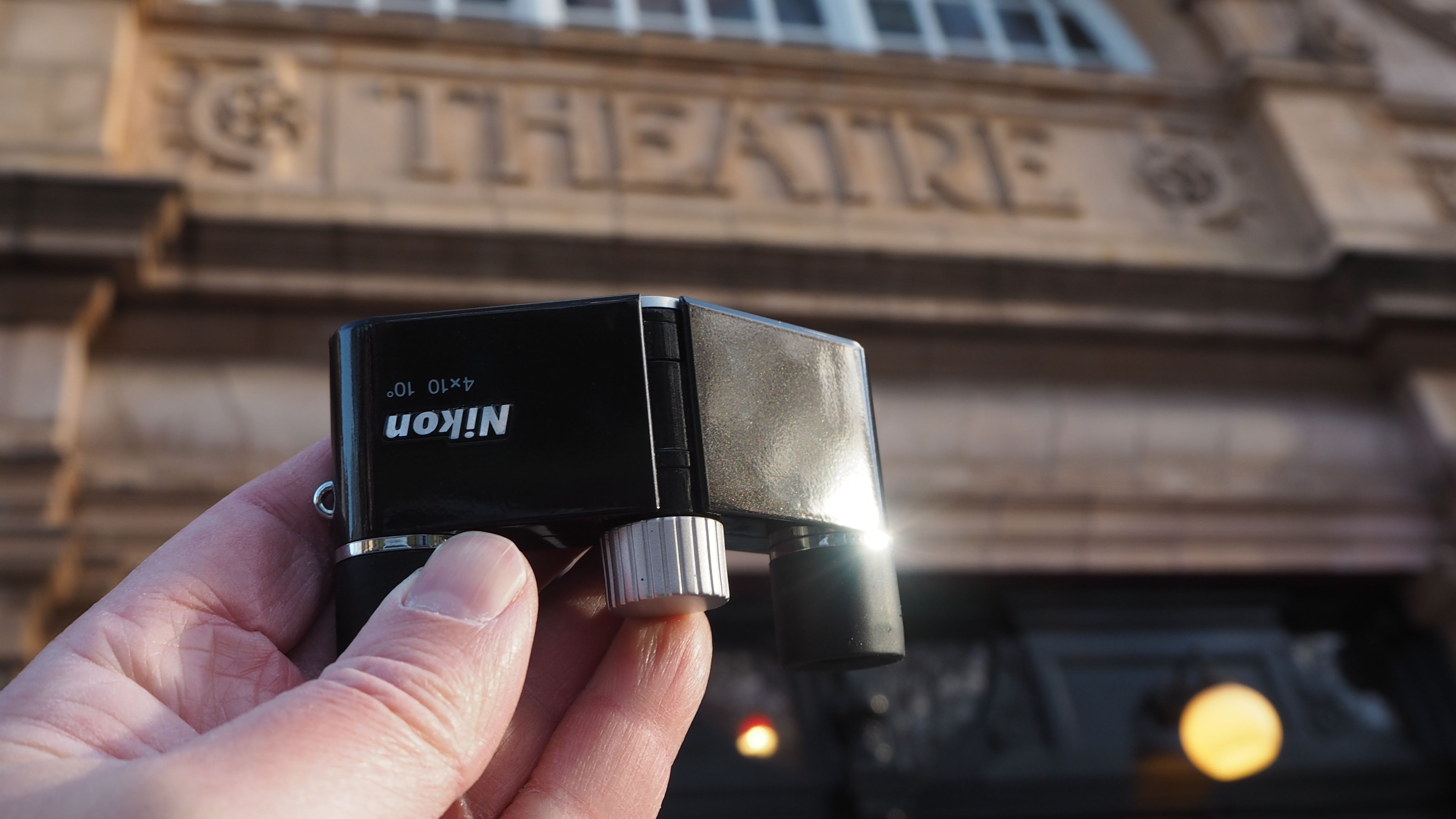
More positively, the operation of these Japanese-made binoculars includes a central folding mechanism that instantly adjusts the interpupillary distance between the eyepieces to best match up with your own eyes. A soft rubber surround on the eyepieces adds a tactile feel while also preventing injury if accidentally jabbing them into your eyes in the dark. That’s a possibility, as they’re far narrower than the large, rounded eyepieces of more conventionally sized binos.
To be picky, the focus wheel can also butt up against the bridge of the nose when in use, as that control sticks out at the back. Its positioning does, however, allow for quick-and-easy focus adjustment without affecting concentration – useful when panning across a stage and shifting attention between actors in a play.
Nikon 4x10D CF: Performance
What I did notice, in the theater, is that the view I had through these binoculars was dimmer than the same view seen with the naked eye. However, unlike my own eyes, they did allow me to zoom in closer to the action. The delivered view was clear enough for me to more easily ‘read’ actors’ expressions from my seat in the upper circle than I would have been able to without them.
Partly because of their modest magnification, the field of view here is wider than some more professional binos. So I was able to keep subjects within my frame and follow them around the stage – even during complex, choreographed dance sequences involving multiple performers.
In this sense, the binoculars did allow me to enjoy the performance more, and while I didn’t feel the need to hold them up to my eyes constantly, they added an extra dimension to what I could take in.
Whether this means these ultra-compact binoculars/opera glasses are worth the asking price is another matter entirely, however. The Nikon 4x10D CF is a costly pair of binoculars. You’ll feel this too, if looking at an outwardly very close alternative in the Carson 4x10 Operaview. There are also Nikon’s own compact Aculon T01 10x21 binos, with higher magnification and larger objective lenses, at less than half the price of the 4x10D CF.
Nikon 4x10D CF: Verdict
To my mind – and eyes – the Nikon 4x10D CF are useful but not without compromise. Sure, ultra-compact pocket binoculars appeal for their extreme portability and unobtrusive size; they're certainly convenient. But small optics also mean a rather dingy view at a venue, unless the stage lights are spectacularly bright.
While a perfect size for theatergoers and smaller, even, than those found latched to the back of some theater chairs, the compact dimensions and plasticky finish also make these Nikons appear noticeably toy-like.
Plus, smaller, when it comes to tech, is not necessarily always better. A bigger lens means a brighter view – which is what I want in a dark venue, although this necessitates bigger binos overall. Here, Nikon gets the job done, but you’d have to really want to go as small as possible to part with the cash.
|
Features ★★★☆☆ |
At a mere 65g, these Nikons weigh less than most chocolate bars. Their dinky dimensions also ensure I won’t be inconveniencing anyone else when taking them to the theater to get four times closer to the action. |
|
Design ★★★☆☆ |
A central folding mechanism plus large circular focus dial at the back makes for quick, fuss-free, and intuitive operation, while soft rubber eyecups and a glossy finish helps disguise the more plasticky elements. |
|
Performance ★★★★☆ |
While a small 10mm objective lens makes for a dimmer view than when observing with the naked eye, getting four times nearer certainly has its benefits if you're high up in cheap seats. |
|
Value ★★☆☆☆ |
This is where the Nikon falls down. It’s priced at a premium, and even if a glossy finish, reasonable clarity in dim lighting, and a faux leather carry case go a little way to help justify the outlay, they still feel overpriced. |