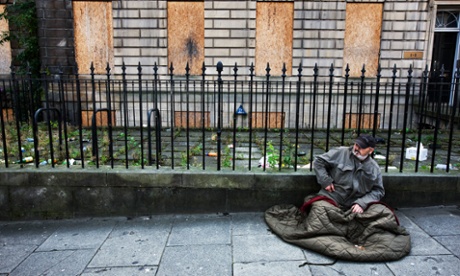
When Glyn found himself homeless at age 51, he was almost pleased to find out he’d be spending a few weeks at Winchester Churches Nightshelter. A former officer in the Royal Signals fluent in German, he likens his new sleeping quarters to a luxurious barrack block.
Before being evicted from a shared house, Glyn used to volunteer at a drop-in centre for rough sleepers in Basingstoke, where he had heard people speak highly of Winchester’s shelter – and not so highly of others. He was especially keen to avoid one Basingstoke hostel known for violence and drug-taking: “I would rather cut off my own leg than spend a night in that place,” he says. He’s not the only one: fellow Winchester resident Chris, 34, used to choose nights on the street over a bed in some of Hampshire’s other shelters.
Glyn lost his home in the private rented sector after a psychotic outburst that happened when he stopped taking medication for post-traumatic stress disorder. “Ten days later I’ve got my housemate pinned to the wall with a knife against his throat,” he says. “That’s not me. I’m not a violent person. The worst part of it is not remembering.”
But Glyn, a chef in his spare time who has just finished marinating meatballs for Winchester Churches’ 17 residents, is hopeful about his future. “I have seen a lot of documentaries about homeless people in larger cities. Pretty grim places,” he says. “But this is almost like a hotel. It’s got everything that a person needs. It has all the people there to help you move on.”
More than just shelter
When it was established in 1988, Winchester Churches Nightshelter’s origins were typical to many shelters: camp beds erected in a church hall, packed away in the morning and moved on to the next hall. With no regulation on alcohol and a first come, first served policy, violence was prevalent and assistance was short-term and unfocussed.
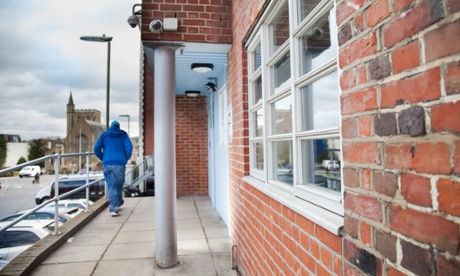
But the shelter – now a charity – has since evolved. It now has a dedicated 10-bedroom property, formerly a Victorian gasworks, which prioritises the most vulnerable and provides access to a full-time advocate, three counsellors, computer training, financial advice, cooking lessons, tenancy training, work experience and nightly breathalyser tests to ensure residents don’t exceed the drink-driving limit.
Those in charge at Winchester are considering rebranding to avoid being stereotyped. “We’re masses more than just a night shelter,” says Michele Price, Winchester’s manager. “The word ‘nightshelter’ has negative connotations – people still think of the old one room with 25 beds, drugs and alcohol and chaos. We have to move with the times.”
It is a decision that has already been taken by other UK hostels, including Oxford Homeless Pathways (OxHoP) – previously known as Oxford Night Shelter – which changed its “old-fashioned name” because “it’s a really derogatory term”, according to chief executive Lesley Dewhurst.
Paul Anderson, policy manager at Homeless Link, understands why some shelters want to shed the term. He started working in night shelters a couple of decades ago when many of them still had beds lined up, dormitory-style, with at least 20 to a room. But things had begun to change. Almost 4,000 new units of accommodation were built between 1990 and 1999 under the Rough Sleepers Initiative – a response to a rise in homelessness caused by reductions to benefits, rising unemployment and the sell-off of social housing under the Thatcher government. The scheme was supported by mental health and resettlement teams that helped rough sleepers to retain accommodation.
“There was a realisation that if you didn’t run things decently people weren’t going to get off the streets. That was probably the first big ideological switch,” Anderson says.
The Rough Sleepers Unit set up by the Labour government in 1997 had a more comprehensive approach, reducing homelessness by two-thirds in everywhere except London – but it wasn’t until 2005 that the focus switched to the nature of night shelters themselves. The £90m Hostels Capital Improvement Programme was born out of research into the poor quality of many homeless hostels, which had little impact on helping people move towards independent living. There was “a consensus around the need to reduce the size and configuration of hostels” and help staff to engage better with residents, according to a 2005 policy briefing (pdf).
This evolved into the Places of Change programme of 2008, which continued to change the ethos and physical space in UK night shelters to “a bed for somebody and a reason for them to get out of it in the morning,” says Anderson. More hostels have begun involving previously homeless people in the design and development of services, he adds, such as King Georges hostel in Westminster, London, run by the Riverside Housing Association.
But despite this progress, terminology remains a problem. On the face of it, there’s little to distinguish a hostel or shelter such as Winchester – where clients come through a referral system and the emphasis is on safety and support – with those that are temporary, seasonal or emergency, says Anderson.
This has caused issues in the past. After a court ruled that a homeless hostel in Anglesey did not legally constitute a dwelling and so could not claim housing benefit on behalf of residents, local authorities elsewhere began refusing similar benefit claims. But, Anderson says, the circumstances in Anglesey were unique and many night shelters offer a nicer environment and should be considered homes; there’s no logic to suspending housing benefits for other properties.
Because some people still experience fear, bed bugs and noisy, prison-like conditions, these experiences filter through to other homeless people waiting to be placed in a hostel. “I didn’t expect it to be as nice as it is,” says Holly, the self-appointed baby of Winchester Churches Nightshelter, who has just turned 18. “I expected it to be full of drunk alcoholics and drug abusers. It was really welcoming and made me feel safe.”
Michele Price, Winchester’s manager, is proud of the emphasis on safety. “I’ve had people who’ve come in from Guildford who’ve said, ‘I drink but I like the breathalyser because it keeps me safe and I’ve been in Guildford where somebody’s thrown a fire extinguisher through the wall and I’m blinking terrified’,” she says.
“I’ve had one incident where I’ve been scared in the 10 years I’ve been here. Oh no, two – there was somebody in the car park with an axe. But he never got very far!”
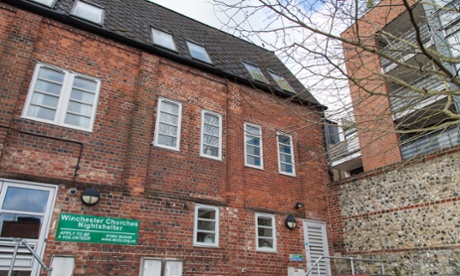
The other thing that sets Winchester apart is its size. Homeless people often have very complex needs: Glyn, pulling his life back together and searching for a job in engineering; Chris, grieving after his partner’s suicide; Holly, kicked out of her dad’s home and sick of dealing with children’s social services; Mark, 27, constantly nervous and trembling from the pills he takes to help his psychosis. Everyone gets tailored assistance and each new resident meets the manager.
“I think where we’re lucky is that we’re quite small and we can’t accept everyone, but we keep it safe,” says Price. “And because we’re quite small we get to know everyone and can provide a better service. If we trebled and had 50 to 70 people, I don’t think we’d produce as good or homely a service.”
Last year the shelter accepted 118 residents but turned away 422 others. There’s a trend towards making homeless hostels as small as possible, says Anderson. But he adds that with homelessness rising and UK night shelters struggling through a funding crisis, this is not always possible – particularly in cities such as London, Brighton, Liverpool or Manchester.
“There’s a realisation that running gigantic programmes can be problematic unless you can get the support right,” he says. “In an ideal world we would run nothing more than 20 beds.”
Sign up for your free Guardian Housing network newsletter with news and analysis sent direct to you every Friday. Follow us: @GuardianHousing