When it comes to improving nutrition on a wide scale, innovations at the level of seeds and soil can go a long way. Without a government that is committed to supporting agriculture in a manner that prioritises nutrition, however, broad change can be difficult to effect.
Strong leadership
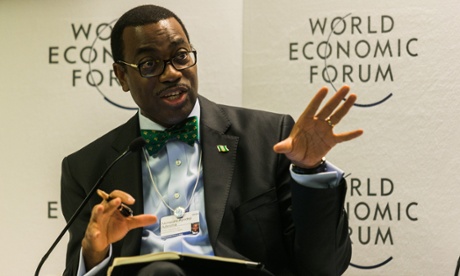
Among those who have embraced the cause wholeheartedly is Akinwumi Adesina, Nigeria’s minister of agriculture since 2011. Adesina has proved deft in bringing new technologies to agriculture and adopting successful innovations from other countries. He also has broadened the typical mandate of the agricultural sector from producing more food to producing better food. Agriculture is responsible for about 40% of gross domestic product in Nigeria.
For four decades prior to the minister’s arrival in the Nigerian capital of Abuja, the government had been buying and selling fertilisers itself, in a system notorious for its corruption.
“No more than 11% of fertilisers ever got to the farmers,” Adesina said. He put an end to that through the help of the mobile phone. Adesina’s ministry launched Nigeria’s first Know Your Farmer network, which involved compiling a database of the nation’s farmers. Today, some 14.5 million of them are registered.
Each of the farmers — 25-30% of whom are women — receives subsidised seeds, fertilisers and other inputs via electronic coupons sent through their mobile phones. With the new system, the government has been able to reach 95%, in some cases 98%, of farmers, depending on the state, with inputs by phone.
“It’s been a revolution for us,” said the minister, who added that the programme has enabled national food production to grow by 21m metric tonnes in just three years.
Reaching out to women
While the e-wallet system has allowed those 14 million farmers to improve the food security for the 50 million people in their households, Adesina conceded that malnutrition is still a problem in the country. In some areas, the rates of stunting are as high as 30%. His ministry hopes to contribute to a solution via three routes. First, he says, it is reaching out to women farmers. This year the government began a programme similar to that in place for seeds and fertilisers. In this instance, it distributes multinutrient powders via coupons sent to mobile phones. He hopes to reach 2.5 million women directly with the powders, which also are subsidised at 50% of cost. In addition, the government is targeting women farmers with highly subsidised vegetable seeds and encouraging more diversified farming systems at the household level. Better nourished farmers, of course, are more productive and therefore also better for business.
Improving fortification
Nigeria also is investing money and energy in biofortification. Two years ago, an orange-fleshed sweet potato, which is high in vitamin A, was developed by the International Potato Center and other partners and distributed to 300,000 households in the country. Today Adesina hopes to reach 1.5 million households with the sweet potatoes and with a cassava bred to be high in pro-vitamin by the International Institute of Tropical Agriculture. Both of the new cultivars have been readily adopted by Nigerians, who bake them into breads, chips and other products. In addition, Adesina is working with the private sector to improve the fortification of such products as oil, flour, salt and seasonings.
Investing in the long-term future of the nation
Adesina sees all of these initiatives as key to furthering the one goal he considers primary: investing in the long-term future of the nation. “If you look at Africa,” he said, “you find six of the 10 fastest-growing economies in the world. You find skyscrapers all over the place. You have infrastructure. But we’re not investing in what I think is the most important infrastructure, which is grey-matter infrastructure. Grey-matter infrastructure is what determines how economies grow.”
Cultivating nutritious food systems
Read more about Adesina’s efforts and other innovations where nutrition is being woven into the agricultural value chain in Cultivating Nutritious Food Systems: A GAIN Snapshot Report published by the Global Alliance for Improved Nutrition (GAIN) on 7 November.
GAIN’s executive director, Marc van Ameringen, said: “By 2050, the world’s population could reach nine billion. In order to live healthy and productive lives, all will need nutritious diets. Despite the intrinsic relationship between the food we grow and the food we eat, the agriculture and nutrition sectors are only just now beginning to overcome decades of mutual isolation. The high rates of malnutrition among farming communities are a stark reminder that the link between agriculture and nutrition is broken.”
“To make the most of the opportunities we have for improving nutrition, reforming this broken food system through better and different investments in agriculture is our best bet.”
Content on this page is paid for and provided by GAIN sponsor of the Guardian Global Development Professional Network.