Summary
- Theresa May, the home secretary, has accused the Police Federation of repeated “scaremongering” about the impact of cuts. She also said that there was “no ducking the fact” that spending on the police has to face further cuts but that it was “perfectly possible” to do it without affecting the quality of neighbourhood policing.
- Tristram Hunt has pulled out of the Labour leadership race after it became clear he was nowhere near gathering the 35 nominations from MPs he needed to stand. In a wide-ranging speech about Labour’s future, he said he was supporting Liz Kendall instead. He also said Labour should consider introducing a mechanism to allow a new leader to be removed if he or she is under-performing. (See 10.44am.)
- Nigel Farage, the Ukip leader, has insisted that Ukip remains “100% united” a day after the party confirmed two senior figures would be leaving their posts. He also claimed the EU referendum would be held next May. (See 9.02am.)
That’s all from me for today.
Thanks for the comments.
This is good - a reflective essay by Mary Turner about a project that involved photographing Nigel Farage throughout the election campaign, and what she learnt about him. Here’s an extract.
Despite it all Nigel himself remained endlessly fascinating. Like most of us I suspect, I’d bought into the image of the ‘probably evil but generally gregarious, jovial beer-swilling, cigarette smoking’ character he presents to the world.
What slowly emerged was a calm, serious, thoughtful, poised and increasingly tired man quite frequently in a lot of physical pain and not untouched by the abuse hurled his way. There is an unexpected subtlety about him, that he extinguishes in front of the press like a light.
The pictures are terrific too.
Vince Cable says Labour and the Lib Dems should see themselves as 'potential allies'
Vince Cable, the Lib Dem former business secretary, has written a lengthy article for the New Statesman about why the Conservatives won the election. Two points stand out.
-
Cable says that the factor that was decisive in the Tory victory, and that cost him his own seat, was hostility to the idea of a minority Labour government being dependent on the SNP.
In Twickenham, even though I often witness the passions of sporting nationalism, I never imagined that the Battles of Culloden and Bannockburn would be refought in the minds of my constituents. But in the event, the Scottish Problem carried a lot more weight than the bedroom tax or even the mansion tax.
The English reaction isn’t a racial thing. The prevalence of Scottish voices in our media reflects an underlying respect, liking and sense of trust. And Nicola Sturgeon’s appeal to many English people was not only to star-struck lefties, but also a positive reaction to an articulate, clever and attractive female politician. The greatest fear and loathing of Scottish nationalism I encountered came from Scottish expatriates settled in London. What they and many English voters resented was the idea of their country – Britain – being redefined without their consent, and without being consulted. To add insult to injury, Scotland seems to have much the better deal from the Barnett formula. The fear of a weak, Labour-led UK government being held to ransom by the SNP was just too much for a lot of my voters.
-
He says Labour and the Lib Dems should see themselves as “potential allies”.
It is just possible that disillusionment with the Tories and with the nationalists in England and Scotland will set in so fast and go so deep that, as in the mid-1990s, there could be a pincer movement from the centre and centre left under plausible new leaders. Merely to state the hypothesis suggests, however, how far away it is. But to make it even possible, a lot has to happen, including our two parties deciding whether they are for ever locked in mortal tribal combat or, more sensibly, whether they are potential allies in a wider, progressive purpose of constitutional reform; a liberal approach to civil liberties; anti-nationalist and internationalist; and with a modern fusion of social democracy and market economics.

Here is a Guardian video of Theresa May telling the Police Federation to stop scaremongering.
Here is Liz Kendall’s response to Tristram Hunt’s endorsement.
Tristram is a big talent. I am delighted to have his backing to be Labour’s next leader. Tristram’s support and ideas will be important as we seek to change so Labour can win back the trust of the British people.
Tristram Hunt's Forward March of Labour speech - Summary
Tristram Hunt’s speech, called the Forward March of Labour, is easily the most thoughtful and far-reaching contribution to the debate about Labour’s future to come from a leading Labour politician. That it intended as a sincere compliment, but technically it is not much of a tribute at all, because the bar has been set very low. Generally, the debate within Labour about what the party needs to do next has been trite and shallow. None of the leading leadership contenders has given a proper speech on the topic and, in their public remarks, they and others in the party have not gone much beyond platitudes about aspiration and economic credibility.
Hunt may not have all the answers, but at least his argument was rooted in a historical analysis.
Unfortunately, as Philip Collins said (see 10.58am), journalists are likely to ignore most of the speech because they will focus instead on the news announcement about Hunt not standing. I’ll try to remedy that here. I can’t find the speech online yet, but if you can, do read it in full. In the meantime, here’s a summary.
The problem
-
Hunt said he agreed with Jon Cruddas that Labour could be facing its greatest ever crisis.
Not since 1983 have we been so out of step with the prevailing mood of the nation.
-
He said Labour faced a problem on three distinct fronts.
Perhaps the first time, we now face an electoral battle across three distinct fronts.
The rise of nationalism in Scotland;
A lack of trust in historically Labour communities across the Midlands and North of England;
And a loss of confidence in Middle England about the Labour Party’s ability to manage the public purse and protect family finances.
-
He said Labour was in trouble partly as a result of a “profound cultural collapse” that has affected the UK. Citing Stoke-on-Trent, where he is an MP, he said:
I can see that these foundational institutions - which for so long have provided British social democracy with its cultural anchors - are barely a presence in the vast majority of my constituents lives anymore.
The chapels are empty.
The working mens’ clubs have closed.
Trade union membership is down - close to non-existent in the private sector.
And despite some encouraging recent signs, deindustrialisation, driven by global competition, has laid waste to most of our manufacturing economy.
This withering of our Labour roots is striking in two important and connected ways.
Both of which were captured by the election result.
First, the erosion of the sentimental and electoral loyalty to our party in white working class communities.
And second the weakening of class-based forms of identity when compared to local or national pride.
Solutions
-
He said that revival of the party under Tony Blair and New Labour had its origins in analysis published by Marxism Today in the 1980s.
That glorious, euphoric walk down Downing Street on that hazy May morning eighteen years ago was the culmination of a journey which began on the pages of Marxism Today in the early 1980s.
Because it was there, whilst wrestling with the widespread conversion of the manual working classes to Thatcherism at both the 1979 and 1983 elections, that historians and theorists - such as the late great Eric Hobsbawm and Stuart Hall - began to shine an unflinchingly brutal light upon the real not imagined political attitudes of the British working class.
Carrying out the painstaking work of placing, as Eric memorably put it, “the future in our bones”.
Let me read you this one astonishing quote from Eric’s 1983 essay Labour’s Lost Millions.
It reads:
“Unless Labour can once again become the party of the majority of the working class it has no future, except as a coalition of minority pressure groups and interests. Yet there is only a modest future for a party which represents only such groups, and social forces on the decline. If Labour cannot get back the sort of communities represented by Stevenage, or Harlow, or Swindon, or Slough, we can forget about the British or any other realistic road to socialism.”
Written thirty years ago…
…it could have been written 30 minutes ago.
- He said Labour needed a leadership contest revolving around proper arguments, “not the allocation of shadow cabinet posts”. There have been claims that some frontbenchers are demanding certain jobs in return for backing a particular candidate.
-
He said some elements were essential to electoral success.
Every successful election victory contains them.
Economic competence.
Strong leadership.
An acute antennae for the country’s concerns – from immigration to public services to housing.
Another factor was important: “an emotional connection” with the voters, through a sense of a “brighter future”.
-
He said “micro-targeting”, offering policies for different groups, without wrapping them up within one vision, would not deliver electoral success. Labour needed:
A 100% strategy.
Not the timid, institutionalised caution which led so many to believe we had a 35% strategy.
- He said Labour needed to “clear out the political hurdles which prevent people listening to [the party]”, including by admitting the party spent too much when it was in power.
- He said Labour needed to show it understood Britain’s three most cherished institutions: work, family and community.
- He said that Labour should be the party of work and that it should restore the contributory principle in the welfare system. In particular, it should adopt some of the ideas on this in the IPPR’s Condition of Britain report.
-
He said Labour should outflank the Tories on decentralisation, promoting a “devo-max settlement for England”.
We must shelve our timidity, match the Tory offer and go beyond it by giving city and country regions the power to vary local taxes, including business rates from a baseline which takes account of regional disparities of wealth.
We need English councils and English cities slashing business rates, attracting inward investment, cutting red-tape and setting up their own enterprise zones.
-
He said Labour should support family life by offering free childcare all year round, using ideas in the IPPR report to fund this, such as freezing child benefit.
And here is a Guardian video of Tristram Hunt ruling out running as a leadership candidate himself.
Updated
Although Theresa May’s comments about the Police Federation sounded fairly damning, some commentators tweeting from the conference say that, overall, she was was not being that combative.
From John Apter, chair of the Hampshire Police Federation
My overall view is that the Home Secretary has been conciliatory and has made an offer to work with the Federation. #OverToUs #polfed15
— John Apter (@Hantsfedchair) May 20, 2015
From Paul Herdman from the Dyfed Powys Police Federation
Appears to me that TM wants to work with us. We need to pick this up and run with it. She doesn't appear angry at all this year. #polfed15
— Paul Herdman (@DyfedPowysFed) May 20, 2015
From Graham Whettone, a police analyst for Sky News
This may disappoint some editors. TM is agreeing with some questions & common ground with #polfed15. She is even receiving applause.
— Graham Wettone (@grahamwettone) May 20, 2015
From Constable Chaos, a police blogger
In fairness to Home Secretary, her approach today is courteous & relatively open to questioners #PolFed15
— Constable Chaos (@ConstableChaos) May 20, 2015
Steve White, the Police Federation chair, told Theresa May that if the federation was saying the same thing over and over again (see 12.06am), it was because government was not listening.
.@PFEW_Chair You say we have told you the same things for years- that shows you are not listening #polfed15
— Cheshire Police Fed (@CheshirePolFed) May 20, 2015
The Police Federation has been tweeting in response to Theresa May’s speech.
#polfed15 @krishgm: the point about 'the crying wolf' is that there WAS a boy and there WAS a wolf; are you going to take this back to govt?
— PFEW (@PFEW_HQ) May 20, 2015
The Police Federation is quoting Channel 4 News’s Krishnan Guru-Murthy (@krishgm), who put that point to Theresa May.
Improvement of #police technology is only effective if matched by technology used across the criminal justice system #CutsHaveConsequences
— PFEW (@PFEW_HQ) May 20, 2015
#polfed15 @Hantsfedchair: In the spirit of working together, will TM take responsibility for providing national stats on officer assaults?
— PFEW (@PFEW_HQ) May 20, 2015
Updated
Here is more from the Police Federation conference.
One officer tells Theresa May cutting local policing is not scaremongering,it's fact. Applause, whistles as he says "don't talk down to us"
— Danny Shaw (@DannyShawBBC) May 20, 2015
Theresa May's speech - Highlights
In her speech Theresa May confirmed that the government will spend £15m providing facilities to ensure the mentally ill don’t have to be held in police cells. But there were other announcements too. Here is a summary.
-
May said the police would have to make more savings.
May: More savings need to be made. Policing will have to play its part. There is still wasteful spending. Resources aren't linked to demand.
— Theo Usherwood (@theousherwood) May 20, 2015
To say no more savings to be found isn't true. It's not going to be enough to shave a bit of excess here. Reform needs to go much deeper.
— Theo Usherwood (@theousherwood) May 20, 2015
Theresa May says there's still wasteful police spending & forces' usable financial reserves increased by £250 million" #polfed15
— Danny Shaw (@DannyShawBBC) May 20, 2015
- She announced a review of police targets.
Onto targets, a Theresa May bugbear. She tells #polfed15 Irene Curtis, Pres of Superintendents Assn, will lead a "major independent review"
— Danny Shaw (@DannyShawBBC) May 20, 2015
Theresa May says review of targets will bring "transparency to where, when & why targets are used"examine impact on crime-fighting #polfed15
— Danny Shaw (@DannyShawBBC) May 20, 2015
Theresa May says target culture must never be allowed to exist in policing again. "Enough is enough". #polfed15
— Danny Shaw (@DannyShawBBC) May 20, 2015
-
She said the police should not be used to control children in care.
Police officers aren't social workers or paramedics. Secure children's homes must not use police to control children in care - May.
— Theo Usherwood (@theousherwood) May 20, 2015
-
She said the use of body cameras had increased the number of early guilty pleas.
Body worn cameras are increasing the number of early guilty pleas - May.
— Theo Usherwood (@theousherwood) May 20, 2015
-
She suggested police cars could be used as mobile police stations.
Police cars could be transformed in to mobile police stations so officers do not have to return to base, she adds.
— Theo Usherwood (@theousherwood) May 20, 2015
-
She said, if the Police Federation wanted to remain relevant, it worth with her on reform.
May ultimatum to Police Fed: work with me to change policing. Get in the way and I'll carry out my reforms anyway. You just won't have a say
— Theo Usherwood (@theousherwood) May 20, 2015
-
She said a policing bill would be introduced to reform the police complaints system and extend police-led prosecutions.
Theresa May says a new Policing Bill will extend police-led prosecutions, overhaul police complaints system, use of police bail #polfed15
— Danny Shaw (@DannyShawBBC) May 20, 2015
Updated
Polite applause for ten seconds or so at the end of Theresa May's speech #polfed15
— Danny Shaw (@DannyShawBBC) May 20, 2015
No audible heckles yet for Theresa May at Police Fed conference... just stony silence as she tells audience reforms are working.
— Theo Usherwood (@theousherwood) May 20, 2015
Theresa May accuses Police Federation of 'scaremongering' and 'crying wolf'
Here is the key passage from Theresa May’s speech.
This weekend the federation warned that spending reductions mean that we will be forced to adopt a paramilitary style of policing in Britain. Today you said that neighbourhood police officers are an endangered species.
I have to tell you that this kind of scaremongering does nobody any good. It doesn’t serve you, it doesn’t serve the officers you represent and it does not serve the public.
In 2002 you said David Blunkett had done more harm to the police in five minutes than others have taken years to do. In 2004 you said Labour were going to destroy policing in this country for ever. And in 2007 you said the government had betrayed the police.
Now, I disagree with Labour policies, but even I don’t think those things are true.
You said police officers were demoralised in 2002, 2004 and 2007 and 2012. You warned of police officers’ anger in 2002, 2005 and 2008. And you warned that the police and the public were being put in danger in 2001, 2004 and 2007.
The truth is that crime fell in each of those years. It has fallen further since, and our country is safer than it has ever been.
So, please, for your sake, and for the thousands of police officers who work so hard every day, this crying wolf has to stop.
Theresa May is really giving no ground. #polfed15 pic.twitter.com/i6QbWScHQT
— Chris Cook (@xtophercook) May 20, 2015
Updated
Theresa May accuses Police Federation of scaremongering and 'crying wolf'
Theresa May, the home secretary, is speaking to the Police Federation now.
She has just accused them of scaremongering about the potential impact of police cuts.
She is referring to the Police Federation’s claim that police officers on the beat are becoming “an endangered species”.
This crying wolf has to stop, she says.
-
Theresa May accuses Police Federation of scaremongering and ‘crying wolf’.
Updated
Charles Clarke says Scottish Labour party should be wholly independent from London
Writing in today’s Times, former Labour home secretary Charles Clarke has backed the idea that there should be an entirely separate Scottish Labour party north of the border.
Labour absolutely must perform well in the Scottish parliament election. It will be difficult to overcome Jim Murphy’s resignation but Labour in Scotland urgently needs its own policy platform. My view is that an entirely independent Scottish Labour party should be created, constitutionally controlled entirely from Scotland.
Clarke is echoing comments by Neil Findlay, former Scottish Labour leadership contender and MSP, who last week said that if there needed to be a separate Labour Party in Scotland, “then so be it”. He added: “The move by Blairites down south, saying that we have got to go back to New Labour, would go down like a bucket of vomit in Scotland.”
Labour leadership frontrunner Andy Burnham, speaking on Sunday’s Andrew Marr show, didn’t dismiss the suggestion that the party should split, saying: “There is a case for that and I will look at that.”
The idea has been around for a while, but has been given some weight by the party’s disastrous performance in Scotland in the general election, where it lost 40 of its 41 seats.
There are parallel debates in the Conservative party. Writing in the Telegraph ahead of the Scottish independence referendum, former Tory cabinet minister and party chairman Norman Tebbit suggested the Conservative party (officially called the Conservative and Unionist party) could split into two parts.
I would prefer to think that if the Westminster Conservatives would keep on our side of Hadrian’s Wall and let conservatives (with a small “c”) create a vigorous Scottish Unionist Party, Scotland might well no longer be a socialist fiefdom.
Hunt accuses Unite of trying to wield 'disproportionate' influence in Labour leadership contest
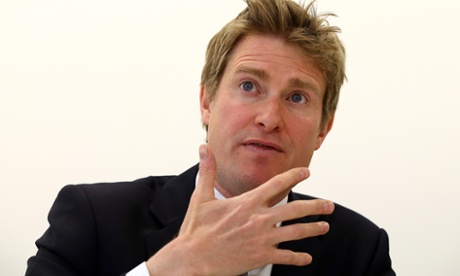
Here are the key extracts from Tristram Hunt’s speech dealing with the Labour leadership issue.
-
Hunt accused Unite of trying to wield “disproportionate” influence in the Labour leadership contest. He did not name Unite in his speech, but, in the Q&A (see 10.50am), he made it clear that he was referring to the union. In the speech he said:
We need a debate that is open, vigorous, iconoclastic, fraternal and sisterly.
We need more of the Demos – the individual members, supporters and affiliated supporters who make up our party.
And we need less dictation by individuals and individual factions that still seek to wield and influence that is both disproportionate to what they deserve and contrary to the egalitarian principle of one member, one vote.
Hunt said he was referring to claims from the Labour MP Barry Sheerman that Unite has put pressure on MPs not to nominate any of the “modernising” candidates. Unite has denied this.
-
He complained that Andy Burnham and Yvette Cooper were getting so many nominations from MPs that they were preventing other candidates from standing. That was not healthy, he argued. (To stand in the leadership contest, a candidate needs to be nominated by 35 Labour MPs.) Hunt said:
Like other potential candidates in recent days I have made a lot of calls to potential supporters among my parliamentary colleagues.
I found that the bulk of MPs are already committed to just a couple of candidates.
It is surprising that the nomination process to select a leader for at least the next five years appears to have been largely decided within at most five days of a devastating general election defeat.
-
He said he was pulling out of the race to maximise the chances of Liz Kendall being able to get the 35 nominations she needs.
It is clear to me that I do not have sufficient support to be certain that I can run for the leadership myself.
And it is also clear to me that in trying to gather the names I need, there is a real risk that I might help restrict the choice for the party.
That is not a risk I am prepared to accept.
Instead, I am offering my endorsement to my colleague, Liz Kendall.
- He said he was backing Kendall because she had the right leadership mettle to lead Labour.
I have known Liz for 20 years.
And has she has shown in the past 20 months she has the confidence and courage to lead our party.
I believe she has learnt the right lessons from our time in office and opposition.
She is open to the big challenges confronting our party and our country.
And I believe she has the right leadership mettle to lead Labour.
The most important choice for Labour is not just who leads us into the challenges ahead but how we are led.
The most important choice I have had to make today is not whether I run for the leadership - or how to advance my career in shadow cabinet.
No, it was how to get a candidate who understands the challenges ahead on the ballot paper for September.
I will post a summary of his key points about Labour’s future shortly.
Updated
Philip Collins, the Times columnist who is chairing the event, wraps up by saying that he expects journalists will ignore the 80% of the speech devoted to ideas.
If anyone gets Hunt’s Eric Hobsbawm quote into their copy, he will buy them lunch, he says.
I will post a summary of the speech shortly.
Q: Do you think you were a bit naive? Should you have started your leadership bid on Friday morning?
Hunt says it was not a crime working for a Labour victory.
He says he has not got the numbers to run. He wants as broad a range of candidates to stand. In order to help, he needs to step back.
Q: What role would you like to play if Liz Kendall becomes leader? Do you want to take on a policy role?
Hunt says that is a matter for the new leader.
But he is particularly interested in the future of the UK, and shaping the devolution agenda.
Q: Do you think it was disloyal of other candidates to have campaign in place before the election?
Hunt says other candidates will have to speak for themselves.
But, he says, he would not want to get rid of all the ideas developed over the last five years.
He says he was working “flat-out” for a Labour victory before the exit poll.
Q: Who are you talking about when you say some people are trying to exercise disproportionate influence in the leadership contest?
Hunt says he is just talking about what he has read in the papers, and the allegations from Barry Sheerman [about Unite].
He says he thinks the contest is being run in a more fair way than in 2010.
Q: Do you think that distinction between the centralisers and the decentralisers will define the leadership contest?
Hunt says yes. This is a more constructive way of thinking about the divisions than left/right. There is a credible case for centralisation. For example, objection to postcode lotteries, he says. But he says he is on the other side.
Hunt says the SNP are very centralising. He thought giving Manchester control over health spending was very progressive. He would favour giving regions control over education too.
We cannot say an English sense of identity is unprogressive, he says.
Hunt says Labour should consider introducing rule to enable under-performing leader to be dumped
Q: Was Labour too sentimental about sticking with Ed Miliband when they knew he was leading the party to defeat?
Hunt says there have been calls for “break clauses” for any leader.
At shadow cabinet recently they discussed the merits of picking a leader now for an election in five years time.
He says there is a case for some sort of break clause that could allow the party to change leader if he or she is not judged to be performing.
-
Hunt says Labour should consider introducing a mechanism to allow a new leader to be removed if he or she is under-performing.
Hunt says Kendall appreciates the nature of the Labour crisis.
She speaks effectively to the country. She is concerned about economic efficiency, and social justice.
Like Hunt, she is also passionate about early years education, he says.
Tristram Hunt's Q&A
Q: Are you saying other colleagues started preparing for the leadership contest before the election?
Hunt says he was not prepared for a leadership contest.
Others had “longer, more established ambitions”, he says.
He says he was focused on winning the election.
Q: And others weren’t?
Hunt says he is not saying that.
Tristram Hunt backs Liz Kendall for the Labour leadership
Hunt says in his speech he will not be entering the race to be Labour leader.
He has made a lot of calls to MPs, he says. He found “the bulk of Mps are already committed to just a couple of candidates”.
He says it is “surprising” that the contest seems to have been restricted in just a few days after the election.
He is not preparted to take the risk that, by seeking other endorsements, he could stop someone else standing.
So he is going to endorse Liz Kendall.
He says he has known her for 20 ideas. She has the right ideas, and the “right leadeship mettle”, he says.
- Hunt confirms he won’t stand for Labour leader.
- He says “the bulk of MPs” are committed to backing either Andy Burnham or Yvette Cooper.
- He expressed concern that the Labour leadership contest is too restricted.
-
He backs Liz Kendall for the leadership.
According to the BBC, Tristram Hunt will endorse Liz Kendall.
The BBC is reporting that Tristram Hunt is not standing for the Labour leadership.
Tristram Hunt not standing for Labour leadership http://t.co/U3tKD6H5aD
— Nick Eardley (@nickeardley) May 20, 2015
Hunt says Labour should embrace decentralisation more enthusiastically.
When the coalition developed its Northern Powerhouse idea, Labour was split as to how to respond.
Yet these plans were in tune with Labour’s history of “gas and water socialism”, he says. Labour has a strong heritage of localism, he says.
Britain is far too centralised, he goes on. He says there are very few countries were political, financial and media power is all located in the same place.
Hunt says Labour should make the contributory principle count for more in the benefits system.
Hunt says Rachel Reeves was right to say that Labour should be the party of work.
One problem was the people thought people were opposed to the benefits cap, he says.
Hunt says Labour had good policy ideas, in areas like growth, where the Andrew Adonis’s commission developed policy, like the condition of Britain, where the IPPR report provide a blueprint, and in local government, where Sir Richard Leese and others provided ideas.
But it did not the the courage to champion these ideas, he says.
Hunt says Labour needs to addresss some of the problems that stopped it getting a hearing with the electorate. It did spent too much, he says. But it also repaired the public realm, and it did not cause the crash.
Hunt says Stoke-on-Trent, the city he represents, can claim to be the place where Labour started. It was the birthplace of the industrial revolution. It has always been represented by Labour.
But the party is suffering from a “profound cultural collapse”, he says.
Class-based identity is shrinking, he says.
Tristram Hunt says, unlike some in the party, he does not think Ed Miliband was wrong to criticise New Labour for being too relaxed about inequality.
But the party should not disappear too far into a debate about values, he says.
He says he agrees with Jon Cruddas, who said at the weekend that this could be the worst crisis facing Labour.
Updated
Tristram Hunt's speech on Labour's defeat
Tristram Hunt, the shadow education secretary, is delivering his speech on Labour’s defeat now.
Here is a live feed.
Farage mocked in European parliament for breaking his resignation promise
In the European parliament Nigel Farage has been mocked for breaking his promise to resign, the BBC’s Nick Eardley reports.
Belgian politician Guy Verhofstadt giving Nigel Farage a bit of stick in the European Parliament today (1/2)
— Nick Eardley (@nickeardley) May 20, 2015
German MEP Manfred Weber to Farage: "You said you'd resign, and yet you are still here. You broke all your promises"
— Nick Eardley (@nickeardley) May 20, 2015
Here is some Twitter reaction to Nigel Farage’s interview.
From Guido Fawkes’s Alex Wickham
Why does every Farage soundbite now sound like he's stroking a white cat https://t.co/76cOuRHLTQ
— Alex Wickham (@WikiGuido) May 20, 2015
From the BBC’s Nick Robinson
We are "100% united" says @Nigel_Farage on day I just caught up with this glorious cartoon by @BrookesTimes pic.twitter.com/2jsNz1vIYj
— Nick Robinson (@bbcnickrobinson) May 20, 2015
Anyone who thinks @UKIP going away is deluding themselves : 4 m votes, 2nd in 120 seats, led by one of best communicators in the business
— Nick Robinson (@bbcnickrobinson) May 20, 2015
From the Guardian’s Michael White
Nigel Farage on R4's Today. Fluent as ever, but he seems to be in denial. "Ukip ran the most positive election campaign" he says. United too
— MichaelWhite (@MichaelWhite) May 20, 2015
From the Sunday Times’s Tim Shipman
Does Nigel Farage think if he says Ukip is 100% united 100 times in the same interview it will make it so?
— Tim Shipman (@ShippersUnbound) May 20, 2015
From Prospect’s Josh Lowe
Tbf Farage is hardly unique among British politicians to have fallen for US political influences that are totally irrelevant here #r4today
— josh lowe (@JeyyLowe) May 20, 2015
Updated
Nigel Farage's Today interview - Summary
Nigel Farage, the Ukip leader, has been on the Today programme within the last hour. After yesterday’s Farage fightback, which saw him sideline two of the key figures in the party seen as his major rivals, there was a lot to talk about. Here are the key points.
-
Farage said that Ukip should prepare for an EU referendum next May.
I strongly suspect that this referendum will be held in May next year, to coincide with the Scottish, London, Welsh and Northern Ireland elections, so we have not got very long.
Actually, he is probably wrong about this. In the past the Electoral Commission has said that it is opposed to the idea of referendums being held on the same day as elections, because the different issues could get confused. But this is the first time Farage has been so specific about predicting an early referendum.
-
He claimed that he was not going to change his “tone”. Ukip MEPs like Patrick O’Flynn and Steven Woolfe have said that the party will have to adopt a less aggressive stance in the referendum campaign. Asked if he would change, Farage said:
No, it isn’t going to change. I fought a wholly positive campaign.
But he did concede that his call for a ban immigrants with HIV, which was cited by Woolfe as an example of where the party sounded too harsh, was not something he was likely to repeat in the EU referendum campaign, because it was not an EU issue.
-
He conceded that some in his party did not feel as strongly about immigration as he did.
Some people in my party don’t think immigration is as important as I think it is. And that is natural in politics. We all have slightly different emphases.
-
He said that he was wrong to say that he would not be a credible leader if he did not have a seat in parliament. In his book The Purple Revolution, published in March, he said:
It is frankly just not credible for me to continue to lead the party without a Westminster seat.
Asked if this argument was wrong, he replied: “Well, yes, things do evolve.”
He also said the party supported his staying as leader because they did not regard the election as a failure.
They think for us to have got 4m votes, despite all the things that happened, was a remarkable achievement.
-
He said that Ukip was now “100% united” after the recent arguments.
What has happened in Ukip is since the election, after the the pressure cooker atmosphere of a campaign office, one or two regrettable things were said and done by a very small number of people.
But I tell you where this leads Ukip, going into this referendum campaign, unlike the other parties - united. 100% united. We have for over 20% fought hard to make the EU an issue ... We are united. The other parties are very, very divided.
-
He said Ukip fought a more positive election campaign than other parties.
If you look at all the post-election statistics, Ukip fought the least negative campaign of all the political parties.
Nigel Farage repeatedly saying Ukip had most positive election campaign. Here's the study he's referring to http://t.co/05aOpdOAYi
— Isabel Hardman (@IsabelHardman) May 20, 2015
-
He said he had “plans” for Suzanne Evans, the Ukip deputy chair who has lost her post as policy chief. Asked about this, he said her contract for that post was due to run out.
I have other plans for what Suzanne Evans can do for Ukip. I think she is potentially a great electoral asset for us.
At one stage Farage saw her as a likely successor.
When I interviewed Farage a couple of weeks ago he virtually annointed Suzanne Evans as his chosen successor. Nothing to change that today
— Tim Shipman (@ShippersUnbound) April 15, 2015
But today, when asked if she was a future party leader, he said it was “ridiculous” and unhelpful to say that about anybody. Pressed on her abilities, all he would say was:
There is no doubt that she is a very able woman.
-
He said that never in history had so many voters been unrepresented. Referring to the fact that Ukip only got one seat, despite the fact that 3.9m people voted for the party, he said:
Never, ever in the history of British politics have so many voters been so unrepresented.
-
He dismissed the CBI president Sir Mike Rake’s comments about the importance of staying in the EU, saying organisations like the CBI were wrong about whether Britain should join the euro. The CBI wrongly claimed that Britain had “significant influence” in Brussels, be said. That was not true. And they claimed that Britain would not be able to trade with Europe if it was not in the EU. That was a “really big myth”, he said.
I will post some reaction to this shortly.
Then we will move on to other stories. Here is the agenda for the day.
9.30am: The Office for National Statistics publishes persistent poverty figures for the UK and the EU.
10am: Tristram Hunt, the shadow education secretary, gives a speech on Labour’s defeat. As Patrick Wintour reports, he will say Labour was timid under Ed Miliband and lacked the political courage to embrace bold ideas on welfare, the family and the devolution of power to cities.
11am: Theresa May, the home secretary, gives her speech to the Police Federation. As Alan Travis reports, she will pledge up to £15m of new funding to provide health-based alternatives for the 4,000 people a year who spend time in detention in police cells under the Mental Health Act.
As usual I will be covering the breaking political news as it happens, as well as bringing you the best reaction, comment and analysis from the web. I will post a summary at lunchtime and another in the afternoon.
If you want to follow me on Twitter, I’m on @AndrewSparrow
Updated