The 'Queen of Rap' has cemented her unexpected political alliance by joining President Donald Trump at a landmark economic summit in Washington, D.C.
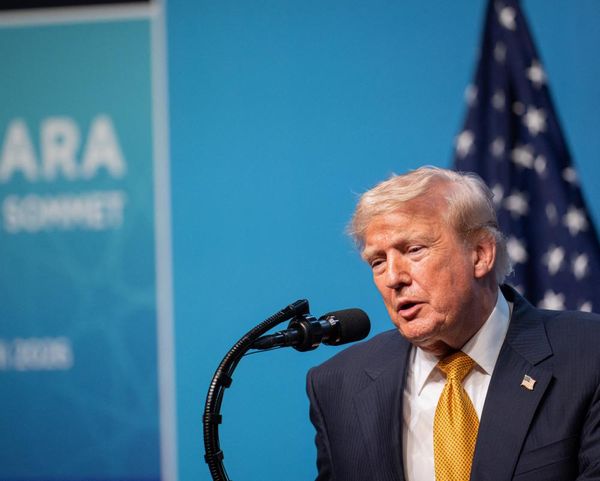
The 12-time Grammy nominee, Nicki Minaj (Onika Tanya Maraj-Petty), will appear alongside Trump and Treasury Secretary Scott Bessent on 28 January 2026 at the presidential summit on financial literacy, an event marking the formal launch of 'Trump Accounts', a new government-seeded investment scheme for children. This initiative, a flagship provision of the One Big Beautiful Bill Act (OBBBA), signed on 4 July 2025, aims to revolutionise generational wealth by gifting every child born in the US between 2025 and 2028 a government-seeded investment account.
Despite fierce backlash from fans and a viral petition for her deportation following her appearance at TPUSA's AmericaFest, Minaj, who recently admitted she is not a US citizen, insists that teaching children 'how to invest' is the ultimate way of 'paying it forward.'
The high-profile event also features a star-studded guest list, including Shark Tank investor Kevin O'Leary, Curb Your Enthusiasm actress Cheryl Hines (wife of Health Secretary Robert Kennedy Jr.), Texas Senator Ted Cruz, conservative influencer Isabel Brown and political consultant Alex Bruesewitz.
The true meaning of paying it forward.
— Nicki Minaj (@NICKIMINAJ) January 24, 2026
Early financial literacy & financial support for our children will give them a major head start in life.
In some cases, they will end up teaching their very own parents how to invest & what to invest in.
This makes me very happy. 🎀 https://t.co/s8jkp8O9lu
Minaj's alignment with the Trump administration represents a significant cultural shift for the Trinidadian-born artist, who recently admitted in a 2024 TikTok Live that she is not a US citizen despite paying millions in taxes. Confirming her attendance, she posted to her 28 million followers: 'The true meaning of paying it forward. Early financial literacy & financial support for our children will give them a major head start in life. In some cases, they will end up teaching their very own parents how to invest.' This endorsement follows her surprise appearance at Turning Point USA's AmericaFest in Phoenix last month, where she interviewed TPUSA CEO Erika Kirk and praised Vice President JD Vance as 'the assassin' for his debate skills.

The Rollout of 'Trump Accounts'
The Treasury Department is utilising 'unusual star power' to market the new savings vehicles, which are tax-advantaged accounts that allow parents to make annual contributions of up to $5,000, with an additional $2,500 from employers.
According to Council of Economic Advisers (CEA) estimates, a baby born in 2026 could see a balance of $303,800 by age 18 if maximum contributions are made, or $5,800 if only the initial $1,000 seed money remains.
Key Financial Mechanics:
Government Seed: A one-time $1,000 deposit for children born 1 Jan 2025 – 31 Dec 2028.
Annual Contribution Limits: Parents can contribute up to $5,000 per year; participating employers can contribute up to $2,500 per year.
Investment Strategy: Funds are strictly limited to broad US stock index funds to minimise risk and fees.
Projected Growth: Treasury estimates show a fully funded account could reach $303,800 by age 18, and up to $1.9 million by age 28. Even the un-supplemented $1,000 seed could grow to nearly $14,000 over 18 years.
The One Big Beautiful Bill Act also makes the $2,000-per-child tax credit permanent beginning in 2026, while increasing it to $2,200 through 2028.
Critics, however, have raised concerns that the accounts could serve as a 'backdoor for privatising Social Security', a claim the Treasury has sought to downplay by focusing on the empowerment of working-class families.
Secretary Scott Bessent has positioned the programme as a cornerstone of the administration's 'ownership society' agenda. To further boost public awareness, the administration has reportedly secured a high-value advertising slot during next month's Super Bowl, scheduled to air shortly after the national anthem.
The 'One Big Beautiful Bill' and the 2026 Tax Landscape
The Trump Accounts are only one piece of the One Big Beautiful Bill Act, which represents a massive structural reset of the US tax code.
Beyond the newborn savings accounts, the OBBBA introduces sweeping changes that take effect this filing season:
Child Tax Credit (CTC): Increased to $2,200 per child (up from $2,000), with a refundable portion of up to $1,700. Starting in 2026, this credit is indexed for inflation.
No Tax on Tips: Wait staff and service workers can now deduct up to $25,000 in qualified tips annually.
No Tax on Overtime: Workers may deduct the 'time-and-a-half' portion of their pay, capped at $12,500 per year ($25,000 for joint filers).
Education Expansion: 529 plans can now be used for up to $20,000 in K-12 expenses annually (double the previous limit).
A Career at a Crossroads
For Minaj, the move into political advocacy comes amidst a period of professional transition she calls her 'Billionaire Barbie' era. While her 'Barbz' fanbase remains fiercely loyal, her support for the Trump administration has sparked significant backlash, including a viral petition calling for her deportation, a move she has dismissed with her trademark candour.
The friction peaked recently in a social media feud with journalist Don Lemon, whom Minaj blasted with homophobic slurs after his coverage of anti-ICE church protests, leading Lemon to label her 'ignorant' and a 'Pick Me' doll.
The rapper has used her platform to advocate for various causes recently, including the protection of religious minorities in West Africa, delivering a speech at the UN in November 2024 regarding the persecution of Christians in Nigeria.
By joining the summit, she is pivoting from being a mere observer of the political landscape to a key messenger for the government's flagship economic initiatives. The move signals that the global rap icon's most explicit alignment yet with the administration's economic agenda and places celebrity influence at the centre of a policy push framed as generational financial empowerment. Supporters call it a bold experiment in early wealth education. Critics see a high-profile cultural gamble. Either way, the summit underlines how pop culture, politics and personal finance are increasingly converging in Trump's second term.