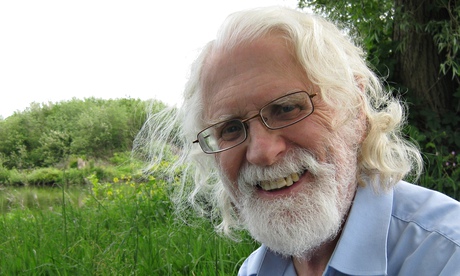
My husband, Nick Spurrier, who has died of lung cancer aged 69, was a seller of secondhand books and a writer whose enthusiasm, energy and campaigning zeal made him a popular figure in his adopted town of Folkestone, Kent.
The son of Robert, a doctor, and Joan (nee Haslop), Nick was born in London but grew up in Grinshill, Shropshire. After Shrewsbury school he moved to London and took his A-levels at Tottenham technical college, from where he went on to study history at the London School of Economics (1970-73).
After a spell of teaching and travelling, he became a bookseller, specialising in history and leftwing politics. The monthly catalogues he sent to university libraries and authors around the world were much prized by their recipients: Paul Foot, in the introduction to his book The Vote: How It Was Won and How It Was Undermined (2005), gave special thanks for Nick’s “wonderful lists of books and pamphlets, rescued, I suspect, from the estates of dead socialists and communists” which he said had “helped build up for me a mighty library on British Labour”.
In 1998 Nick bought a small shop in the Old High Street in Folkestone, which he ran as a general secondhand bookshop alongside his existing catalogue business. Shortly after this, we married and moved to Folkestone from Canterbury, where we had met as next door neighbours. Buying the shop put Nick firmly in the centre of what was to become Folkestone’s “creative quarter”, developed by the Creative Foundation with support from the Roger de Haan Charitable Trust, with the aim of regenerating the town through the arts and creative industries. He entered with enthusiasm into the ideas behind this new development, showing the same passionate commitment that he had first shown in student politics at the LSE and in anti-apartheid protests.
Nick took a particular interest in the Folkestone Book Festival, where he set up the friends organisation, and was a familiar figure meeting and greeting authors. As a founder member of the Folkestone People’s History Centre, he promoted the lottery-funded Roman villa dig in the town, taking part in it himself. A Guardian article about the project mistook him for the former Archbishop of Canterbury, Rowan Williams, earning for him a local reputation as “the archbishop”.
Nick was a leading figure in the campaign to create a new museum in Folkestone town hall, but sadly did not live to see the successful outcome of a lottery bid to which he had given such support. He wrote extensively for local newspapers and magazines, on his own website and on Facebook, taking every opportunity to provide positive views about Folkestone and to promote the town and its heritage. Stories about his own life and travels were also enjoyed by many, as were a series of articles on the history of technology in the engineering magazine E&T.
Having fought off alcohol dependency in the 1970s, Nick was an active member of the fellowship of AA, attending regular weekly meetings where he provided support to others.
He is survived by me, by two stepsons, Adam and Charlie, and by two brothers, Simon and Rod.