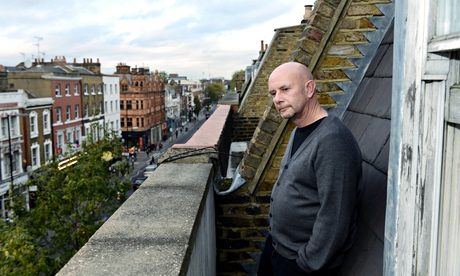
There’s a scene right in the middle of Nick Hornby’s new novel, Funny Girl, that seems to illuminate much of what this writer of fiction, memoir, essays and screenplays is all about. It is the middle of the 1960s and at the fag-end of the day’s television schedule comes Pipe Smoke, a discussion programme so tedious that Dennis, who has been invited to appear on it, wonders if it’s “an attempt to persuade the workers of Britain that they needed more sleep than they were getting”. Dennis is the producer of Barbara (and Jim), the smash-hit sitcom that forms the engine of the novel’s plot, and he has been asked to defend his work against sniffy academic Vernon Whitfield, whose chief objection is that the show is enormously popular. As they circle one another in the green room, Dennis asks him: “‘Do you not like ordinary people?’ ‘I love ordinary people individually,’ said Whitfield. “It’s ordinary people en masse that trouble me.’” And, he continues: “‘Where are we going with all this? The BBC is full of horse-racing and variety shows and pop groups who look and sound like cavemen. What will it look like in 10 years’ time? Fifty? You’re already making jokes about lavatories and God knows what. How long before you people decide it’s all right to show people taking a shit, so long as some hyena thinks it’s hysterical?’”
It is a very funny scene, which climaxes with Dennis, whom we already love, accusing Whitfield, whom we already loathe, of closet eugenicism on air. But it is also a double-edged one. Whitfield is a horrible snob, an enemy of enjoyment. But, as Hornby told me when we met in a cafe near his Islington office: “Some of the things that Vernon says are right. We sort of have ended up watching people sitting on the toilet. I don’t want him to be right, and I still think there’s all sorts of way in which he’s not. He was spectacularly wrong about the times, but quite prescient.”
Hornby’s own cultural tastes encompass books, films, TV, music and sport – not merely in the sense that he enjoys all of the above, but that he rejects a worldview that fixes them in a rigid hierarchy of importance and value. He tells me about a recent appearance at the Cheltenham literature festival, at which his remark that people should give up on books they are not enjoying became a news “if adults are not enjoying something they’re doing in their leisure time, they should stop doing it. That’s all I said, really. But because it was about books, then it becomes this thing.” What worries him most is that the persist-at-all-costs attitude “reinforces the notion that reading is duty, and you’re always more likely to watch a television programme than read a book, if the book that you’re reading is a grim slog and the TV programme you’re watching is something you’re loving.”
Well, I say, I guess the counter-argument goes like this: if you think “grim slog” too quickly, and give up if you’re not immediately hooked, then eventually there will be an erosion in reading and books because they often require a greater investment of time and attention than other forms of entertainment. OK, he responds, but it is not really about “difficulty or not-difficulty”, it is about whether something speaks to you, citing his own enthusiasm for the social histories of David Kynaston (“It’s like reading thrillers – I just can’t stop reading them”) or for a slow-paced novel such as Marilynne Robinson’s Gilead.
What he can’t stand is the pressure to read whatever everyone else is reading, to be part of a perceived high-culture experience. But would he advise someone to persevere with Gilead, given that he loves it so much? “No,” he replies, emphatically. His view is that people are intimidated into thinking that, culturally speaking, something awful will happen to them if they don’t read the books they’re told they should. And what will really happen? “The answer is nothing at all.”
Hornby has, in many respects, sidestepped this problem by making sure that his books are unlikely to feel like a grim slog even when they centre on difficult or painful subjects. Fever Pitch, his phenomenally popular memoir about the joy (small) and pain (great) of pledging his allegiance to Arsenal football club came out 21 years ago. Last year his publishers inducted it into the hallowed ranks of the Penguin Modern Classics series, rather ironically, given our conversation about cultural taxonomy. They did, he smiles, get “a bit of stick” for it. But they were right, because it is a classic: absorbing, affecting, with a reach and ambition far beyond its initial premise and an important influence on much subsequent writing. His first novel, High Fidelity, was published in 1995 and did a similar transformational job on unlucky-in-love record-shop owners as Fever Pitch had done on football fans. This was followed by About a Boy, How to Be Good, A Long Way Down and Juliet, Naked. In between, at regular intervals, have come collections of non-fiction, often based on his long-running column in the Believer, Stuff I’ve Been Reading.
Alongside work, football and the occasional trip to see live music (although he is “driven demented by standing next to young people who are on a device all the way through a show”), there is family life. His oldest son, Danny, with his first wife, Virginia Bovell, is 21 and has autism. The couple co-founded the charity the TreeHouse Trust, now Ambitious about Autism. He has two younger sons, Jesse and Lowell (both also football mad) with his second wife, film producer Amanda Posey. His literacy charity, the Ministry of Stories, originally inspired by Dave Eggers’ 826 Valencia, is now well established. Amanda and the boys are at work and school all day, he says, so what else is he going to do? Have lunch? Go to a gallery? “No. I work. And it feels worth it when you’ve got a hardback in your hand or when you’re going to see a movie that you’re proud of, that’s a pretty good feeling.”
Now comes Funny Girl. It maps the speedily improving fortunes of Barbara, who wins a beauty contest in her native Blackpool, runs away to London when she realises she is liable to get stuck in a bathing costume and a sash if she doesn’t, and tries to reinvent herself as Britain’s answer to her idol, American entertainer Lucille Ball. After a brief sojourn in department store Derry & Toms, she succeeds, changing her name to Sophie, landing a part in a husband-and-wife sitcom and dominating it so totally that her screen husband is relegated to titular brackets.
It is the first Hornby novel set in the past. The 57-year-old insists that he’s not a nostalgist, so what made him choose this particular period, and the newly emergent light entertainment industry? Lots of things came together, he explains: working on the film version of Lynn Barber’s memoir An Education, the action of which ends just before Funny Girl is set; a desire to write about a collaborative art form; even those Kynaston books. It all made for a good mixture, “because when you had a hit television show, for example, everyone in the country watched. It’s incredible looking back on those figures. In the 50s, not enough people had televisions; in the 60s, suddenly everyone had a television and they had, effectively, two channels to choose from. No one watched BBC2, so if you won your slot, then you had the whole of the country watching. Steptoe and Son once got 22 million people, which is a World Cup final kind of figure.”
There was also a sense of new territory, of youth and of vigour: “There were all these clever people doing really good things in television, and the BBC didn’t quite know what it had, didn’t try to stop people, didn’t try to presuppose what was populism and what wasn’t.”
His heroine came out of him wondering why we hadn’t had a British Lucille Ball. He thinks it’s probably because women just weren’t given much to do in British comedy, “even in something like Monty Python. That poor girl just stood around in a bikini most of the time. Comedy was very much a boys’ club. So I wanted to put a fictional character in that gap.”
Almost as important to the novel are his two writers, Bill and Tony. The book begins a few years before the 1967 decriminalisation of private homosexual acts, and the characters are pictured dealing with their sexuality in dramatically different ways. But they also have strikingly different attitudes towards their success: while Tony wants to mine the same seam, Bill begins to hanker after new artistic challenges. Although comedy-writing duo Galton and Simpson (best known for Hancock’s Half Hour and Steptoe and Son), provided a clear model for Bill and Tony’s professional partnership, Hornby was just as interested in writing about Lennon and McCartney – or, at least, the myththat they gave birth to: “One wrote the tunes and the other one wanted to push it, and they couldn’t hold it together as a result … there is a great elemental story in that, about any characters who want two different things.”
He says that he has great sympathy for both positions, but when I press him on whether he, like Tony, thinks one should keep on going with a hit – what you might call the Seinfeld model versus the Fawlty Towers one – he laughs. “Yes, I do, actually. I think if you have that gift, and there’s no drop in quality, then yes, absolutely, I think you have a duty to the people who need that.”
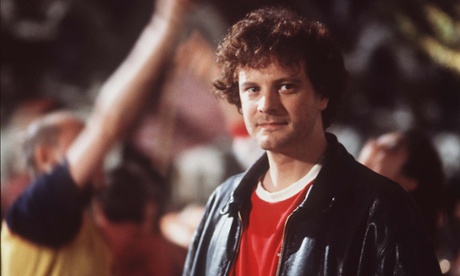
It strikes me that Hornby himself has dodged the issue by doing both: while the books have continued to appear, he has forged a second career in screenwriting. His film adaptation of Fever Pitch, in which he was portrayed by Colin Firth, came out in 1997, but he didn’t write the screenplays for subsequent film versions of his work. He had had a few projects on the go – including a co-writing project with Emma Thompson – but didn’t give anything “a proper bash” until An Education. He says the experience was “so interesting and so artistically rewarding” that he realised he wanted to do much more of it. He followed An Education by adapting Colm Tóibín’s Brooklyn, to be released at some point next year; and then came Wild, based on Cheryl Strayed’s memoir of 2012.
Both An Education and Brooklyn took years to complete; Wild will hit UK cinemas next January, at which point we will be able to watch Reese Witherspoon portray Strayed’s 1,000-mile hike along the Pacific Crest Trail in order to exorcise the trauma of her mother’s death, and her subsequent heroin addiction and marital breakdown. Witherspoon had loved the book so much when she read it, she had immediately optioned it, so things moved quickly. Hornby, who had also loved it and knew Strayed slightly, wrote to her and asked if he could “have a go”. It was 13 months between their first conversation and the last day of shooting.
The three recent screenplays form what he calls a “young girl trilogy”, and in his later novels, too, he has been noticeably attracted to female narratives. I wonder whether it started with 2001’s How to Be Good (the novel that Sunday Times critic John Carey memorably likened to Dostoevsky), narrated by beleaguered female doctor Katie Carr. With the adaptations, the stories certainly spoke to him where those featuring men as central characters hadn’t, he says. “It seems to me quite often that the journeys of young women are more moving, because they are hemmed in more, and dramatically it’s more interesting to think about and write about people whose lives are circumscribed in some way.”
He is particularly funny on being asked that perennial “man-writes-as-woman” question. “When we were doing the press junket for Wild, endlessly people would say, how do you get into a woman’s head? You think, well she wrote the fucking book. It’s a memoir. It’s like asking how you get in the kitchen. That isn’t the question to ask. What do you do when you get in the kitchen? How do you dramatise this? What decisions are you making for it to become a movie? But the stuff about how you get into a woman’s head when that woman is very articulate and has described the contents of her head perfectly adequately – it’s strange. The point is I couldn’t – wouldn’t ever – go on a 1,000-mile hike. She had that experience for me, as it were, and I get the chance to sit in Upper Street writing about it.”
In Wild, Strayed/Witherspoon can barely lift her pack, lives on raw, dehydrated food, stinks, fashions shoes out of masking tape and faces down a rattlesnake. Life on Islington’s Upper Street is undoubtedly easier. But Hornby is no slouch: he has screenwriting commitments for the next couple of years, one of which is a TV version of Nina Stibbe’s epistolary memoir of life among north London intellectuals, Love, Nina. Surely he doesn’t, I suggest, need to work quite as hard as he does?
“Yeah, but it feels like now is the time. It feels like I’ve learned a lot that I want to use and the offers are really interesting. And I’ve no idea if I’ll be offered anything like this in 10 years’ time, or whether I’d be capable in 10 years’ time, and really – work is one of the points, isn’t it?”