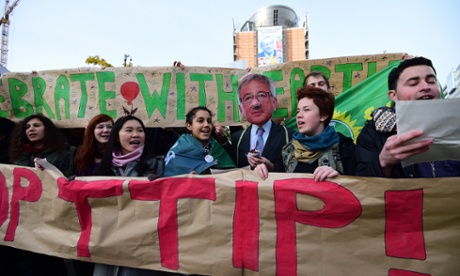
TTIP debate summary
-
Matthew Hancock, the business minister, has said that campaigners who claim that the proposed EU/US free trade deal (the Transatlantic Trade and Investment Partnership, or TTIP) poses a threat to the NHS are misleading voters. They have already won that battle, he says, because the NHS is not being included.
We are quite clear that there is no threat to the NHS from TTIP. Public services, and publicly funded health services, are not included in any of the EU trade commitments ...
I would say this: anyone who remains campaigning against the inclusion of the NHS in TTIP, you have already achieved your aim, and continuing to campaign is continuing to actively mislead, because public services, publicly funded health services, are not included in this negotiation.
Hancock was speaking at the end of a two-and-a-half hour debate that saw many MPs express concerns on this issue. But mostly there was support for the principle of a trade deal. Caroline Lucas, the Green MP, was one of the very few MPs who said TTIP should be completely abandoned. She said that although the government claimed it would benefit a family of four by £400 a year, a research paper from Tufts University in the US (pdf) shows that the average Briton will be £3,000 worse off after 10 years under TTIP because it will depress wages.
That’s all from me for today.
Thanks for the comments.
Updated
The Institute of Directors has just issued a press notice criticising “the poor quality of the debate in parliament” on TTIP. It says “poorly-informed MPs risk jeopardising a trade deal which could bring huge benefits to Britain’s small and medium sized companies.”
And this is from Allie Renison, its head of EU and trade policy.
MPs need to engage properly in the discussions around TTIP rather than jumping on the misinformation bandwagon that is currently rolling across Europe. IoD members are clear that we need the deal, with 9 out of 10 backing it to create jobs and growth.
Many of TTIP’s loudest opponents claim to be in favour of free trade, while hiding their protectionist agenda behind misleading scaremongering about the NHS and investor-state dispute settlement.
Trade unions, meanwhile, have mistakenly tried to paint TTIP as the plaything of multinationals, despite the fact that small and medium sized enterprises actually stand to benefit the most. Politicians who are close to trade unions have a particular duty to stand up and make the case for increasing exports and boosting inward investment.
Matthew Hancock’s speech is getting some criticism on Twitter.
From the Ukip MP Mark Reckless
@matthancockmp thinks he has put issue of NHS and TTIP to bed - surely wishful thinking
— Mark Reckless (@MarkReckless) January 15, 2015
From the SDLP MP Mark Durkan
HoC #TTIP debate need for due scrutiny >implics 4 NHS, food,enviro, health/safety standards etc. Govt quote dismissive assurances again.
— Mark Durkan MP (@markdurkan) January 15, 2015
From Global Justice Now
This speech by @matthancockmp is determined to say TTIP can do no harm - in the face of studies and research which say the opposite.
— Global Justice Now (@GlobalJusticeUK) January 15, 2015
From Nick Dearden, director of Global Justice UK
Incredible response from @matthancockmp for the Govt to #TTIP debate - utterly dismissive and total contempt for public concern. #noTTIP
— Nick Dearden (@nickdearden75) January 15, 2015
The debate is now over.
I’ll post a summary shortly.
Hancock says the ISDS provisions won’t affect the ability of governments to regulate.
Britain has 90 such agreements in place, but there has never been a successful claim against it, he says.
The SDLP’s Mark Durkan asks what would happen if another member state lost an ISDS case.
Hancock says, if it were about their own regulations, it would have no impact on the UK.
On the health service, he quotes what the EU’s former trade commissioner, Karel de Gucht, said about the NHS being covered by TTIP. She said that “the argument is abused in [the UK] for political reasons but it has no grounds”.
He says Sarah Wollaston, the chair of the health committee, also made it clear the NHS was not covered. (See 3.35pm and 4.13pm.)
He says those who want the NHS excluded have already won. They should stop raising this issue, because, in doing so, they are actively misleading people, he says.
There is already massive engagement with the public on this, he says. That will continue.
He says he wants to to ahead so Britain can carry on its historic role as a champion of free trade.
Updated
Matthew Hancock, the Conservative business minister, is winding up.
He starts by saying Britain has a great history of trade, going back to the wool trade in the middle ages.
Mark Reckless, the Ukip MP, intervenes. Is TTIP about setting business free? Or is it just about having a singe regulatory regime for the US and the EU.
Hancock says it is about promoting trade.
Millions of people have been lifted out of grinding poverty by the extension of free trade, he says.
Caroline Lucas intervenes. The government says TTIP could save the average family £400 a year through cheaper prices. But what does Hancock say about a peer-reviewed academic paper saying after 10 years TTIP would make the average worker £3,000 worse off, through lower wages.
Hancock says in his lifetime extending free trade has made people better off.
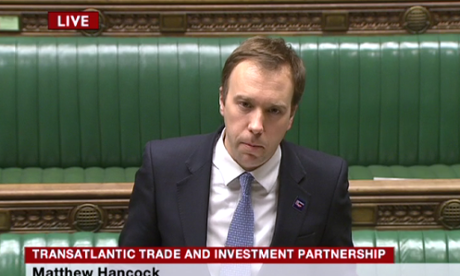
Ian Murray concludes with some questions for the minister.
What plans does the government have to ensure the Commons is kept fully informed about the negotiations?
What will the government do to keep the public informed?
How will the government keep business engaged?
And how will the government respond to the Commons passing today’s motion. (See 2.15pm.)
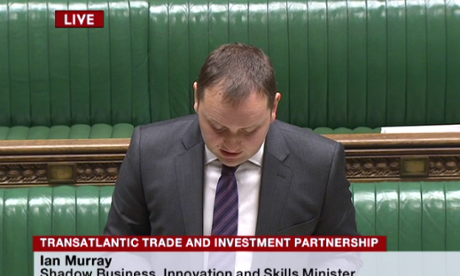
Ian Murray, the shadow business minister, is winding up for Labour.
He says he is sorry that Robin Walker attacked 38 Degrees. He says he is glad that organisations like 38 Degrees have raised concerns about this, and brought it to the attention of MPs.
He says Labour governments going back to Attlee have supported regulated trade agreements.
Labour supports TTIP in principle. But it will not support a deal that does not protect public services and the NHS, or a deal that does not safeguard standards on issues like the environment.
He says he has never received so much correspondence on an issue. It shows how much public concern there is.
This cannot be a backroom deal between Brussels and Washington. Like justice, trade deals must not just be done, but must be seen to be done too.
The biggest threat to the NHS and public services is not this trade agreement, or any trade agreement, but the re-election of a Conservative government.
He challenges the minister replying, Matthew Hancock, to say that the government will not support any TTIP that includes the NHS and public services. And, if they are not going to be included, why not have a “belt and braces” approach, and spell that out explicitly.
On ISDS provisions, he says there is a case for saying they are inappropriate where trade partners have unequal legal jurisdictions. But that is not the case with the the US and the EU.
Zac Goldsmith asks if removing ISDS is a red line for Labour.
Murray says Labour does not think ISDS, as proposed in TTIP in its current form, is neither necessary nor desirable.
Caroline Lucas, the Green MP, has been tweeting this Twitter poster about TTIP.
Debating #TTIP today. My amendment seeks to bin it altogether: http://t.co/SmYwk5YAfB #stopTTIP pic.twitter.com/Giru1AZ4Wj
— Caroline Lucas (@CarolineLucas) January 15, 2015
Labour’s John McDonnell says if there was a vote on TTIP itself, he would be voting against.
As a trade deal, it is even bigger than joining the single market, he says.
And the ISDS provisions amount to a transfer of power from sovereign governments to corporations. This country may not have lost a ISDS case. But other countries have, and it has cost them billions, he says.
Caroline Lucas, the Green MP, is speaking now. She tabled an amendment saying the TTIP talks should be “frozen in their entirety”, but it is not being put to a vote.
She says people are increasingly opposed to an agreement that could undermine democratic law-making.
The purpose of ISDS provisions are to give new rights to companies, she says. She quotes from a pro-TTIP briefing circulated in the City. It says TTIP would “set a precedent” and it addresses the question of why firms who lose out from a trade deal need ISDS provisions, and why they can’t just use national courts. It’s because ISDS provisions “depoliticise” the issue, the briefing says, and provides a “neutral panel”. But, Lucas says, most of us would assume that this is what the courts provide anyway. So why do we need this corporate-only dispute settlement mechanism? It is not depoliticising the issue; it is trying to take these issues out of public scrutiny. And it implies the current judicial system is not good enough for private companies. That attitude is “incredibly worrying”.
Sarah Wollaston has posted a link to a letter the health committee received from the European Commission in December about the impact of TTIP on the NHS.
.@Chr1sR0berts @sallyhbrooks the letter to @CommonsHealth from EU director gen for trade clarifying issues re NHS http://t.co/OfoMtXJFDc
— Sarah Wollaston MP (@drwollastonmp) January 15, 2015
It’s a four-page letter, giving the commission’s answer to 10 questions. Here’s the first one.
1. Is it the EU’s negotiating position that publicly-funded health services should be excluded from TTÍP?
This is the effect of the EU’s approach to public services in all trade negotiations since the General Agreement on Trade in Services (GATS) in 1995. In the case of TTIP, it is clear in the negotiating directives given to the Commission by the Member States. This says that the EU must preserve the quality of its public utilities and that services supplied in the exercise of governmental authority should be excluded from the agreement. At the same time all bilateral agreements take GATS as a starting point. This means as follows:
• We explicitly exclude services supplied in the exercise of governmental authority: this exception is valid and is significant for a number of public services (e.g. justice, policing).
* Beyond this, in all its trade agreements the EU then takes a broad horizontal reservation which reserves the right to have monopolies and exclusive rights for public utilities in EU Member States at all levels of government.
* In addition, the EU retains very broad sectoral reservations in its trade agreements for public services (public education, public health and social services, and water). This means that public authorities at all levels do not have to treat foreign companies or individuals the same way as EU ones and do not have to provide access to their markets.
It is also worth explaining that even without the above reservations and exceptions, the EU trade agreements leave EU governments at all levels free to regulate all services sectors in a non-discriminatory manner. For example, they are free to deciding on (i) the licencing requirements necessary to be allowed to provide a particular service or (ii) the quality standards that suppliers have to meet.
Therefore, in effect all publicly funded public health services are protected in EU trade agreements, and this approach will not change for TTIP.
Phil Wilson, the Labour MP, says it would be counter-productive to reject TTIP before knowing the possible advantages.
Zac Goldsmith, a Conservative, says ISDS provisions have a role in countries where the judiciary is unreliable. But that is not the case here, he says. He says he has repeatedly asked the government to cite examples of where firms have been disadvantaged here by not having access to courts. The government always says it does not have the information. But, if it does not have that information, why does it think ISDS provisions are necessary?
(In his column on Tuesday George Monbiot said he had repeatedly asked much the same question. He said he did not get a satisfactory reply either.)
Goldsmith says these trade deals do not achieve as much as people thing. Nafta (the North American Free Trade Agreement) was supposed to create jobs, but there is now a consensus that it cost 870,000 jobs, he says.
MPs should insist on the right to approve or reject this treaty before the government commits itself too it.
Labour’s Sheila Gilmore says she is glad campaigners have forced this issue onto the agenda.
Sarah Wollaston is now tweeting about her speech, in response to challenges from critics.
Here’s here response to Sally Brooks and Chris Roberts, who are both academics, according to their Twitter profiles.
..@sallyhbrooks No Sarah, it does matter how Public services are delivered @drwollastonmp Outsourcing = asset stripping & rent-seeking...
— Chris Roberts (@Chr1sR0berts) January 15, 2015
.@sallyhbrooks It appropriates existing infrastructure, intellectual property, publicly funded accumulated knowledge 4 profit @drwollastonmp
— Chris Roberts (@Chr1sR0berts) January 15, 2015
@Chr1sR0berts @sallyhbrooks I was clearly referring to the fact that all are health services exempt from TTIP if publicly funded
— Sarah Wollaston MP (@drwollastonmp) January 15, 2015
And here’s here reply to Unison’s Ciaran Naidoo
Tory @drwollastonmp and chair of health committee admits US firms should be able to sue using #ttip to protect investments.TTIP inludes #NHS
— CiaranNaidoo (@CiaranNaidoo) January 15, 2015
@CiaranNaidoo I said companies can already do so under domestic contract law
— Sarah Wollaston MP (@drwollastonmp) January 15, 2015
Here’s the Guardian’s Politics Weekly podcast. It features Tom Clark, James Ball, Natalie Nougayrède and Michael White discussing the aftermath of the Paris attacks, and the row about election debates.
Labour’s Liz McInnes says there is a real fear that the TTIP is about giving businesses huge new powers to intimidate policy makers.
The European Commission has made the TTIP more transparent. And it has temporarily suspended talks on the ISDS provision. She says she urges the government to use this opportunity to negotiate exemptions for the public sector.
The government has said it will not push for an NHS exemption because the NHS will not be affected. These mixed messages are very concerning, she says. The government should push to exempt the NHS.
Sarah Wollaston, the Conservative MP and chair of the Commons health committee, says trade is the cornerstone of our national wealth. Ed Miliband wants to “weaponise” health. That is shameful. And claims about TTIP’s impact on the NHS have been used as part of that weapon. She says she would not support TTIP if it would damage the health service.
A Labour MP asks what would happen if an incoming government cancelled a contract with a private health supplier. Wouldn’t they be able to sue the government for compensation?
Wollaston says, in those circumstances, a firm would be able to get compensate already, under existing laws. TTIP would protect British firms doing business in the US.
She says Labour MPs should withdraw the claim that this is a conspiracy.
Updated
Eilidh Whiteford, the SNP MP, says the public concerns about TTIP are very genuine. TTIP offers some potential benefits for Scottish agriculture. But there are dangers too. Aberdeen beef is produced to a very high standards; but in the US animal welfare standards are lower, allowing producers to sell beef at a cheaper price.
The government should spell out more details about how TTIP would affect different parts of the economy.
Ciaran Naidoo from Unite says Julian Smith missed the point when he was talking about TTIP and the NHS earlier. (See 3.21pm.)
@JulianSmithMP misleading. #TTIP not abt opening up NHS it means companies can sue UK if gov takes #NHS contracts back into public hands
— CiaranNaidoo (@CiaranNaidoo) January 15, 2015
Julian Smith, a Conservative, say he wants to challenge the premise of the motion. It is not the case that there has been no parliamentary scrutiny. This is the third debate on TTIP. And ministers have answered many questions about it on other occasions.
He says the the European Commission has said explicitly than any ISDS provisions in TTIP would have no effect on the government’s ability to make changes to the NHS.
TTIP will save consumers hundreds of pounds when they buy jeans and trainers and other items. And it will bring benefits, particularly to small businesses.
Back in the debate Labour’s David Anderson says David Cameron used to lecture Labour on transparency when he was in opposition. But the TTIP deal is far from transparent, he says.
There is considerable concern about private firms taking over public services, he says. That’s why people do not trust these negotiations.
In a blog for Coffee House, the Labour MP John Healey says today’s debate highlights how inadequate parliamentary scrutiny of EU treaty-making is. Here’s an extract.
Despite the fierce extra-parliamentary debate the planned deal has provoked, this will be only the third time in the 18 months since negotiations started when there will be any debate at all in the House of Commons chamber. In total, the three debates will amount to less than one day’s full business on a binding treaty that could have wide-ranging effects on our national economy from aerospace to agriculture, metals to motor vehicles and public services to pharmaceuticals. Each debate has been instigated by backbench MPs, not ministers, and with no prospect of a binding vote.
The truth is that Westminster lacks any proper ways to hold ministers to account for what they do or decide in Europe. Voters often worry decisions on Europe are taken by people beyond their reach or influence, and this fuels anti-European sentiment
TTIP is the biggest-ever bilateral trade agreement. The public have an important stake in it, and so deserve a say through their own UK Parliament. There is an overwhelming case for all Party leaders to guarantee a Commons vote on TTIP, whether or not the content of the EU-US agreement formally requires member state approval.
Robert Walter, a Conservative, is speaking now. He says he also supports the motion and its call for more parliamentary scrutiny of TTIP. He whole-heartedly believes in free trade, he says.
John Spellar, the Labour MP, is speaking now. He says he is glad that Geraint Davies said he was in favour of free trade. Yet Davies is in strange company. Many of those opposed to TTIP are opposed to free trade. And some of them don’t like America.
He says he endorses what Robin Walker said about 38 Degrees. He is not criticising the membership, he says, but he does criticise their “nihilistic, hysterical leadership”.
The biggest threat to the NHS is the possible re-election of the government, he says.
He says letters from the European Commission have addressed the threat to the NHS from TTIP. (The EU trade commissioner Karel de Gucht explicitly said last year that TTIP did not pose a threat to the NHS.)
Robin Walker, a Conservative, is speaking now. He says no MP could object to the motion, which talks about parliament giving TTIP more scrutiny. (See 2.15pm.) But he makes it clear he does not share Geraint Davies’s concerns. As Robert Walter alluded to earlier, the UK never lost an ISDS case, he says. (See 2.46pm.)
But Walker says Conservatives have some reservations about TTIP. He says he thinks it is “not sufficiently transparent”.
Walker goes on to criticise David Babbs, the chief executive of 38 Degrees, which has campaigned against TTIP. Walker says Babbs told a Commons committee that he had told 38 Degrees members about a letter from the European Commission saying that concerns about TTIP opening the NHS up to privatisation were unfounded. But that turned out to be wrong, he says. He says Babbs also misled the committee about 38 Degrees being responsible for an article about this on BuzzFeed.
This sort of campaigning does not help public scrutiny, he says.
Labour’s Chi Onwurah says the TTIP could open up the NHS to take-over by American companies.
Geraint Davies says the government has given assurances that this would not happen. But there is doubt about how robust those assurances are.
He suggests that ISDS provisions could also stop a future Labour government freezing energy prices. Or, if a future government wanted to renationalise rail services, these laws could stop that happening too, he says.
Geraint Davies is still speaking.
There is enormous pressure for a trade deal, he says. Trade is good. Anyone with any knowledge of economics knows that the laws of comparative advantage mean a trade deal would be good for jobs.
But the ISDS provisions are the “thorn in the rose”, he says. Companies would be able to sue democratically elected governments.
There are examples of companies extracting money from governments. He mentions Philip Morris suing Uruguay.
So these powers will be used to “fleece the taxpayer”, he says.
Robert Walter, a Conservative, says the UK is party to 90 trade deals involving ISDS provisions. Does Davies know how many times the UK has lost?
Davies says he doesn’t.
(According to what David Cameron told MPs at the end of last year, the answer is none.)
Caroline Lucas, the Green MP, intervenes. She says EU governments have lost 127 cases. So it is very serious matter.
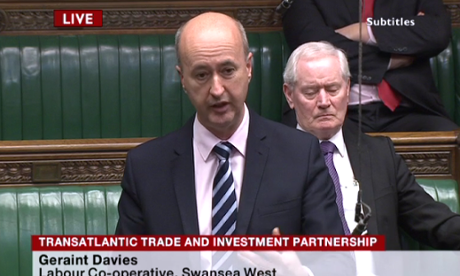
Lindsay Hoyle, the deputy speaker, says that, after Davies, 16 MPs want to speak. He urges MPs to keep their interventions short.
Julian Huppert, the Lib Dem MP, intervenes. Does Davies welcome the suspension of the ISDS parts of the TTIP talks.
Yes, says Davies.
Geraint Davies, the Labour MP, is now opening the TTIP debate. He says around 60 MPs supported his call for a debate when he put the proposal to the backbench business committee.
This issue is fundamental to the balance of power between democracy, and multi-national giants, he says.
Parliament’s right to scrutinise TTIP is “imperative”.
If we end up in a position where multi-nationals can sue governments, we will be in the wrong place, he says.
This is being stitched up.
MPs debate the Transatlantic Trade and Investment Partnership (TTIP)
MPs will soon be starting a debate on the proposed the proposed Transatlantic Trade and Investment Partnership (TTIP), the free trade deal being negotiated between the EU and the US. And they will focus in particular on its investor-state dispute settlement (ISDS) provisions.
They will be debating a backbench motion which has been tabled by Geraint Davies, a Labour MP, and Greg Mulholland, a Lib Dem. Here’s what the motion says:
That this House believes that the Transatlantic Trade and Investment Partnership and any associated investor-state dispute settlement provisions should be subject to scrutiny in the European Parliament and the UK Parliament.
It may well be passed without a vote, but that won’t necessarily mean much. Ministers now ignore these backbench motions if they want to.
Still, the debate should shed some light on one aspect of TTIP that has become particularly controversial. Here are three items of background reading that help to explain why.
If a government proposes to abandon one of the fundamental principles of justice, there had better be a powerful reason. Equality before the law is not ditched lightly. Surely? Well, read this and judge for yourself. The UK government, like that of the US and 13 other EU members, wants to set up a separate judicial system, exclusively for the use of corporations. While the rest of us must take our chances in the courts, corporations across the EU and US will be allowed to sue governments before a tribunal of corporate lawyers. They will be able to challenge the laws they don’t like, and seek massive compensation if these are deemed to affect their “future anticipated profits”.
I’m talking about the proposed Transatlantic Trade and Investment Partnership (TTIP) and its provisions for “investor-state dispute settlement”. If this sounds incomprehensible, that’s mission accomplished: public understanding is lethal to this attempted corporate coup.
The TTIP is widely described as a trade agreement. But while in the past trade agreements sought to address protectionism, now they seek to address protection. In other words, once they promoted free trade by removing trade taxes (tariffs); now they promote the interests of transnational capital by downgrading the defence of human health, the natural world, labour rights, and the poor and vulnerable from predatory corporate practices.
[Monbiot is] entirely missing the point of what is going on here. Which is simply that it’s a mechanism to make sure that governments live up to the laws that they themselves have agreed to. And that’s it. Governments are entirely allowed to change their minds on what those laws are, of course, but they do have to compensate those who lose money as a result of their changing them. A very close analogy is the idea of compulsory purchase: no one at all thinks that the government should be allowed to steal your house in order to build a railway line. But we all also agree that sometimes the government should be allowed to build a railway line through where your house used to be. The logic of TTIP and ISDS is exactly the same.
Lunchtime summary
- Andy Burnham, the shadow health secretary, has said Labour could stop foods high in sugar, fat and or salt being advertised on TV before a watershed, to protect children’s health. As Patrick Wintour reports, publishing a public health white paper, Burnham said he wanted fresh talks between advertisers and TV companies to look at why current advertising restrictions on unhealthy products are failing to work
- The Green party has now overtaken Ukip in terms of the size of its membership. Some 2,000 people joined only yesterday, taking its membership over 43,000.
- Clegg has said he backs David Cameron in his attempt to try to ensure that the state can always access internet communications used by terrorists. (See 10.32am.)
Ed Balls has been tweeting about his visit to Washington. (See 12.43pm.)
Just been live on @msnbc's @Morning_Joe to launch the publication of the "Inclusive Prosperity" report pic.twitter.com/JNtoLNYXm1"
— Ed Balls (@edballsmp) January 15, 2015
And here is the inclusive prosperity report that he is publishing.
Here is the full report of The Commission on Inclusive Prosperity which I have co-chaired with Larry Summers: http://t.co/QE7pErwhy1"
— Ed Balls (@edballsmp) January 15, 2015
Balls has summarised the report’s argument in an article for Huffington Post.
The Obama administration is backing the Balls report and on the Today programme Jon Sopel, I think, suggested that, with President Obama also hosting a visit from David Cameron, this amounted to Washington hedging its bets as to the outcome of the election.
Updated
You can read all today’s Guardian politics stories here. And all the politics stories filed yesterday, including some in today’s paper, are here.
As for the rest of the papers, here’s the PoliticsHome list of top 10 must-reads, and here’s the ConservativeHome round-up of today’s political stories.
And here are four articles I found particularly interesting.
Last weekend, in an interview with the Sunday Times, the Chancellor said this: “I really like Boris Johnson. I respect him. I respect what he has done in London. I like his writing. He’s great company and we have quite a similar political outlook on things… It’s a good political friendship and long may it continue to be so.”
This is spectacular. For the past five years Mr Osborne and Mr Johnson have been rivals. Now Mr Osborne, acting on the advice of Michael Gove, has signalled that he is ready to join Boris Johnson’s team. He brings with him Tory central office, the whips, and the gruesome inner circle that surrounds the Prime Minister.
I record all of this with sorrow, even perhaps an element of personal bitterness. The Telegraph colleague I know is an outsider, a maverick, a genius. Now they want to make him continuity Cameron, the best way of securing the Prime Minister’s legacy, and keeping out Mrs May. He is the politician the Tory establishment favours and has suddenly become odds-on favourite for the succession.
Ed Balls is to pre-empt David Cameron’s visit to the White House by 24 hours by launching an international “inclusive prosperity” report in Washington on Thursday that has the Obama administration’s blessing.
The timing of the shadow chancellor’s visit is a coincidence. But it will help Labour to challenge any perception from Mr Cameron’s two-day visit to Washington, starting later on Thursday, that President Barack Obama is implicitly endorsing the Conservatives at the forthcoming UK general election.
Mr Balls co-chaired the committee that wrote the centre-left economic prospectus with Lawrence Summers, the former US Treasury secretary and Obama adviser, with input from a number of leading academics and politicians around the world.
They argue that the centre-left has to map out a route for greater prosperity and higher employment for low and middle-income earners that challenges what they describe as the politics of despair espoused by populist parties.
One survey found that 32 per cent wanted the next government to spend more money on trying to improve public services even if it meant borrowing more. Keeping spending at the present level was backed by 29 per cent, and only 24 per cent supported cuts.
In the second survey, 42 per cent of respondents favoured increased public spending funded by tax rises.
The findings cast doubt on the wisdom of the Conservatives’ election plans, which independent experts say will require “colossal” spending cuts.
Britain under the Coalition is a country in which the poor are being “left behind” and entire cities “cast aside” because politicians are obsessed with Middle England, the Church of England says today in a damning assessment of the state of the nation.
In a direct and unapologetically “political” intervention timed for the beginning of the General Election campaign, the Archbishops of Canterbury and York, warn party leaders are selling a “lie” that economic growth is the answer to Britain’s social problems.
Questioning David Cameron’s slogan “we’re all in this together” they condemn inequality as “evil” and dismiss the assumption that the value of communities is in their economic output as a “sin”.
Britain, they argue has been “dominated” by “rampant consumerism and individualism” since the Thatcher era, while the Christian values of solidarity and selflessness have been supplanted by a new secular creed of “every person for themselves”.
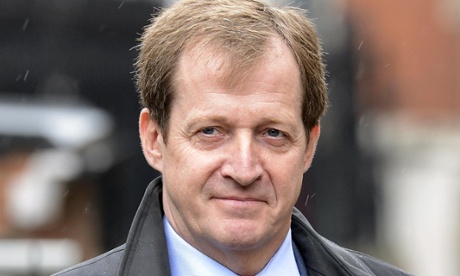
Alastair Campbell, Tony Blair’s former communications chief, has strongly rejected claims that he hit someone in the street. His accuser, who has not been identified, reported the incident to George Galloway, the Respect MP and a fierce critic of Campbell, and the story has been covered by the Ham & High, which also has posted some (rather inconsequential) video footage. The accuser accepts that he provoked Campbell, calling him a “piece of shit”, and tried to kick him. Campbell says that the other man, as well as trying to kick him, spat at him too. Campbell has written this up in a lengthy post on his blog. “Though I am used to robust debate, including in public, this is the first time I have been attacked in a public place like this [near his home in Gospel Oak, north London] and the first time I have been spat at,” he says.
The Action/2015 campaign has been launched today to pressurise world leaders into making progress on poverty and climate change at two global summits coming up this year. They are the meeting in New York in September to renew millennium development goals, and the climate change conference in December.
In a speech in London this morning, Ed Miliband backed the campaign. As the Labour news release says, he said a Labour government would work towards three aims.
• An end to extreme global poverty (people living on $1.25 a day) by 2030
• Tackling inequality must remain at the heart of the post-2015 development agenda, with a focus on securing equal access to healthcare and protecting the rights of women, children and workers.
• A separate development goal on climate change and a binding international agreement on climate change leading to zero net carbon emissions by 2050 with the UK leading the way by decarbonising electricity supply by 2030
And in his speech he said:
I know tackling climate change, global poverty and inequality are not as fashionable as they once were. But I also know they are more important than ever.
For me, they are not luxury items in our programme for change. They are not part of a branding exercise. They go to the heart of my beliefs and the reason why I entered politics.
Working together to wipe out extreme poverty – at the launch of #action2015 with @Ed_Miliband and @ONEcampaignUK pic.twitter.com/ZH1x1A26X0
— Mary Creagh MP (@marycreagh_mp) January 15, 2015
Miliband is currently at Queen's Park Community School speaking to young people about Millennium Development Goals. pic.twitter.com/uueXKVXRc8
— Siraj Datoo (@dats) January 15, 2015
If you’re interested in what MPs and peers are reading, these lists are interesting.
Meanwhile, MPs have been keen to read @DenisMacShane and @philipjcowley's tomes before Christmas pic.twitter.com/oDk7f6xDuY
— Asa Bennett (@asabenn) January 15, 2015
Good to see Lords are keen to know more about the working class, women in journalism and English law pic.twitter.com/0qhh68vFha
— Asa Bennett (@asabenn) January 15, 2015
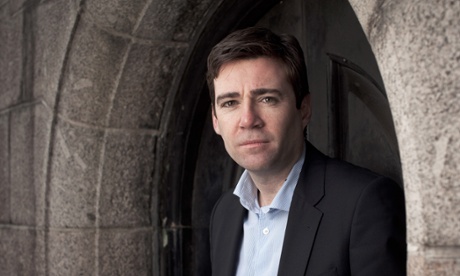
Andy Burnham, the shadow health secretary, delivered a speech on public health this morning. He said that he was not proposing a “finger-wagging approach” but instead advocating ideas that would empower adults.
The whole package is quite wide-ranging. You can read full details here, and here are some of the key ideas he’s announcing.
- Action would taken to cut the consumption of high-strength, low-cost alcohol, perhaps through minimum pricing or changes to bottle sizes.
- General food labelling would be made clearer.
- Plain cigarette packing would be introduced immediately, with the aim of ensuring children born in 2015 become the first smoke-free generation. (The SNP has got a similar goal for Scotland.)
- All young people would be trained in first aid, including cardiopulmonary resuscitation, before they leave school.
- Defibrillators would be placed in public places, and a open register of where they were would be created, accessible via a digital app, so people can find them easily.
-
New recommended minimum levels of physical activity would be announced, with the goal of getting 50% of people to meet them by 2025.
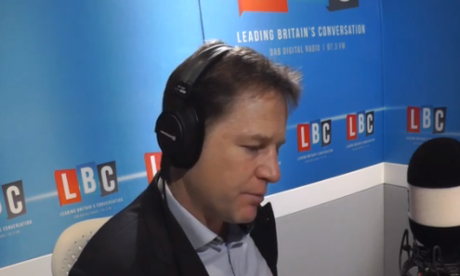
Nick Clegg's Call Clegg phone-in - Summary
Here are the key points from Nick Clegg’s phone-in. I’ve covered what he said about internet surveillance in some detail because, until now, attention has largely focused on how divided the Conservatives and the Lib Dems are over the so-called snooper’s charter. As Clegg made clear, on other internet surveillance issues the two parties are much closer.
-
Nick Clegg said he supported David Cameron in his attempt to try to ensure that the state can always access internet communications used by terrorists. He said that the debate on this had been “mangled” since Cameron spoke on this last week, but that he supported the key point Cameron was making.
As it happens what David Cameron has been going on about in the last few days is nothing to do with keeping Mrs Miggins’ website record of her visits to the local garden centre website [ie, the communications data bill]; it’s actually been about this issue of how you intrude on the communications of terrorists, or would-be terrorists, something the principle of which - there’s lot of technical complexity - the principle of which no one is going to disagree with.
Clegg said he accepted that further legislation in this area may be necessary.
One issue is, do we as a society, as a government, as a state, and the police and the security services, should they retain the right to, and be given extra powers if necessary, to listen in to the communications, on all sorts of different platforms, and they change all the time, of people who want to do us harm? Of course. I’ve defended that. And we’ve updated our laws. I’ve supported fast-track legislation this summer to do that.
Clegg said that Cameron would be raising this issue in his talks with President Obama. They were concerned about people who pose a threat to security and ensuring “there are no dark places where they can hide”, Clegg said. He said the British were dependent on American companies a great deal for their internet communication services and that Cameron would be talking to Obama about ensuring that American firms cooperate more with British authorities.
We rely very heavily as a country on their cooperation; for instance, where there’s an encrypted service - and having encrypted services are important, because we don’t want any of us to become subject to hacking from criminal gangs and so on, so encryption is just a fact of life; you can’t undo encryption - you can ensure that you cooperate with the companies, that where you want to break that encryption, find out what nasty people are saying too each other, we can do so.
But he said this issue was not the same as the proposal in the draft communications data bill to store information about internet searches. He was still opposed to that, he said.
Actually the communications data bill was not about listening in. It was simply about saying every single website, every single social media interaction you do every year, should be stored somewhere. And I don’t think ... constructing some vast, gargantuan database which records what Mrs Miggins in 36 Orchard Close has done when she ‘s gone on to her Waitrose website for a year - do I think that’s a sensible use of the statute book, or our time and resources?
Interestingly, he did not refer to the communications data bill as the snooper’s charter, which is what the Lib Dems usually call it. Yesterday Theresa May, the home secretary, complained this term was highly misleading.
-
Clegg ridiculed David Cameron’s stance on televised leaders’ debates.
This cheery-eyed compassion the Conservatives have suddenly discovered for the Green party is one of the more specious excuses I’ve seen ... I think David Cameron has put himself in an unsustainable, and actually slightly laughable position.
He said that, although Cameron was saying he would only take part if the Greens were included, the Greens and Ukip combined had as many MPs as Plaid Cymru, half as many as the SNP, and less than half as many as the DUP - even though Plaid, the SNP and the DUP are all being excluded.
-
He said the broadcasters should “develop a bit of backbone” and be willing to empty chair Cameron if he refuses to participate.
I really do hope the broadcasters develop a bit of backbone on this, because they shouldn’t be bullied by the Conservatives throwing their weight around.
-
He strongly criticised the Lib Dem MP David Ward for posting a tweet saying that seeing the Israeli prime minister Benjamin Netanyahu at the Unity march in Paris on Sunday made him feel sick.
What David Ward did ... was crass, was stupid, was insensitive, was offensive clearly.
But Ward’s tweet was not racist, Clegg said. And he indicated that Ward would not be suspended from the party, or ordered to apologise.
-
He said the Lib Dems would soon be releasing the front page of their manifesto, setting out their top priorities. (Actually, one version has already been “leaked”.)
Updated
The Tory blogger Harry Phibbs says Nick Clegg should not have been so dismissive of the Greens. (See 9.25m.)
Nick Clegg's being dismissive about the @GreenPartyUK - but on @YouGov this morning they are on 7%, the Lib Dems on 6%... #CallClegg @LBC
— Harry Phibbs (@harryph) January 15, 2015
Q: Why are the Paris attacks getting so much more attention than the massacre of 2,000 people by Boko Haram in Nigeria?
Clegg says it is understandable that an attack in a European city, only two hours from London, is getting so much attention.
And that’s it.
I’ll post a summary soon.
Q: What do you feel about the Mayor of Rotterdam saying Muslims who do not like the West should leave?
Clegg says he does not think that was helpful.
Clegg says he is alarmed by the survey showing that a quarter of British Jews have considered leaving the UK.
Q: Could you form a coalition with Labour if you had to?
Clegg says it is not his decision. It’s the voters’ decision.
Whichever party wins the election has the right to try to form a government, he says.
A cottage industry will be spawned by people trying to predict the election, he says.
Q: Yesterday it was reported that Cameron would refuse a coalition with the Lib Dems unless you drop your opposition to the communications data bill.
Clegg says recently Cameron has not been talking about the communications data bill. He has been talking about ensuring the state can access the communications of suspects. Everyone would agree with that, he says.
He says the Lib Dems will soon release the front page of their manifesto, setting out their priorities.
Q: Why are the Tories trying to get out of the TV debates?
Clegg says their teary-eyed compassion for the Greens is one of the most spurious excuses he has heard.
There are lots of parties that have more MPs than the Greens, like Plaid Cymru and the DUP.
Clegg says he is not totally happy with the proposals from the broadcasters. But people have to accept them.
Q: Do you think the debates will go ahead?
Yes, says Clegg, because Cameron has put himself in a “laughable” position.
He says he hopes the broadcasters develop some “backbone” and threaten to empty chair Cameron. But he hopes Cameron is there.
Q: Why are you so opposed to the draft communciations data bill?
Clegg says this debate gets mangled.
One issue is whether the security services should be able to listen in to the communications of those who could do us harm? Of course they should, he says.
But a separate issue is whether details of everyone’s communcations should be stored.
He says he does not think that creating some vast, gargantuan database, storing details of what Mrs Miggins did when she logged onto the Waitrose database, would be a good idea? No, he says.
Q: But even Lib Dems don’t agree with you, like Lord Carlile?
Clegg says Lord Carlile has not agreed with party policy on this issue for years.
He says David Cameron is talking to President Obama about getting cooperation from US internet providers about the communications of suspects. That is much more important.
The issue of proportionality is important, he says. We should focus on the threat.
Q: What needs to come out of Cameron’s meeting with Obama?
Clegg says much internet information comes through systems provided by the US. Britain wants to ensure that it can cooperate with the American internet companies, so that if they need to break into the encryption of people how might do us harm, they can.
Q: In the light of the murder of four Jewish people in Paris, do you think David Ward, the Lib Dem MP’s, tweets are anti-semitic? What are you going to do about it?
Clegg says what Ward did was crass and offensive. But he does not think they were racist.
He says Ward does not speak for the party in any way on this. In the past he has been suspended over remarks on Twitter.
It was foolish to criticise the Israeli prime minister Benjamin Netanyahu’s presence in Paris. Netanyahu had ever right to be there, Clegg says.
Q: Shouldn’t MPs be more responsible? These were Jewish victims, not Israeli victims?
Yes, says Clegg.
Q: Should Ward apologise?
Clegg says he has been asked if Ward should be sacked from the party. That is what the Israeli ambassador has demanded. If people are racist, that is unacceptable.
Clegg says, on previous occasions, Ward’s tweets were worse. That led to a suspension and a full apology?
Q: Will he be suspended for this?
Clegg says on previous occasions Ward used offensive language about the Jewish community and Jews.
If someone feels passionately about the plight of Palestinians, they are entitled to do that.
Criticising Nenanyahu’s presence in Paris was wrong. But, Clegg says, he has to make a judgment about whether something slips into racism.
Here are Ward’s tweets.
#Netanyahu in Paris march - what!!!! Makes me feel sick
— David Ward (@DavidWardMP) January 11, 2015
Je suis #Palestinian
— David Ward (@DavidWardMP) January 11, 2015
Nick Clegg's Call Clegg phone-in
Q: Do you agree the Charlie Hebdo story shows double standards? David Irvine was jailed for denying the Holocaust? And the French comedian Dieudonné M’Bala M’bala has been arrested.
Nick Clegg says in Britain freedom of the law is extensive, but there are some constraints.
Q: So would you defend those people who burned the poppies?
Clegg says you have to be consistent. This is why in 2008 the Lib Dems pushed for reforms to the blasphemy laws.
Q: So you would condemn the conviction of the person who burned the poppies?
Clegg says if you break the law, you should be punished.
Q: Then the law is hypocritical.
Clegg says the Lib Dems have changed the laws. They have pushed for changes to promote freedom of expression.
Nick Ferrari reads out details about a Muslim extremist fined for burning poppies in 2011. He reads from an account.
Clegg says he agrees that what the man did was offensive. But he does not know the details, and will not comment further.
We cannot be one-eyed about this, he says.
And he says the Lib Dems have pushed to change the law from more freedom of speech.
Q: But this case suggests you cannot burn poppies, but you can offend Muslims?
Clegg says he does not know about the case. But he suspects that it might be do to with committing a public order offence in a particular space.
George Osborne was on ITV’s Good Morning Britain earlier, in the light of a speech he gave yesterday setting out plans for the government to always run a surplus in normal times, and he became the latest Conservative figure to try his hand at persuading the nation that David Cameron does really want television debates. He said:
David Cameron wants to take part in the TV debates, he has taken part in them before. He has said very clearly the Green Party should be involved if you’ve got all the parties. He’s made it pretty clear that that is what he’d like to see. It’s only fair.
He wants to get the format right. I think most people watching this say ‘We’ll either watch all the parties taking part in this debate, or let’s have a head-to-head between the two people who could be prime minister, David Cameron and Ed Miliband’. The broadcasters, they seem to have come up with neither of those plans. We’re just saying come up with a good plan, of course we want to take part.
There would never have been TV debates in this country if it hadn’t been for David Cameron last time saying ‘I will take part’. In the past, when someone looked like winning an election, they’ve said no. David Cameron last time said yes. We’re up for the debate but let’s have the right plan.
We’ll probably hear more about this from Nick Clegg on Call Clegg shortly.
Here’s the agenda for the day.
9am: Nick Clegg hosts his Call Clegg phone-in.
9am: Andy Burnham, the shadow health secretary, gives a speech on public health.
10.30am: Ed Miliband gives a speech on climate change and global poverty.
Afternoon: David Cameron arrives in Washington for his two-day visit to President Obama.
Afternoon: MPs debate the proposed EU/US free trade deal, the transatlantic trade and investment partnership (TTIP).
As usual, I will be also covering all the breaking political news from Westminster, as well as bringing you the most interesting political comment and analysis from the web and from Twitter. I will post a summary at lunchtime and another in the afternoon.
If you want to follow me on Twitter, I’m on @AndrewSparrow.