It is a strange political climate in which Labour is desperate to speak about the deficit, and the coalition wants to focus on its spending plans; this role reversal is only one of the more bizarre aspects of the autumn statement this Wednesday.
It is not often, for instance, that days before the autumn statement one of its authors – Liberal Democrat leader, Nick Clegg – describes the economic thinking of its co-author – the chancellor, George Osborne – as “complete and utter nonsense”.
But this is an economic event almost totally shaped by the imminent election, and the coming decoupling of the Tory-Lib Dem alliance.
Labour, still trailing badly in the polls on the economy, hopes at this late stage in the parliament that it has finally found a rich seam by arguing that the government will have to admit that the deficit has worsened against the spring Office for Budget Responsibility forecasts because of the economy the coalition has built.
Ed Miliband and the shadow chancellor, Ed Balls, argued on Monday the reason the Treasury tax receipts were lower than first forecast, and the deficit consequently higher, was due to the squeeze on living standards, and the new zero-hours economy. Policy Exchange, the centre right thinktank, points out: “Since the March forecast, UK unemployment rate has fallen to 6%, a level the OBR did not expect to see until the end of 2016 – and two-thirds of the total fall they expected to see in unemployment full stop before it levelled off.”
Given the levels of growth in the economy, and the increase in hours worked, tax receipts should be booming, but instead they are repeatedly below forecast.
Balls says: “Low pay jobs and stagnating wages are not bringing in the receipts the chancellor needs to bring down the deficit.” Echoing Tony Blair, he promises: “We will be tough on the deficit and the causes of the deficit”.
There is some research to suggest there is a link between the living standards squeeze and the borrowing numbers. Research conducted by the left-of-centre thinktank the IPPR pointed out this week that at the time of the 2010 budget, the OBR predicted gross income tax receipts (before taking into account tax credits) would rise from £153bn in 2010-11 to £181bn in 2013-14. In fact, there was an increase of only £4bn, a shortfall of £24bn.
The IPPR argues that had earnings growth between 2010-11 and 2014-15 been in line with the OBR’s forecast at the time of the June 2010 budget, income tax receipts would be £175.6bn more than the expected figure for this fiscal year.
So Balls can argue there is now a living-standards tax gap, even if the coalition insists the lower than expected receipts are not a structural problem, but probably just a short lag. Moreover it is one thing for Balls to diagnose a problem, and another to come up with a credible solution to reform the labour market to boost wages, and hence tax receipts.
Labour’s other line of attack is to argue that it is now the only party not offering unfunded tax cuts, pointing to David Cameron’s conference promise of middle-class tax cuts.
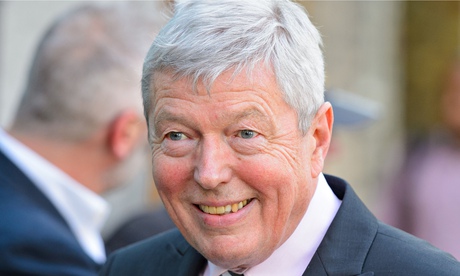
But Labour’s deficit problem was well explained by Alan Johnson in an interview in GQ: “If I feel frustrated about anything it is about not holding George Osborne to account because his flagship policy was to clear the deficit in one term. But he has totally failed. This big fat lie that we created this mess and they are creating the recovery has to be challenged and nailed. Labour did not create the recession and Osborne is not creating the recovery. It is quite simple. It needs a couple of big speeches by Ed – Ed Miliband, not Ed Balls.”
Quite whether a couple of speeches by Miliband at this late stage in the political cycle will rub out the public’s preconceptions about Labour and the deficit is arguable.
Clearly Osborne is hoping he can use the autumn statement to embarrass Balls by challenging him to explain when in the parliament he will bring the current deficit into balance. Although Lib Dems and Tories disagree on how to bring the deficit under control, both parties say the current structural deficit should be in balance by 2017-18. Balls has merely said this will be achieved as early as possible in the parliament. Lib Dem sources insisted they had still not decided whether to put this challenge to Labour jointly in the form of a Commons vote. Forming a joint alliance with the Conservatives on the economy is not ideal for the Liberal Democrats.
In his radio interviews on Monday, Nick Clegg on Monday went out of his way to ramp up the rhetoric in his attack on the Tories’ plans to bring the deficit down after 2015. He said it was too reliant on hitting the working poor, and lacked any proposal to raise taxes on the wealthy. Clegg is keen to be in the centre on the economy, with Labour profligate and the Tories ideological. It is a fine judgement working out how to lever Clegg into an independent position on the economy.
For the moment the Tories and Lib Dems will use the autumn statement as a platform from which to spread pre-Christmas goodies around, promising housing programmes; garden cities; A-roads mainly in Tory marginals; Stonehenge underpasses; cash for the NHS; improvements to doctors’ surgeries and even a tidal lagoon in Swansea Bay.
This bonanza of spending, admittedly predominantly on capital projects, sits oddly with the commitments to bring the deficit down. Quite how Osborne squares the circle, only the autumn statement will reveal.