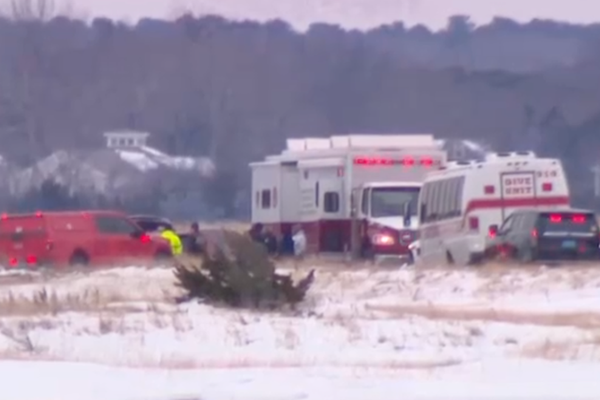
Multiple problems – serious, longstanding problems – at Mid Essex Hospital Services Trust (MEHT) exemplify why the NHS has come up with its new “success regime”, and why Essex as a whole is one of the first three areas of England to fall under it.
The trust’s website says: “We care. We excel. We innovate. Always.” It has 5,000 staff, looks after 380,000 patients in Chelmsford, Maldon and Braintree and provides both acute and community-based care services from four sites in that area, including Broomfield Hospital in Chelmsford. But its recent performance, both clinically and financially, has fallen very short of its proud boast.
Its accumulation of an estimated £32m deficit, serious difficulty attracting staff and, especially, a catalogue of appalling failings in patient safety – some of which have caused serious harm and death – have made it a cause for major concern for both NHS England and the NHS Trust Development Authority, as well as for Mid Essex Clinical Commissioning Group, the GP-led local NHS body that, put simply, is the hospital trust’s chief paymaster.
Internal NHS documents obtained by the Guardian show that those three organisations have known about scores of failings and weaknesses in the safety and quality of patient care, at Broomfield in particular, and tried to stop them happening again.
A series of “never events” there, which are meant to no longer happen because of improved safety checks have seen surgeons operate on the wrong hip, wrong ear and wrong part of the scalp of three separate patients.
A patient wrongly diagnosed with tendonitis was “later admitted with septic shock resulting in amputation of left arm and extensive surgery on [their] right [arm]”. Another delayed diagnosis saw staff fail to identify correctly that an elderly person who had fallen at their care home had suffered a broken right wrist and a subdural haematoma, bleeding in the skull, which can be fatal.
During an inspection by the Care Quality Commission, the Mid Essex trust was also found to be using unregistered nurses in the role of fully-qualified, registered nurses – the first time its inspectors have ever come across such a flagrant breach of the nurse registration system.
That should never have happened, the regulator said, and immediate remedial action was taken. The risk from the passing off of inexperienced staff as more experienced is both that trust in nurse registration is damaged and, more directly, that less able, less qualified personnel can end up looking after complicatedly unwell patients, whose condition requires more expert monitoring.
It is understood that whistleblowers alerted the CQC to this disturbing practice. The CQC’s highly critical report into the trust, published in April, noted “an unacceptable level of thematic serious incidents and never events at Broomfield”.
“Unregistered staff should never be doing the work of registered nurses, or be included in the count of registered nurses on a ward. Patient safety and trust in the registration system are paramount”, said Karen Webb, director of the Royal College of Nursing’s eastern region.
A report to the March meeting of Mid Essex CCG details no fewer than 44 “serious incidents” that occurred at MEHT’s hospitals between October and December last year. They also involved several deteriorating patients – including a child – who received “sub-optimal care” before they died; an unexplained “patient accident outside A&E where a wheelchair collided with a van causing patient injury”; several unexpected deaths; medication errors; two newborns dying unexpectedly; and a failure to properly safeguard a vulnerable child and an adult.
Broomfield has also been the scene of ambulance “stacking” outside its A&E department. At one point there were so many ambulances double parked outside the department that doctors had physical difficulty reaching patients waiting to be admitted. Vital resuscitation equipment has been found to be often incomplete. And another inquiry, into 26 potentially avoidable caesarean section births, is also under way.
Major improvements are now happening at Mid Essex to minimise the risk of such terrible events recurring. The NHS as a whole has made strenuous efforts to improve quality and safety of care since Robert Francis QC’s report in 2013 into the Mid Staffs scandal, such as hiring many thousands more nurses.
Jeremy Hunt, the health secretary, has introduced a much tougher inspection regime for hospitals and GP practices that has seen a small but growing number be put into “special measures”. This week he reiterated that it is “my mission to turn the NHS into the safest and most caring health system in the world”. Despite all that, serious failings of care still persist in some places.
Trusts with such problems on the clinical side have often sunk deep into the red too. Recent research by the BBC found that MEHT’s deficit had shot up from £19.3m in 2013-14 to £32m by the end of March this year. Similarly, the amount that nearby Colchester Hospitals NHS Foundation Trust had overspent by had also rocketed from £2.4m to £21.2m over the same short period.
NHSE and the TDA are two of the three national NHS bodies which, along with Monitor, supervise semi-independent foundation trust hospitals. They will now apply the “success regime” to whichever parts of England are deemed to have problems sufficiently deep-rooted and longstanding to need it.
After identifying the first three places to get the “success regime” – North Cumbria and North, East and West Devon are the others – NHS England chief executive Simon Stevens indicated that others will be added later. Essex is categorised by the NHS as “a challenged health economy” – an area where health and care services face really serious problems.
However, there are 13 such areas in all. If this approach of no-nonsense direct intervention and taking control is extended in time to all 13, the sheer scale of improvement work needed, transformation of how things are done and knocking of heads together will keep the three bodies busy for a long time. But, as Stevens says, an NHS under unprecedented pressure to overhaul dramatically how it operates, in order to make itself fit for the future, cannot afford such weak spots and has to take decisive action.