
Bionic hands for children may soon be available on the NHS as the world's first clinical trial of a new type of prosthesis begins this week.
The 3D-printed devices for child amputees, based on popular Disney characters, are designed to be produced at a fraction of a cost of current models.
Bristol-based firm Open Bionics is working with 10 children at a local hospital during the six-month trial.
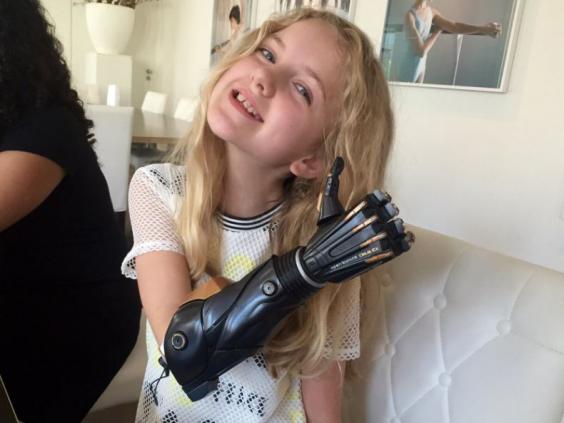
Tilly Lockey, an 11-year-old from Durham who lost her hands after she developed meningitis as a baby, told the BBC her prototype bionic hand “looks awesome and it makes you feel confident.”
“Instead of people thinking they feel sorry for you because you don’t have a hand, they’re like: ‘Oh my gosh, that’s a cool hand!’” she said.
The hands cost £5,000 and only take one day to make, using cutting-edge 3D scanning and printing techniques to ensure a good fit.
Currently-available prosthetics with controllable fingers can cost up to £60,000, often prohibitive to growing children.
The new lightweight design by Open Bionics uses a 3D printer to create the hand in four separate parts, custom-built to fit the patient using scans of their body.
Sensors attached to the skin detect the user’s muscle movements, which can be used to control the hand and open and close the fingers.
A royalty-free agreement between Disney and the company means the devices can be based characters from Iron Man, Frozen and Star Wars. Tilly's hand is themed on the Playstation game Deus Ex.
Open Bionics has won a £100,000 award from the Small Business Research Initiatives scheme to fund the trial, which it is conducting with the North Bristol NHS hospital trust.
The company won the prestigious James Dyson award for innovative engineering in 2015.
If the trial succeeds, the team wil be able to apply for a grant of £1 million to offer the product at NHS clinics across the country.
3D printing uses a computer to produce objects from very thin layers of material.
Doctors hope the technique may eventually help provide affordable prosthetic limbs to the 30 million people worldwide.












