An NHS doctor has been force to 'give up' her children for months while she works on the front line of the UK's battle against coronavirus.
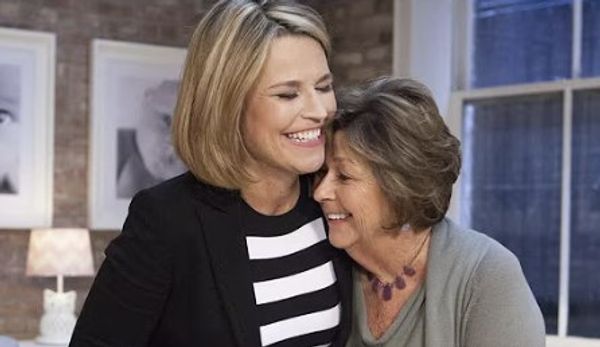
Dr Adele Holland, a single mum to Evie, six, and Harry, four, and many other key workers have had to make tough choices after losing access to child care during the crisis.
After Harry's nursery closed and his childminder stopped working, Dr Holland decided to send Evie to her mother's home and Harry to her ex-partner - a decision that has left her in tears many nights.
She wanted to be with her children, but felt she couldn't be away from work as the UK faces its greatest health crisis for a generation and needs all hands on deck.
Have you been affected by coronavirus? Email webnews@mirror.co.uk.

She likely won't be able to see her children for months due to the lockdown, social distancing measures and the fact that her mother is over 70 and shielding to protect her own health.
Dr Holland told Sky News: "My choice was either stay at home with my children and not work, knowing that all of this including the shortages of NHS staff was going on.
"Or the other option was to lose my children for three months."
She added: "I cried a lot, Evie rings me at night sometimes, she uses my mum's phone. We just lay in bed with the phone next to my face. For her, three months is such a long time."
Many NHS workers have been forced to stay home and take care of their pre-school children because they can't access child care.
It is estimated that half of the country's nurseries have shut due to the lockdown.
The only children who should be going to school or nursery are those of parents who are key workers.
Meanwhile, the Government is coming under increasing pressure over Covid-19 tests as healthcare leaders warned there is "no immediate prospect" of mass NHS staff testing.
Chris Hopson, the chief executive of NHS Providers, which represents NHS trusts, said maximum testing capacity in the UK was currently "very constrained" at around 13,000 tests per day.
At present, the focus is on testing patients in hospital to see if they have coronavirus, with NHS trusts told earlier in the week they should use up to 15 per cent of any spare testing capacity for NHS staff.
Health Secretary Matt Hancock has now scrapped that cap, telling NHS hospital labs to use all spare capacity to test their frontline workers.
It comes as Housing and Communities Secretary Robert Jenrick admitted on Wednesday that just 900 NHS staff were tested over the weekend as staff testing is rolled out.
He told Radio 4's Today programme: "Clearly that's a low number but one we want to build on significantly.
"We now have capacity today to be testing 12,750 people and we expect that within a couple of days to be 15,000.
"So we should now have the growing capacity to test NHS staff in addition to the patients in critical care."
Mr Jenrick denied the Government and Public Health England (PHE) would only agree to centralised testing after claims from scientists and universities that their offers of help have been rejected.
He said the Government was willing to "work with any provider" who had the "right infrastructure and skills" and urged them to get in touch.
The minister also said he expects there to be 25,000 tests per day by the "middle of April".
Asked when the national coronavirus testing centre near Milton Keynes would be fully operational, Mr Jenrick replied: "I don't know precisely when that's going to be coming on board.
"Everything is being brought forward as quickly as it possibly can."
The promise of 25,000 tests per day by mid-April is in stark contrast to comments made by NHS medical director Professor Stephen Powis last Wednesday who said there would be "hundreds of thousands of tests" per day within the next few weeks.
Asked on LBC radio if the kit was in place, Prof Powis said: "We are getting the kit... you heard me correctly, we need to get to hundreds of thousands of tests a day, and we will do that over the course of the next few weeks."
On Tuesday, Cabinet minister Michael Gove acknowledged at the daily Number 10 news conference that the Government needed to go "further, faster" on testing.
Currently about 8,000 tests a day are being carried out, despite ministers having previously claimed to have met a target of 10,000 a day.