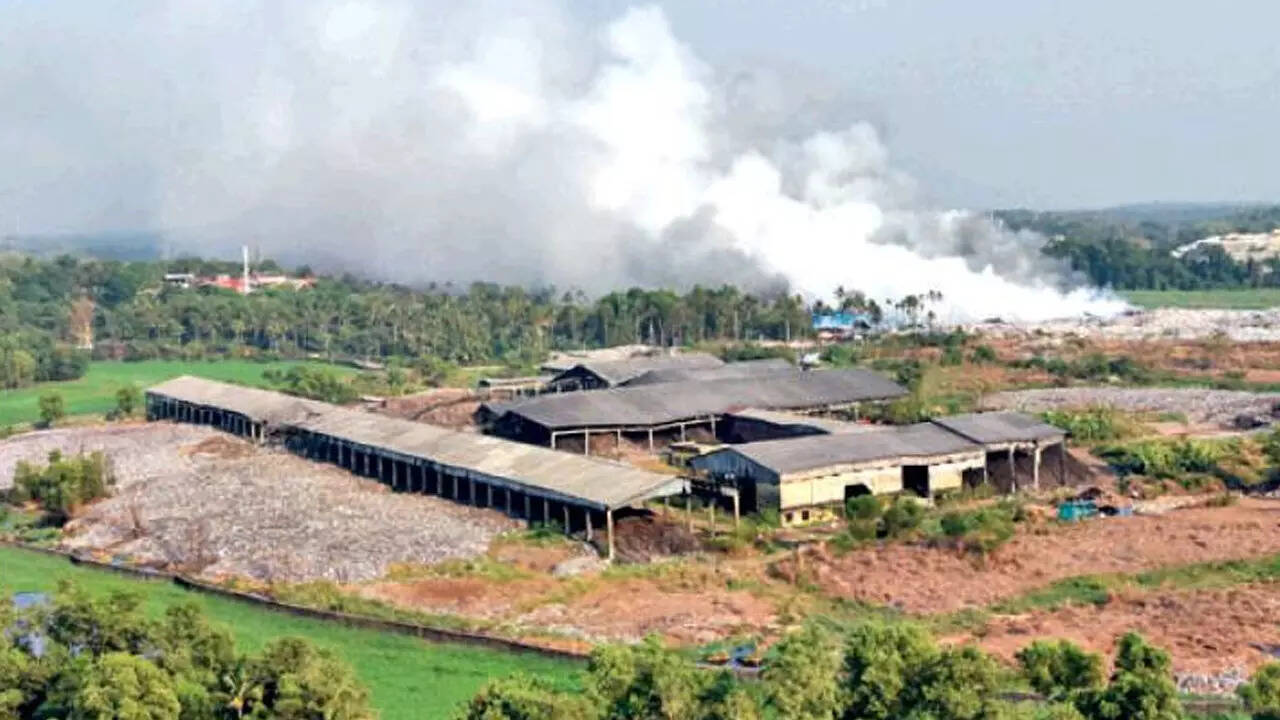
KOCHI: The national green tribunal (NGT), while hearing a batch of petitions regarding the Brahmapuram waste treatment plant, has asked the Kerala state pollution control board (KSPCB) to ascertain the present status of the implementation of solid waste management rules in Ernakulam and to give an overview of how it is being implemented in other local bodies.
Issuing orders to various departments, NGT has asked KSPCB to inquire into the nature of observations made by the state-level monitoring committee in its report to the green court and come up with a proper action taken report against defaulters.
The chief secretary, environment secretary, district collector and all the local bodies in the district, including Kochi corporation, have been directed to file further progress reports regarding the implementation and its success on or before January 24, 2022. The green court has come down heavily on the chief secretary’s action plan report submitted before it, stating that it was not satisfactory.
No proper scrutiny was made by him or the concerned principal secretary. It has also asked for a realistic report considering that the implementation of solid waste management is poor.
The state chief secretary had submitted that the state and Kochi corporation have made a concerted effort to resolve the issue of pollution by remediating the legacy waste dumped at Brahmapuram and to establish a waste-to-energy project.
The report said that directives were sent to the district collector and inspector general of police Kochi seeking their intervention to stop illegal dumping of faecal sludge into the water bodies near Brahmapuram. It was decided that a joint taskforce of the corporation, police, KSPCB and health department should conduct inspections and catch vehicles illegally transporting waste and dumping septage waste at Brahmapuram, the report said.
The court said that authorities have not started the work of biomining at Brahmapuram. It is still in the stage of finalizing the tender and handing over the area to people who are said to be the successful bidder. No significant improvement has taken place in reducing the legacy waste lying in the dumpyard.
Further, the leachate treatment plant is not functioning properly, and they are operating the waste management facility without proper authorization for a long time. If local bodies are themselves violating the rules and carrying out activities, how can the government impose penalties on poor people who are not able to comply with the same?






.png?w=600)