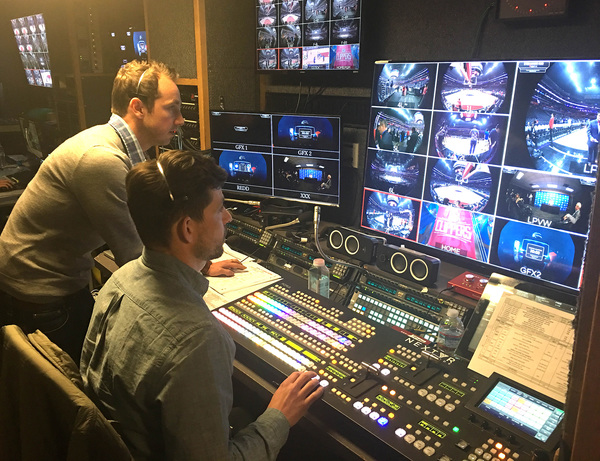
It was late December, and the Clippers had built a healthy first-quarter lead against the Denver Nuggets at Staples Center. Far from the action, in a trailer parked in the unglamorous concrete bunker of the arena's outer ring, Matt Drummond studied a panel of monitors.
"Nice pass," Drummond announced to the production crew working around him.
DeAndre Jordan had drawn his defender toward J.J. Redick and slipped toward the rim. Redick didn't miss him, whipping a one-armed delivery into the paint. Without a dribble, Jordan turned and dunked with two hands, swinging from the rim like a gymnast preparing for a handstand on the high bar.
"That was a good one," Drummond said into a microphone. "Just hold on to that until we get a stoppage."
If the play was impressive on the grainy screens Drummond was studying, a replay would be even more emphatic in virtual reality.
The NBA catapulted live streaming in virtual reality, or VR, toward the mainstream early in the fall, announcing that Newport Beach-based technology company NextVR would broadcast a live game every Tuesday night during the regular season. It is available to subscribers of NBA League Pass, which, for $200, allows fans to watch any out-of-market regular-season game.
And now, one game a week can be, not just watched, but experienced.
"In some ways, we could still be at a point in time where a lot of people don't yet know that they want this in VR," said David Cramer, NextVR's chief operating officer. "The thing that we've seen is that when people do see it, it just blows away their expectations."