The umbrella association for more than 320 sports governing bodies and over 8,000 sports clubs has challenged the next government to give sport a higher profile and delivered a “to do list” of key policy demands.
Ranging from the introduction of a sporting-integrity unit to combat match-fixing to more specialist PE teachers in primary schools, the Sport and Recreation Alliance (SRA) said that too often sport suffers from a “lack of joined-up thinking” across Whitehall departments.
“We’ve struck a balance between being ambitious and realistic. There is nothing in here that couldn’t happen over the course of a five-year parliament if there is the political will behind it,” said James Allen, the head of policy at the SRA. “It just requires a bit more commitment from all the major parties. The biggest problem is a lack of joined-up, co-ordinated activity. Getting government to talk to itself would be quite helpful.”
The SRA’s to do list reflects fears among many governing bodies that it will disproportionately suffer from a lack of money and attention in any fresh round of government cuts in the autumn.
It calls for the creation of a “sport betting right” that would raise money for grassroots sport by levying a charge on bookmakers to license bets, and automatic rate-relief for sports clubs.
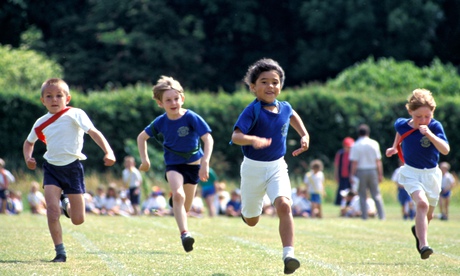
In school sport the SRA, which represents everyone from the Rugby Football Union and the Football Association to smaller sports and outdoor pursuits, said more money needs to go into specialist training for PE teachers in primary schools in order to emphasise its importance in the curriculum.
“We want more specialist teachers and we want it to happen much more quickly. They’re talking about a couple of hundred a year rather than 20,000,” said Allen, who has been lobbying across Parliament. “We want an investment in self sufficiency so they are able to provide high-quality PE.”
He also said ministers need to “think more carefully about what they say” in order to avoid reactivating the debate about whether to make competitive or non-competitive sport a priority, when experience has shown a mixture of both is most likely to appeal to the widest number of children. “That would cost nothing but a few seconds of thinking time. You are setting government policy. A little more nuance and thought in what they say is pretty helpful,” he said.
Other items on the SRA’s list include a requirement for each local authority to provide a “robust and comprehensive strategy” for physical-activity opportunities. Many local authorities have drastically reduced sport budgets due to government cuts.
The Labour mayor of Newham, Sir Robin Wales, told the Guardian the cuts had made it extremely hard to maintain funding for sport. “The truth is that this government doesn’t care. It mouths those platitudes but it doesn’t care,” he said.
Allen said that while it was unrealistic to expect funding priorities to change hugely, there was more that could be done to help local authorities make the most of their remaining investment. He also called for clearer figures on how much was being invested in sport locally. “There are plenty of anecdotes of hire charges going up by 50% or leisure centres closing, but it’s hard to get a nationwide picture,” he said. “We haven’t seen the end of this yet – there is going to be a tough five years ahead.”
In order to continue to attract major events to the UK and continue a run that includes the 2012 Olympics, the 2014 Commonwealth Games, the 2015 Rugby World Cup and the 2017 World Athletics Championships, the SRA proposed a major-events bill to provide a lasting framework and a £3m-a-year investment in an integrity unit to safeguard against match-fixing. Allen said a modest proportion of the tax income raised from licensing offshore bookmakers, around £3m a year, should be used to finance a unit that could safeguard against match-fixing in smaller sports. “We want some help with helping them protect themselves. There is a gap and they are vulnerable. There is a danger of complacency in government,” he said.
The intervention came as Sajid Javid, the secretary of state for culture, media and sport, delivered his first major speech on sports policy after a year in the job and less than a week before Parliament dissolves in readiness for the general election.
Javid hinted that government priorities would change if the Tories win power at the next election, prioritising investment that could deliver on wider social goals rather than participation for its own sake.
“It means sport funding not just rewarding participation but actually focused on the projects that deliver social impacts,” he said. “Whether that’s new skills for our younger people, better health for older people, less anti-social behaviour or more social cohesion,” he said.
Exchequer funding for grassroots and elite sport is expected to come under severe pressure in the autumn comprehensive spending review, whichever party or parties make up the next government.
Javid suggested sports governing bodies and grassroots organisations would be able to access funding from other government departments.
However, it is widely assumed that the amount invested directly in governing bodies throught Sport England’s Whole Sport Plan will decline when it is reviewed in 2017.
The government published a document called A Living Legacy on Wednesday to outline its investment in sport between 2010 and 2015. It trumpeted its achievements so admitted there was further to go.
“While our course is true, there remains much to be done if our legacy is to be one from which future generations will reap the rewards for years to come,” wrote Javid in the foreword.