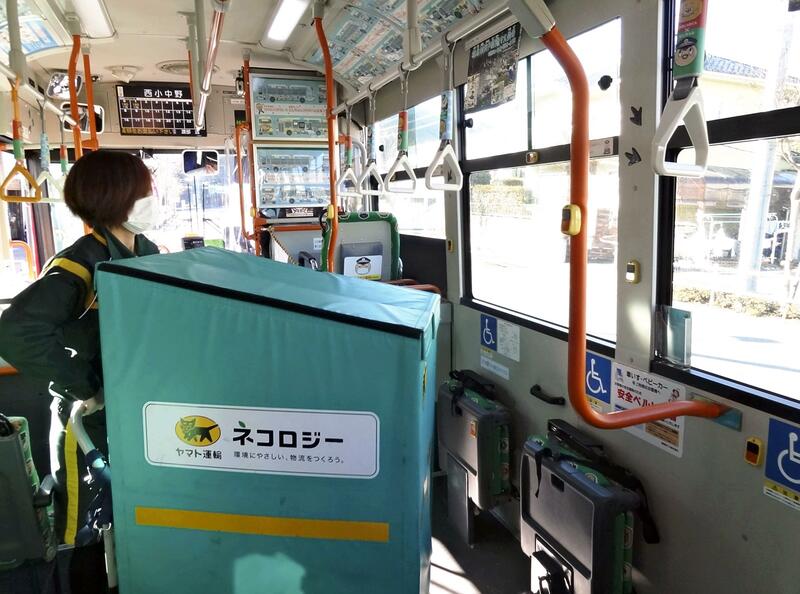
Nishi Tokyo Bus Co. and Yamato Transport Co. have teamed up to improve their business efficiency by using passenger buses to deliver packages to an area with a dwindling population.
This initiative, servicing a route spanning the city of Akiruno to the village of Hinohara in western Tokyo, has garnered attention as a mutually beneficial business model that both provides bus service operators with a new source of income and helps ease the shortage of drivers plaguing delivery companies.
Nishi Tokyo Bus is the only company offering public transport between the two municipalities, and the company, based in Hachioji, Tokyo, is kept afloat through subsidies from the central and local governments because of the area's declining population.
"We needed a new approach to maintaining our transportation services for the locals that reside along unprofitable routes," said Shuji Nakamura, head of the company's passenger transport section.
Meanwhile, delivering parcels to Hinohara was a challenge for Yamato Transport, based in Chuo Ward, Tokyo. Deliveries from the company's sales office in Akiruno, which has Hinohara under its jurisdiction, to the village's main delivery point take about 40 minutes. On top of that, the village's main road splits into one road going north and another going south, making travel in the area time-consuming for drivers.
After assessing the situation, the two companies launched a test run of the bus delivery service in November 2019. Nishi Tokyo buses transported packages along a route running from JR Musashiitsukaichi Station in Akiruno to Kazuma in Hinohara. This trial run was carried out over 12 weekdays that month, making it possible to reduce the number of round trips Yamato delivery personnel had to make.
Soon after, more space for parcels was created on the buses and arrangements were made for the accommodation of regular parcels and those that require refrigeration. The initiative was implemented in full last December, with one trip made every weekday.
Regular bus services have seen no disruptions and both companies have seen an improvement in their business' efficiency.
"Because we've been able to reduce round-trip travel distances by about 50 kilometers a day, we now have more time to provide services to our customers," said Kazuhiro Seki, the chief of the sales planning section at Yamato's Nishi-Tokyo branch.
People 65 and older accounted for 52.2% of the village's population as of Feb. 1. The village's planning and finance division has fully embraced the initiative, saying that it would not only help maintain an important transportation route for locals, but also reduce the subsidies the village receives.
"We are happy to see this new source of demand, which also provides a logistics service, in such a time when maintaining bus routes is difficult," Nakamura said.
Both companies are considering implementing similar initiatives in other mountainous areas.
Read more from The Japan News at https://japannews.yomiuri.co.jp/