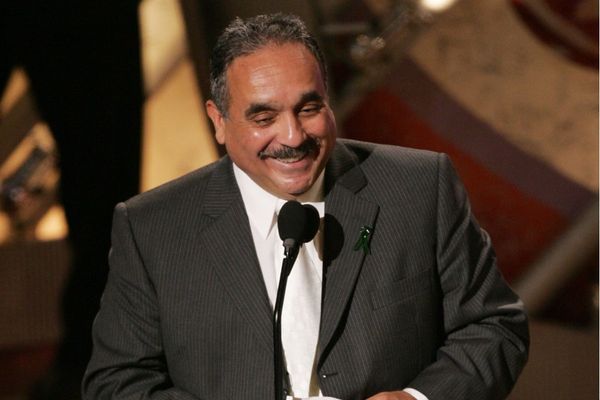
We Think author Charles Leadbeater managed to ruffle a few feathers while simultaneously (and indiscreetly) plugging his new book.
"We're at the very beginning of a fundamental shift in the economics and culture of news production. Most media is basically an industrial-era organisation based on high barriers to entry and high capital costs, and those costs are falling rapidly." He said his 6-year-old son had, in his own small way, become a media producer when he set up his own Bebo page at the weekend.
"Established organisations like the BBC will be changed by it but we will increasingly see entirely new organisations like YouTube, Wikipedia and OhMyNews which will organise themselves in entirely different ways. We have only just started."
Leadbeater said during this discussion he'd been struck by the cynicism of the talk of news as a commodity. "What the social production of media is all about is reclaiming the sense of public debate, and news has some kind of higher purpose than attracting viewers for advertisers. Do you really stand for the principles of media, public democracy and open debate - or do they?"
Leadbeater said that when he worked on the FT, there were only two ways to get into the paper: the letters page, in which case the letter would be cut in half or, if they went to university with the editor, they could write on the op-ed page.
Across the board, he said, professionals don't like users with information because it disempowers them. "I worked for the FT for ten years and the whole point of the FT is to not write bad stories about the industry because you won't get any more stories. Now the ethics of the news industry are open in a way that has never been open before." As for trust, there are more ways of building than through media brands, not least peer review.
He said that social media is an enormous challenge for news organisations. "If Wikipedia can produce an account of the July 7th bombings which is almost as good as the BBC but with no employees, what sense of motivation and contribution is it really tapping in to? If you face that challenge by saying let's turn it into a commodity and pay for it, you're heading into a cul-de-sac."
ITN's editor in chief David Mannion wasn't impressed. "I've never heard so much tosh in all my life. There is still an awful lot of material out there that is not user-generated content, and may I remind Mr Leadbeater that we stood here yesterday in front of a roll call of professional journalists and cameramen who had died because of authenticity and because they were on the spot."
None of the speakers said they had had a bad experience with faked content. CBC doesn't have a UGC hub but deals with material on an ad-hoc basis. Editor in chief of current affairs and Newsworld Tony Burman said the material is overseen by experienced journalists and we expect them to use the same criteria and judgement with this material as they would with other material. What we're dealing with is the incredible response to the breaking story, but it's a very natural fit between the organisation and trying to serve the audience better.
Premesh Chandran, founder and CEO of Independent Malaysiakini.com, pays regular contributors to the site, paying just a small amount. "It's not a lot of money, but a token that if you are doing this on a regular basis you should be rewarded for your work." Much of the contributions to the site are people looking to promote a cause like human rights, democracy or the environment, so the site has not had a problem with dodgy content because people don't want to undermine their cause.