Mississippi urges Supreme Court to use abortion case to overturn Roe vs. Wade next term
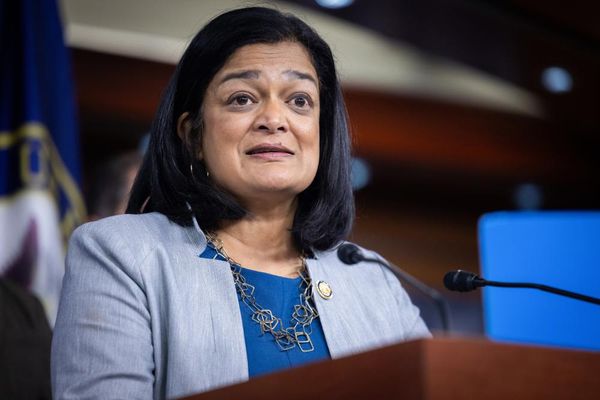
WASHINGTON — Lawyers for Mississippi asked the Supreme Court on Thursday to overturn Roe vs. Wade and give state legislators the authority outlaw all abortions.
The justices in May agreed to hear the state’s appeal of a lower court’s invalidation of a Mississippi law that would forbid abortions after 15 weeks.
In their brief filed with the court Thursday, the state’s lawyers raised the stakes and argued the right to abortion set in1973 should be repealed entirely.
They said that Roe was “egregiously wrong” as a matter of constitutional law and that it has proved to be “hopelessly unworkable” in practice. They pointed to the fact that more than a dozen conservative states like Mississippi want to outlaw most or all abortions.
“Under the Constitution, may a state prohibit elective abortions before viability? Yes,” state Attorney General Lynn Fitch wrote. “Why? Because nothing in constitutional text, structure, history, or tradition supports a right to abortion. A prohibition on elective abortions is therefore constitutional if it satisfies the rational basis review that applies to all laws.”
Her far-reaching argument appeared tailored to reflect the last year’s change at the high court.
There are now five conservatives appointed by Republican presidents who believe Roe vs. Wade was wrong.
Mississippi’s lawyers said that the justices have not been able to resolve the bitter divide over abortion and that state legislators could do it better.
—Los Angeles Times
Report: One-third of US has limited voting access since 2020 election
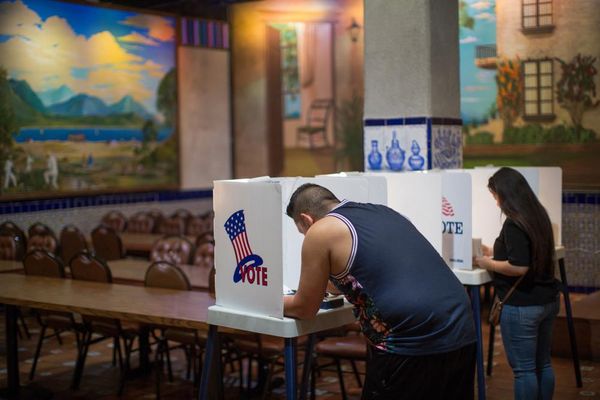
More than halfway into the year, and with most state legislative sessions concluded, the full scope of voting changes spurred by the 2020 election is coming into view.
As of last week, 18 states have enacted 30 laws that limit voting access, according to the Brennan Center for Justice, a liberal public policy institute at New York University Law School that has been tracking state voting legislation. At the same time, 25 states have signed into law 54 measures that expand access to the ballot box.
And more voting changes are sure to come. Thirteen state legislatures are still in session, and additional states, like Texas, may convene for special sessions.
Since the start of the year, more than 400 bills tightening voting rules have been introduced across nearly every state. This wave of restrictions is "the most aggressive" the Brennan Center has seen in more than a decade of tracking such laws. And the proposed changes are in large part motivated by false claims of voter fraud in last year's election.
Arkansas and Montana, with four new laws each, are tied for enacting the most voting restrictions this year. Arizona is a close second with three new laws.
Most of the restrictive voting measures approved this year focus on rolling back mail voting access by limiting the availability of drop boxes, shortening the time voters have to apply for an absentee ballot and limiting who can return another voter's mailed ballot. Other laws impose new identification requirements and increase maintenance of voter rolls, which could lead to the unintended removal of eligible voters.
—The Fulcrum
Perpetrators of domestic abuse committed 2 of 3 mass shootings from 2014-19, study finds
SACRAMENTO, Calif. — Perpetrators of domestic abuse represent a tiny subset of U.S. gun owners but pose the greatest threat when it comes to mass shootings, according to gun violence researchers who studied cases over a six-year period from 2014 to 2019.
This group is composed of people who have abused an intimate partner or who have a history of having done so, according to research from the Educational Fund to Stop Gun Violence published in the Injury Epidemiology journal.
Two out of every three mass shootings analyzed in that paper were linked to domestic violence, said Lisa Geller, the lead author of the paper and the state affairs manager for the nonprofit affiliate of the Coalition to Stop Gun Violence. Her team looked at shootings where four or more people died, not including the shooter.
Not only was their a frequent intersection between domestic violence and mass shootings, Geller said, but when the two intersected,it typically raised the risk that someone would die. On average, her research team found, two out of six people will survive a mass shooting if it’s not related to domestic violence, but if it is, only one in six made it out alive.
“The intent behind a perpetrator who kills a family member or intimate partner may be different from someone who perpetrates some of these high-profile public mass shootings that we hear about a lot on the news,” Geller said. “This intent to make sure that a family or intimate partner is killed, may mean that they are more likely to actually die from that gunshot.”
These shooters also execute their plan in familiar surroundings where they know how to trap people and get to their intended target, Geller said, whereas in random mass shootings, the perpetrator is shooting indiscriminately and going after as many people as possible.
The difference in survival, Geller said, also may be affected by how quickly ambulances or police are alerted or how quickly they respond. Her research did not control for such differences.
—The Mercury News
Death toll in South Africa mayhem rises to 337, minister says
JOHANNESBURG — South Africa's government said on Thursday that the death toll from a week of mayhem and mob violence had risen to 337 people.
In the the coastal province of KwaZulu-Natal, there were 258 deaths. Another 79 were confirmed in Gauteng province, which includes the capital, Pretoria and the country's economic hub, Johannesburg, cabinet minister Khumbuzo Ntshaveni said.
At the start of the week, the number of confirmed dead had stood at 215.
The two provinces were rocked by riots, looting and vandalism for about a week starting on July 9. Major highways and rail routes were shut down, leading to shortages of food and fuel, while businesses were plundered and burned.
Only after the mobilization of 25,000 soldiers to aid local law enforcement did the security situation begin to stabilize.
Protests initially broke out over the imprisonment of ex-president Jacob Zuma, who hails from KwaZulu-Natal. He was given15 months in prison for contempt of court in relation to a corruption inquiry.
But the demonstrations soon descended into arson and gunfire, with vigilante groups forming to protect property.
Helping to fuel the violence was frustration over the swelling unemployment rate and economic inequality, long-running problems exacerbated by the coronavirus pandemic.
—dpa
———