St. Louis gun-waving couple plead guilty to misdemeanor charges
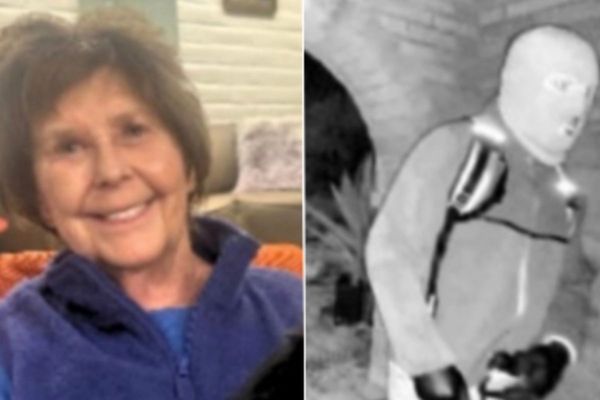
ST. LOUIS — Mark and Patricia McCloskey, who waved guns at protesters last year who marched past the couple's Central West End mansion, pleaded guilty Thursday to misdemeanors and agreed to give up their weapons.
Mark McCloskey, 64, will pay a $750 fine after pleading guilty to fourth-degree assault, a Class C misdemeanor. Patricia McCloskey, 62, must pay a $2,000 fine after pleading guilty to second-degree harassment, a Class A misdemeanor. Mark McCloskey could have faced up to 15 days in jail; Patricia McCloskey could have spent up to a year behind bars. Neither will face jail time.
"This particular resolution of these two cases represents my best judgment of an appropriate and fair disposition for the parties involved as well as the public good," the special prosecutor in the case, former U.S. Attorney Richard G. Callahan,said in a statement.
The McCloskeys also agreed to forfeit the weapons they used when they confronted a throng of protesters marching past their Portland Place mansion on June 28, 2020. The McCloskeys emerged from their home and waved guns at the demonstrators. They claimed the protesters were trespassing by entering their gated, private street.
After accepting the McCloskeys' pleas in court Thursday, Circuit Judge David Mason denied the couple's request that Mark McCloskey's rifle be donated for use in charity fundraisers. The McCloskeys' lawyer Joel Schwartz said the couple would have liked to donate the rifle to the Missouri Historical Society or "for auction to the (St. Louis) Children's Hospital."
Mark McCloskey, outside the Carnahan Courthouse, said "this is a good day for the McCloskeys," expressing no remorse for his actions.
—St. Louis Post-Dispatch
Opioids rip through US workforce, with deaths at record level
Before the COVID-19 pandemic was the drug epidemic. Its relentless toll added a record 90,722 overdose deaths in the U.S.for the year through November 2020, a grim number obscured by coronavirus casualties that recently topped 600,000, according to federal data released this week.
As the virus transfixed the nation, the drug crisis spread to largely untouched parts of the country — exacerbated by the recession and millions of job losses. Not only stores and restaurants shuttered: Counseling services moved online, inpatient clinics closed and mobile clinics pulled back. Without support, many Americans relapsed and some turned to drugs for the first time.
Before the pandemic, U.S. unemployment hit a half-century low of 3.5%; today, the country is still missing almost 8 million people on payrolls. President Joe Biden’s administration is seeking full employment, but that goal will be daunting as businesses confront a workforce more addicted than ever.
Ronald Armstrong, a 57-year-old recovered heroin user and peer counselor, is noticing new faces when dropping off clean needles around Washington. Along Good Hope Road and in downtown encampments are people who are younger, and many who have never bought drugs before.
“When COVID happened, it compounded the situation, and made it more comfortable to say, ‘It’s OK now,’” said Armstrong. “‘Because I ain’t gotta work, ain’t nobody hiring anyway.’ That false reality of, ‘As soon as they open the city up, I’m going to get me a job.’ It’s not going to happen like that.”
Opioids are behind about three-fourths of the overdoses, according to Wednesday’s data from the U.S. Centers for Disease Control and Prevention. Washington was among the deadliest regions, seeing a 50% surge in deaths. Some of the impact is visible, such as the growing clusters of tents downtown where many overdoses occur, a sight so common that Federal Reserve Chair Jerome Powell mentioned them several times this year.
Much of the devastation in the capital and far beyond, though, is seen only by people on the ground like Armstrong, and offers an early warning of cracks in the broader economy.
—Bloomberg News
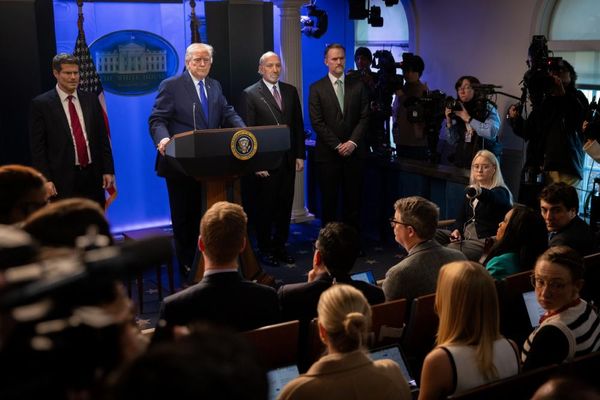
North Korea facing ‘tense food situation,’ Kim Jong Un says
North Korean leader Kim Jong Un says the country is experiencing food shortages caused by recent natural disasters.
Citing typhoons and flooding, Kim told the plenary meeting of the Workers’ Party of Korea the country was in the midst ofa “tense food situation,” according to reports.
North Korea faces international sanctions over its nuclear program and has closed its borders during the COVID-19 pandemic,cutting off imports of food, fuel and fertilizers from China.
The extent of the shortages are unknown but believed to be serious and have sent food prices spiking, Korean Central NewsAgency said.
In April, at a similar meeting, Kim compared the situation to a time of extreme famine in the early 1990s following the collapseof the Soviet Union where as much as 10% of the population died from starvation.
The Food and Agriculture Organization of the United Nations has estimated that North Korea plans to only import about a fifthof the food it needs and that an increase in agriculture planting in 2020 was offset by extensive flooding.
The organization estimates North Korea could run out of food entirely between August and October.
—New York Daily News