

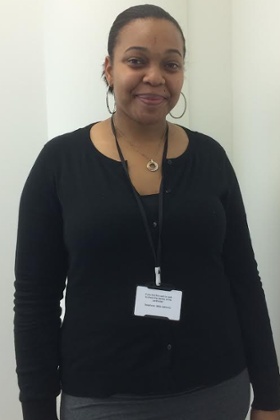
Leigh-Anne Elliott says she has never stopped learning since she became a looked after children’s social worker for the borough of Newham in London’s East End. “It’s such a multicultural and diverse borough – I’ve worked with families from Afghanistan, the Caribbean, Africa, Romania and Pakistan which is really interesting. It makes me more culturally aware. My job is more rewarding because you have to be proactive if you are working with somebody whose first language isn’t English. It’s opened me up to a lot more experiences – I feel I am forever learning. It’s a special place to be.”
The borough, which was home to the London 2012 Olympics and saw significant investment during the Games, is one of the most diverse in the UK with some 200 different languages spoken and has one of the youngest populations in the country, with almost 40% under the age of 25. Some 82% of children in the borough are from a minority ethnic background – compared with the England average of 22% – and 75% of primary school pupils speak English as an additional language.
The latest Ofsted inspection report of Newham’s children’s services and the local safeguarding children’s board (LSCB), published in August 2014, identified a number of strengths in the service: its adoption service and the experience and progress of care leavers were both ranked “good”. The effectiveness of the LSCB was also classified as “good”. Staff spoke of this providing a firm foundation on which to further improve the range of children’s social care services in the borough.
Beverley Halligan, the council’s principal social worker and head of social work improvement, has been with Newham for 20 years. She says: “Inspectors identified we had made improvements and although there are still improvements to be made, we were encouraged by the report – we had positive verbal feedback from them so spirits were raised.”
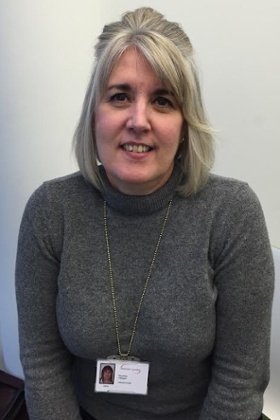
It is a view shared by Stuart Andrews, manager for an assessment team: “Newham is such an ambitious council – it wants to do the best that it can to ensure that children are safe and achieve good outcomes.”
Newham sets itself apart from others because it attaches child and adolescent mental health service (Camhs) practitioners to children’s services teams. It is a way of working that appeals to Yoko Totsuka, a family and systemic psychotherapist in Newham.
“What makes Newham really interesting, and something I think which is quite unique, is that our Camhs outreach team – made up of eight clinicians – is attached to children’s services teams,” she says. “We build relationships with team managers and social workers and help embed systemic practice, where we look at the individual child or adult in context of the relationship. We consider the family context rather than focusing on the child’s individual world.”
She says that her team is building on Newham Camhs’s drive to deliver accessible and responsive service: “We go and see the families wherever they are, and often jointly with social workers.”
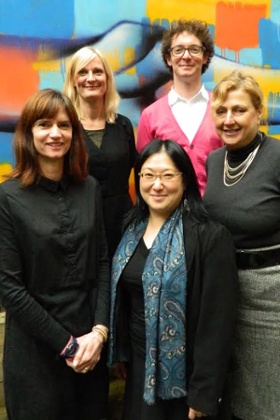
Newham’s focus on mental health brings professional rewards and benefits to children and families, Totsuka says: “What is unique in Newham is the real focus on mental health and therapeutic work. I am also learning an awful lot about social work and what its priorities are, which benefits my practice as well.”
The partnership with Camhs is a real benefit to frontline social workers, according to Andrews: “We have really good links with Camhs – they discuss cases with us and offer us a much greater insight.”
For Elliott, one of the key professional benefits of working in Newham, apart from the personal perks of a £3,000 retention bonus and subsidised gym membership, is its “virtual school” team. The virtual school model offers support to looked-after children from “virtual teachers”, as if they attend a single school. This year’s Ofsted report stated: “The educational support that children who are looked after receive is of high quality and is a significant strength. As a result, many children achieve as well as or better than expected at school and are able to access further and higher education.”
Newham’s social workers say the virtual school has aided their practice. “The virtual school team also shares the same floor as my team,” says Elliott, “so we always have easy access to each other and can ask each other questions if we have to.”
Elliott says she feels well supported: “My caseload is manageable and managers are always very accessible. We [have adopted] systemic practice – we look at the child holistically – and embed that in our work and have the space for reflective practice.”
There is clear career progression, Elliott adds, and she is keen to climb the ladder in Newham. Andrews also has ambitions to become a senior manager and plans to stay with the borough. He says: “One of the best things about working here is the relationships you can build; we share the same drive and passion. I have aspirations to go into senior management and have a greater influence in terms of practice and I would like to do that in Newham.”
Halligan says Newham has been a good employer – offering flexible working and a range of experiences she was unlikely to find elsewhere, without having to move. She says: “There is no denying it’s challenging but it’s that breadth of work and being able to work with such vibrant and varied communities which appeals. It means you can’t stand still. Newham has that drive to keep moving forward, to change with the times.”
Newham are recruiting for practice managers in children’s social care, and for social workers in children’s care. Click on the links for more information and to apply.
Content on this page is paid for and produced to a brief agreed with Newham council




.png?w=600)








