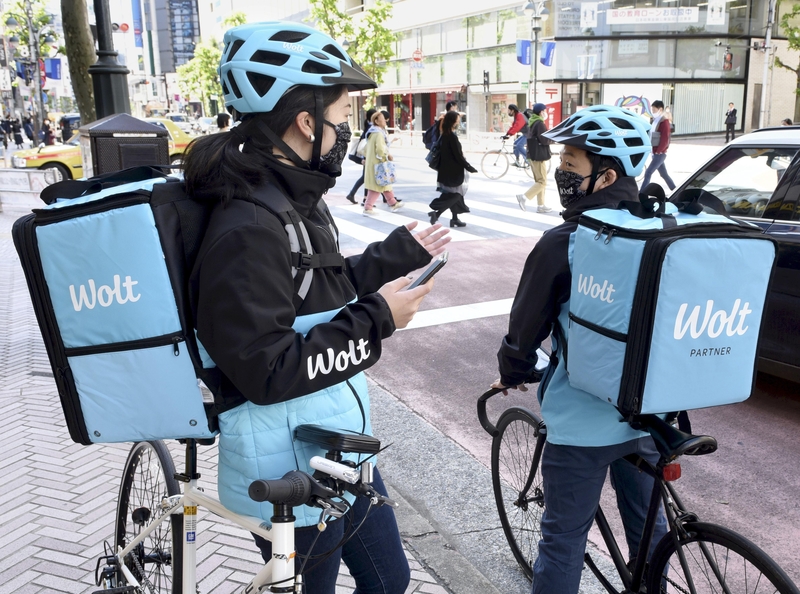
Competition is ramping up among food delivery service operators, which deliver meals from restaurants to homes or offices upon receiving orders via smartphone apps or over the internet.
Finland's Wolt entered the expanding Tokyo market in limited areas on Oct. 22 at a time when more people were refraining from dining out as novel coronavirus infections were spreading.
When Wolt began offering its services on the morning of Oct. 22, orders started coming in. Wolt personnel set out on bikes and other means to pick up and deliver them.
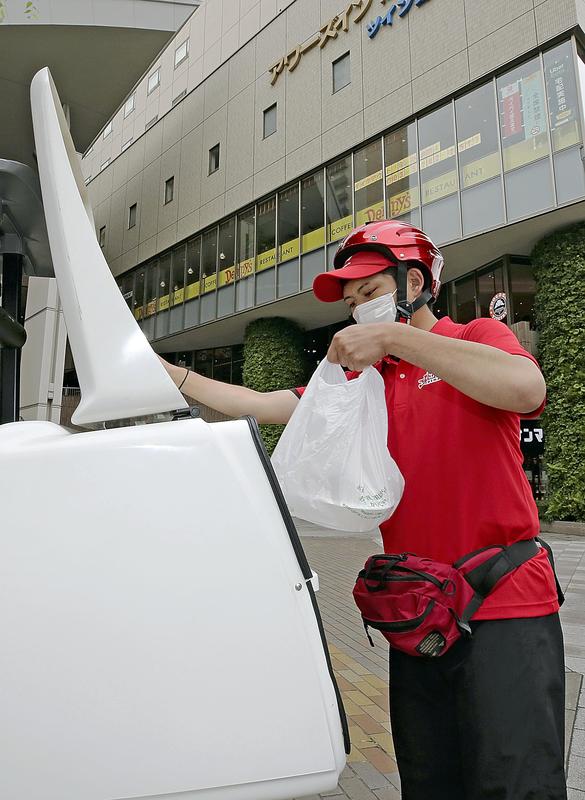
Wolt operates in more than 20 countries, mainly in Europe, but has also been offering delivery services in Hiroshima, Sapporo and Sendai since March. To separate itself from the competition, Wolt has a focus on localization by delivering such dishes as okonomiyaki pancakes, soup curry and gyutan beef tongue.
Wolt chief executive officer Miki Kuusi said that because not many people order food online in Japan, he is confident the company can grow.
Demae-can Co. and Uber Eats, run by Uber Technologies Inc., are the two largest food delivery service operators in Japan.
Demae-can launched in 2016 and over the past three years, during which the company saw explosive growth in the wake of the pandemic, the number of franchises more than doubled to 35,000 as of Sept. 18. From September 2019 to August 2020, Demae-can's annual income jumped nearly eight-fold from 300 million yen to 2.3 billion yen. According to market research firm NPD Japan Ltd., the size of the food delivery market grew as much as 23% in August from a year earlier. Demae-can aims to operate 100,000 outlets by the end of 2022.
In anticipation of growing demand, a flurry of domestic and foreign newcomers alike are entering Japan's online food delivery market. DiDi Food, an affiliate of China's ride-hailing giant Didi Chuzing Technology Co., began its delivery service in Osaka in June. Menu, Inc. started its services in Tokyo in April and aims to differentiate itself by offering high-end meal delivery from places such as Italian eateries and restaurants.
Under the food delivery system, a customer orders food from a restaurant via a food-delivery app and then a delivery person picks the meal up at the eatery and delivers it to the customer. Delivery costs are added to the bill and in Demae-can's case the fee is 420 yen per delivery in principle. Delivery companies also receive fees from restaurants.
Read more from The Japan News at https://japannews.yomiuri.co.jp/