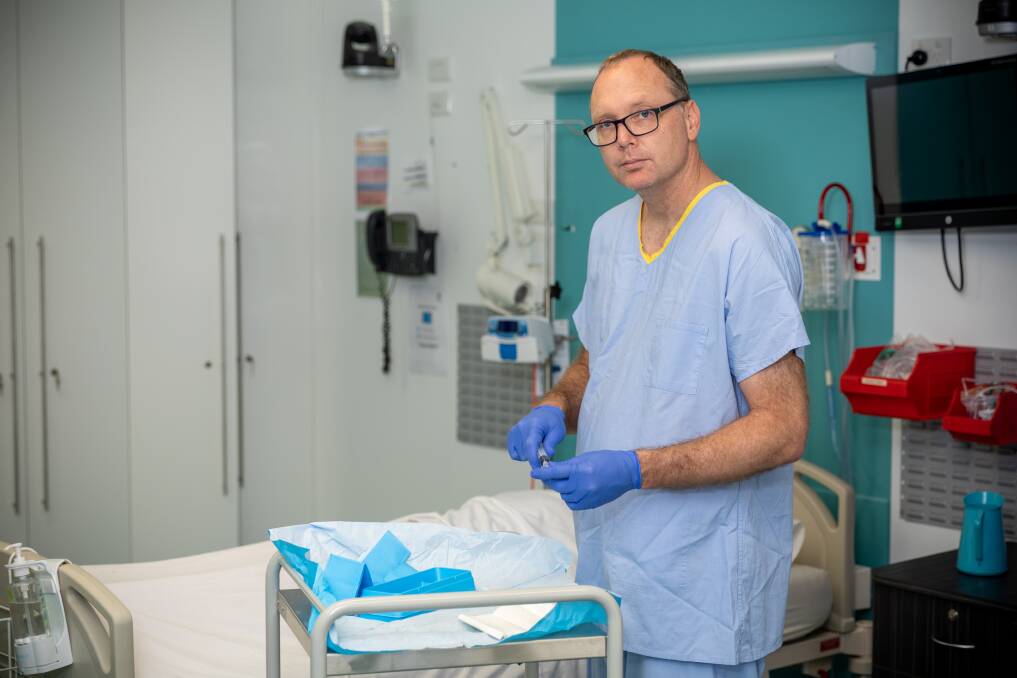
NEW research out of the University of Newcastle will help reduce the risk of hospital infection for "tens of thousands" of Australians and potentially save the health system "millions of dollars".
Professor Brett Mitchell, an infection control expert, has found that using antiseptic before inserting a catheter reduces the risk of urinary tract infection (UTI) in hospitals.
"UTIs are really common infections acquired in hospitals," Professor Mitchell said.
"About 70,000 people in hospitals each year get a UTI, and a lot of those infections are related to catheter use.
"People with UTIs stay in hospital longer, it impacts the person, and also health services with the costs of bed block.
"Although antiseptics may be a little bit more expensive than using something like saline or water to clean that area, it will actually save hospitals money across the board by reducing bed days and treatment costs."
Professor Mitchell's research, published in the British Medical Journal, is likely to influence clinical practice.
"It will have an impact on tens of thousands of Australians in terms of reducing their risk of infection in hospital," Professor Mitchell, a finalist in the National Health and Medical Research Awards, said.
"Between 20 and 25 per cent of people who end up in hospital will end up with a urinary catheter, so there are millions of catheters going in each year in Australia.
"That's why it's important. This can have a major impact on health services and patients."