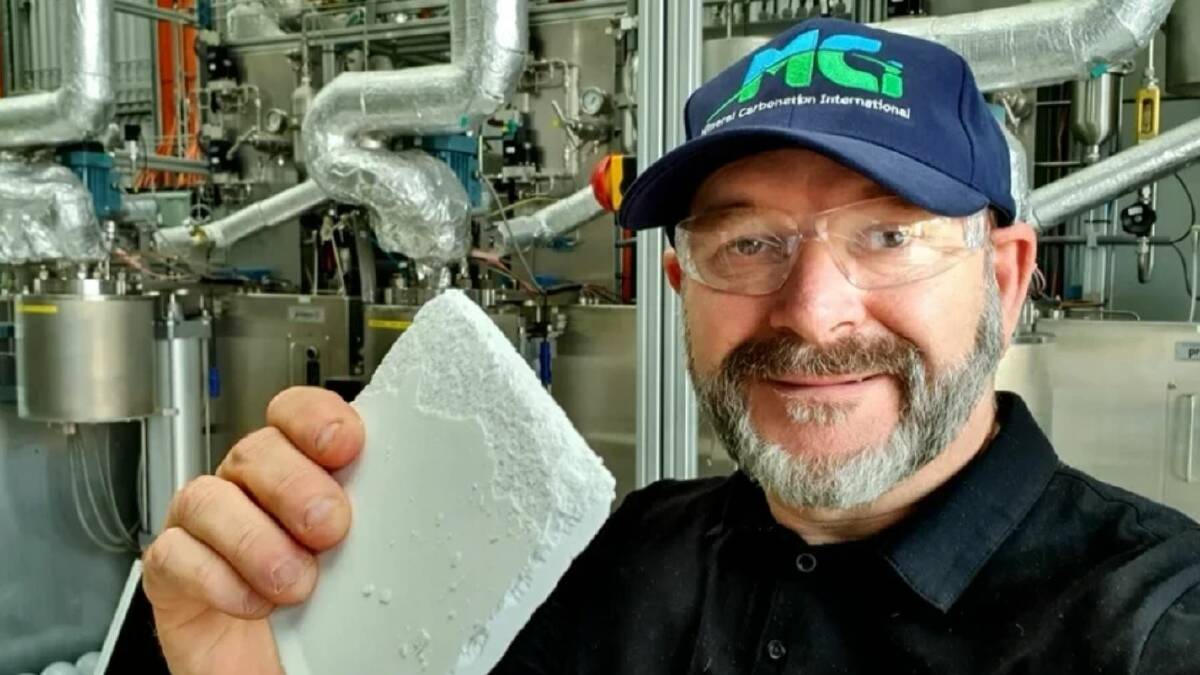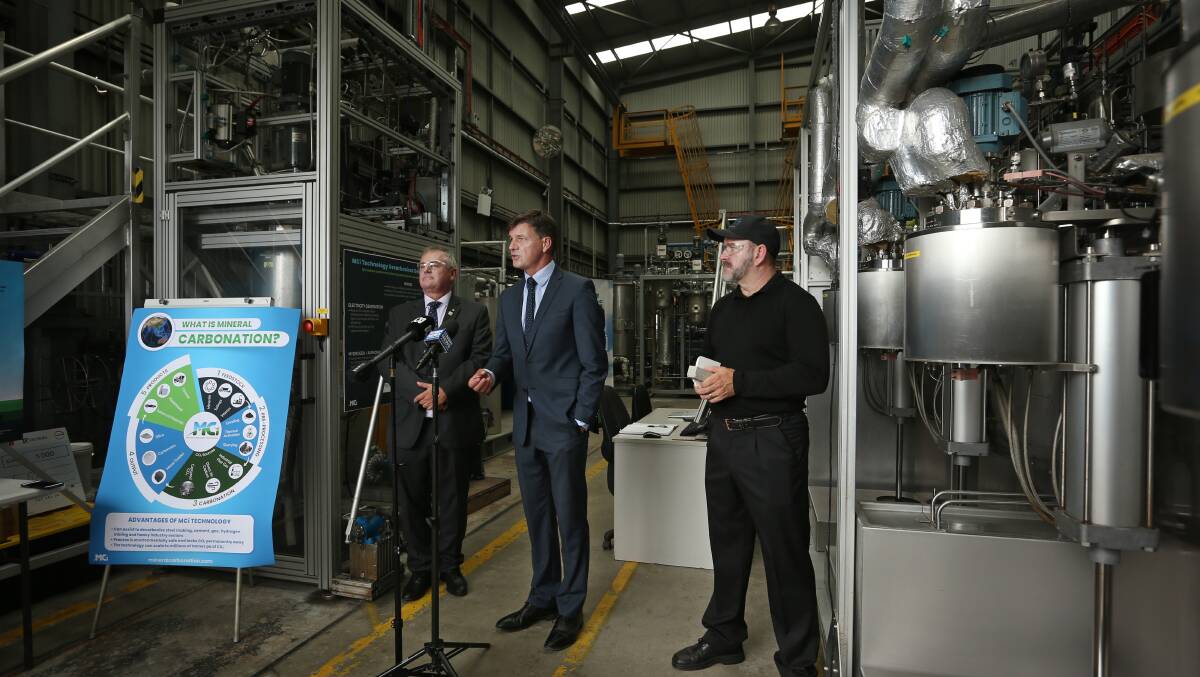
CANBERRA-based Mineral Carbonation International (MCi) has confirmed it will bid for money from a new $50 million Carbon Capture, Use and Storage (CCUS) fund launched formally at MCi's Shortland research facility yesterday by Energy and Emissions Reduction Minister Angus Taylor.
Mr Taylor toured the purpose-built facility yesterday, meeting MCi personnel along with the University of Newcastle vice-chancellor Alex Zelinsky.
MCi board member Jez Smith said the company was a joint venture between chemical company Orica, Greenmag Group - led by MCi chief executive Marcus Dawe - with support from the University of Newcastle.
"MCi uses carbon engineering processes to transform captured CO2 emissions from most industrial sources into solid materials that can be used to manufacture a range of low-carbon building and construction products," Mr Smith said.
"We use CO2 as a resource and create profitable pathways for many industries to reduce their emissions. This is carbon utilisation (CCU)."
THE MCi website is here
Explaining the processes yesterday, MCi's chief technical officer, Mark Rayson, said the company had found ways to turn CO2 into a solid, magnesium carbonate, that permanently sequestered the carbon.
Dr Rayson said a feedstock, a cheap, locally available rock called serpentine, was ground and then mixed with CO2 using MCi's combination of patented technology and intellectual property, creating magnesium carbonate and silica, both of which had commercial uses.
"Effectively, we have found a way to speed up a process that occurs naturally over thousands of years, but to do it quickly and in a low-energy, low-emissions way," Dr Rayson said.
Mr Smith, who is also emeritus chief scientist at Orica, said work began on the process 14 years ago, with MCi formed seven years ago, and building a pilot plant at its research centre at the university's Newcastle Institute of Energy and Resources at Shortland.
He said the company had a full-time equivalent workforce of 16, some of whom were seconded from Orica.
MCi believed its technology was good enough to become globally significant, and it would apply to the new federal fund to build a bigger version of its existing plant, on the way to commercialising its technology.
After a briefing from MCi executives, Mr Taylor told those gathered that the work represented "a fantastic example of how smart Australian engineers are providing a solution to CO2 that adds value to the CO2, creates jobs and strengthens the economy".
He said CCUS was "a real opportunity for Australia and we are putting real money behind it".