Newborn babies are not as fragile as they may seem. They can survive without food or liquid maybe for as long as a couple of days, which is the time it takes for the mother to produce enough milk.
But going without fluid and nutrition for five days – which is how long a baby boy in western Sydney is reported to have spent down a drain after being allegedly abandoned by his mother – stretches credibility, according to one of the UK’s leading paediatricians.
“I would say it is extraordinarily unlikely that this child was abandoned soon after birth and survived untended in a storm drain,” said Dr Simon Newell, vice president of the Royal College of Paediatrics and Child Health.
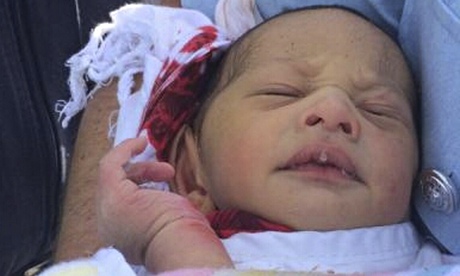
In a case which has shocked Australians, Saifale Nai, 30, was charged with attempted murder on Sunday after passersby heard a baby wailing from the bottom of a 2.5-metre drain in the Quakers Hill suburb.
The newborn was in a serious but stable condition at Westmead children’s hospital on Monday. Police said he was malnourished and dehydrated but otherwise physically unhurt.
Babies go through a remarkable process of change at birth. Towards the end of the pregnancy, they pass a pint of urine – at that stage a clean fluid – each day. They have a constant supply of sugars and nutrients from the placenta. But once born, they often have to exist more or less on their body stores for a couple of days until the mother produces sufficient milk. In that time they lose weight.
“That means a baby can survive certainly for a number of hours and maybe a day or more,” Newell said. But he seriously doubts survival for much longer. “It is much more likely that somebody was caring for this infant and then decided to leave the poor child down a storm drain.”
The baby was found because a passing cyclist heard him crying. “That is something babies do when they have the energy to do it. The most hopeful thing about this whole story is that this poor child was crying,” Newell said. It is the babies in hospital care that do not cry who are the most at risk.
Temperature is key to a newborn surviving in such extreme environment, he said. “In the UK this week it would be not long at all and the child might die within an hour. Then obviously if the temperature is OK – and it may have been that in Australia, shaded from the sun – then it is about nutrition and water. The time you would survive would be measured in many hours but not days.”
Newell, who had dealt with about half a dozen abandoned babies in his career, said he as concerned about the child’s mother. “There is always a very tragic story in the background,” he said. “Clearly it is a terrible thing to do, but every woman who has ever had a baby would know this woman would be in a very sorry state.”