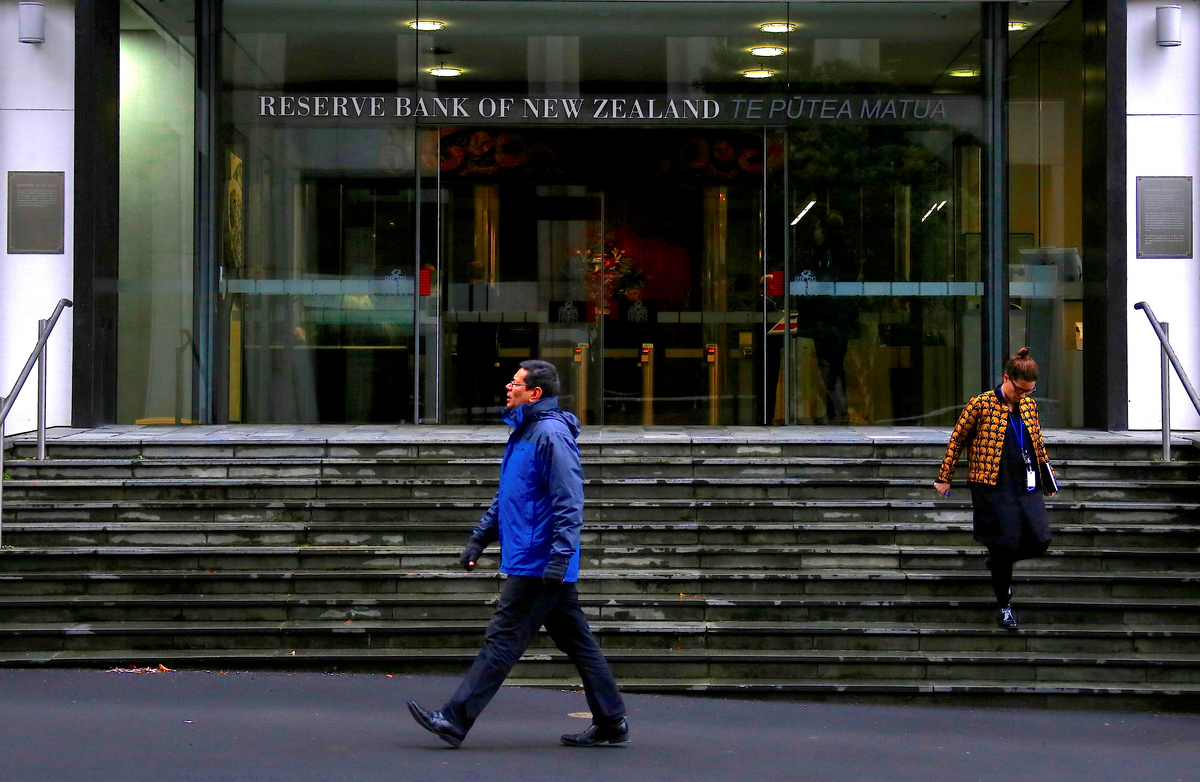
WELLINGTON (Reuters) - New Zealand's central bank will hold interest rates at a record low of 1% at its meeting on Sept. 25, a Reuters poll showed, but more easing is expected this year given a slowing domestic economy and broadening global pressure.
The Reserve Bank of New Zealand (RBNZ), which stunned markets with a steep 50 basis points cut in August, is expected by all 14 economists polled to pause at Wednesday's meeting to assess conditions.
However, RBNZ Governor Adrian Orr isn't expected to hold fire for too long, as 11 of the 14 see the central bank cutting rates by 25 basis points in November.
ANZ Bank forecasts three more 25 basis point cuts - in November, February and May - which would lower the Official Cash Rate (OCR) to 0.25%.
On Sept. 25, the RBNZ "will reaffirm its willingness to cut further should the outlook warrant, but it will also want to assess how earlier stimulus is transmitting through the broader economy before moving again," said ANZ Chief Economist Sharon Zollner.
But given the central bank's "proactive" rate-setting committee, "we wouldn’t rule anything out," she said in a note on Friday.
Markets have priced in a more than 70% chance of RBNZ holding rates next week.
Orr flagged the possibility of taking rates below zero at the last policy meeting on Aug, 7, and the bank drove home its dovish message by predicting no chance of a hike until late 2021, a lower-for-longer outlook recently also adopted by the Reserve Bank of Australia (RBA).
Slashing the OCR to 1% was aimed at jolting the economy out of a sharp slowdown. But this has not brought any discernible improvement in business or consumer confidence, or inflation expectations indicators, Zollner said.
The domestic economy has been sluggish this year with business confidence at record lows amid international trade tensions, China's slowing economy and Brexit.
The economy grew faster than expected in the second quarter, giving some room to RBNZ, but there's been little to shift expectations of further rate cuts this year.
On Wednesday, the U.S. Federal Reserve cut interest rates again to sustain a record-long economic expansion and fend off risks such as weak global growth and resurgent trade tensions.
Australia left its interest rates at all-time lows this month after easing by a quarter point in both June and July.
"The RBNZ did more to get ahead of the game in August," said Westpac Chief Economist Dominick Stephens.
"Although the economic outlook remains poor, it is probably no worse than the RBNZ previously forecast," he said.
(Editing by Richard Borsuk)