WELLINGTON (Reuters) - The New Zealand Treasury trimmed the country's growth forecast for 2019 and flagged a smaller surplus as it cautioned of risks to the economy from global trade frictions and slowing immigration.
The Treasury predicted a NZ$1.7 billion budget surplus in 2019, down from its previous forecast of NZ$3.7 billion in the May budget. Surpluses for 2020 and 2021 were also trimmed.
The lower forecast surplus largely reflected the carried-over expenses from the 2017/18 period into the current year due to timing issues, the Treasury said.
The Treasury cut its forecast for economic growth to 2.9 percent in 2018/19 from the prior prediction of 3.8 percent, and 3.0 percent for the following year and warned growing global trade tensions and slowing immigration could pose further risks to its estimates.
Many economists had expected the Treasury to have to cut its ambitious growth forecast, raising questions of whether growth well above 3 percent was realistic given immigration and house prices growth were starting to slow.
Nick Tuffley, chief economist at ASB, said the government has kept its "fiscal powder dry."
"The fiscal accounts have room for modest increases in spending.. the forecasts continue to show the economy growing at or near its historical average," he said.
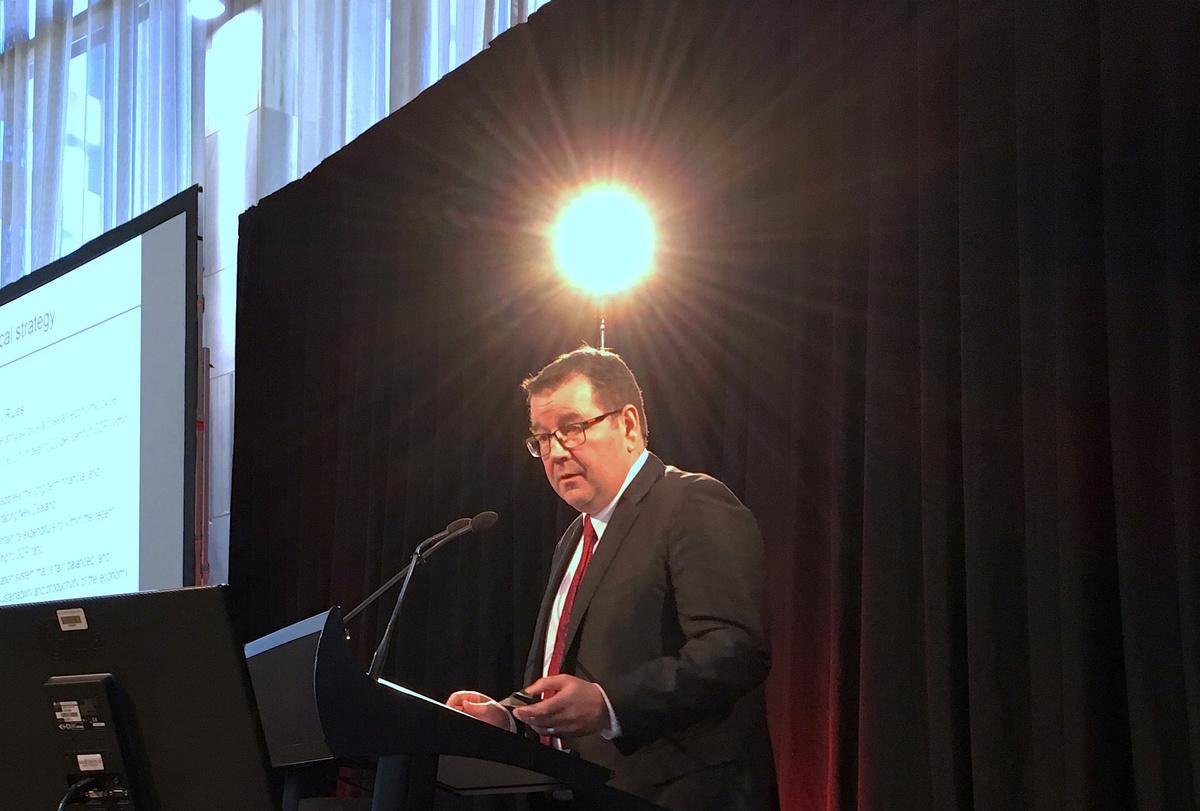
Commenting on the outlook, Finance Minister Grant Robertson highlighted the potential threats to the economy from the Sino-U.S. trade dispute, which has roiled global markets this year as policy makers worry about the wider impact on business investment and growth.
"I continue, as most people do, to keep a wary eye on the U.S.-China trade dispute," Robertson said, adding that the tensions between the two economic superpowers is one of the top international concerns for New Zealand.
Underscoring these risks, the Treasury said in its report there are a number of possible headwinds to growth, including rising trade tensions, political instability around the world and uncertainty over the impact of U.S. monetary policy tightening.
The New Zealand dollar <NZD=D4> edged down to $0.6843 from around $0.6856. It later made back most of its losses to trade around $0.6852.
'WELLBEING' BUDGET
Robertson said that his next budget would be the first of a new plan to measure government performance and spending by social wellbeing indicators as well as traditional economic indicators.
Prime Minister Jacinda Ardern's Labour-led coalition, which came to power last year, has looked to spread prosperity more broadly, banning some foreigners from buying New Zealand property and undertaking a central bank review that added employment to its monetary policy goals.
In its first budget released in May, Ardern's centre-left government ramped up spending and unveiled billions of dollars in additional funding for housing, health and education, while also pledging to reduce its debt burden as a proportion of gross domestic product.
The Treasury did forecast inflation to stabilise around 2 percent for the next four years. That would likely be welcome news for the Reserve Bank of New Zealand (RBNZ), which has kept rates at a record low as it works to boost tepid inflation towards the centre of the 1 to 3 percent range.
At its last policy review in November, the RBNZ struck a neutral tone as it kept interest rates at 1.75 percent, emphasising its next move was dependent on data and that downside risks to growth remained.
(Reporting by Charlotte Greenfield and Praveen Menon; editing by Shri Navaratnam)