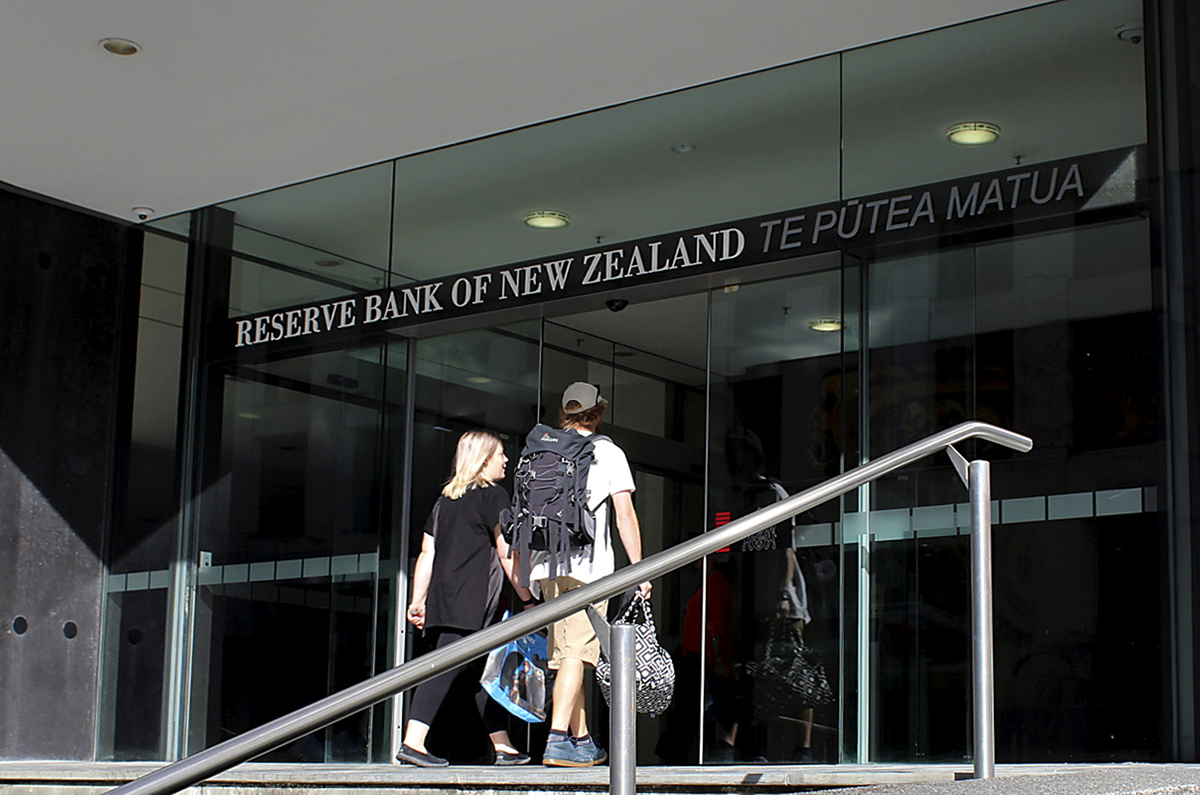
WELLINGTON (Reuters) - New Zealand's government on Thursday announced the initial seven members of the central bank's new policy setting committee, which includes three external and four internal appointees but no business people.
The new monetary policy committee (MPC) makes its first decision at the next cash rate review on May 8 and transfers power to change rates from the governor alone to a panel of bank staff and external members.
On Wednesday, the RBNZ held its last monetary policy decision under the old framework at which central bank governor Adrian Orr decided to keep rates unchanged but surprised markets by flagging the next move in rates was likely to be a cut.
The four RBNZ staff members on the committee include Governor Orr, who chairs the committee; Deputy Governor Geoff Bascand; Assistant Governor and General Manager of Economics Christian Hawkesby; and Manager for International and Markets Analysis Yuong Ha, who has a one-year term on the committee while the role of central bank chief economist is vacant.
From outside the bank, Caroline Saunders, Professor of International Trade and the Environment and Director Agribusiness and Economics Research Unit at Lincoln University, has been appointed for a four-year term.
Bob Buckle, Professor Emeritus at Victoria University of Wellington and a former Principal Adviser at NZ Treasury, and Peter Harris, an economist with experience in the trade union movement, will both have three-year terms.
Westpac chief economist Dominick Stephens said it was interesting no business people had been appointed to the MPC, but noted the three external appointments all had governance experience and a broad mix of skills.
"These are all experienced economists who will be quite capable of critiquing the RBNZ's analysis, and more than capable of holding their own in a debate about economics," Stephens said.
Fragile business sentiment has dogged New Zealand's economy, with confidence hitting a decade-low in August last year, as businesses grew concerned about the government's investment and employment policies.
The new committee starts on Monday and was formed following a review into central bank operations, which the Labour-led government launched in late 2017.
Decisions are reached by consensus, with a vote taken if needed, and minutes of the meetings will be published.
Despite the changes to the rate-setting process, the MPC's remit follows RBNZ's existing goals of keeping medium-term inflation between 1-3 percent and supporting maximum sustainable employment.
(Reporting by John Mair; Editing by Sam Holmes)