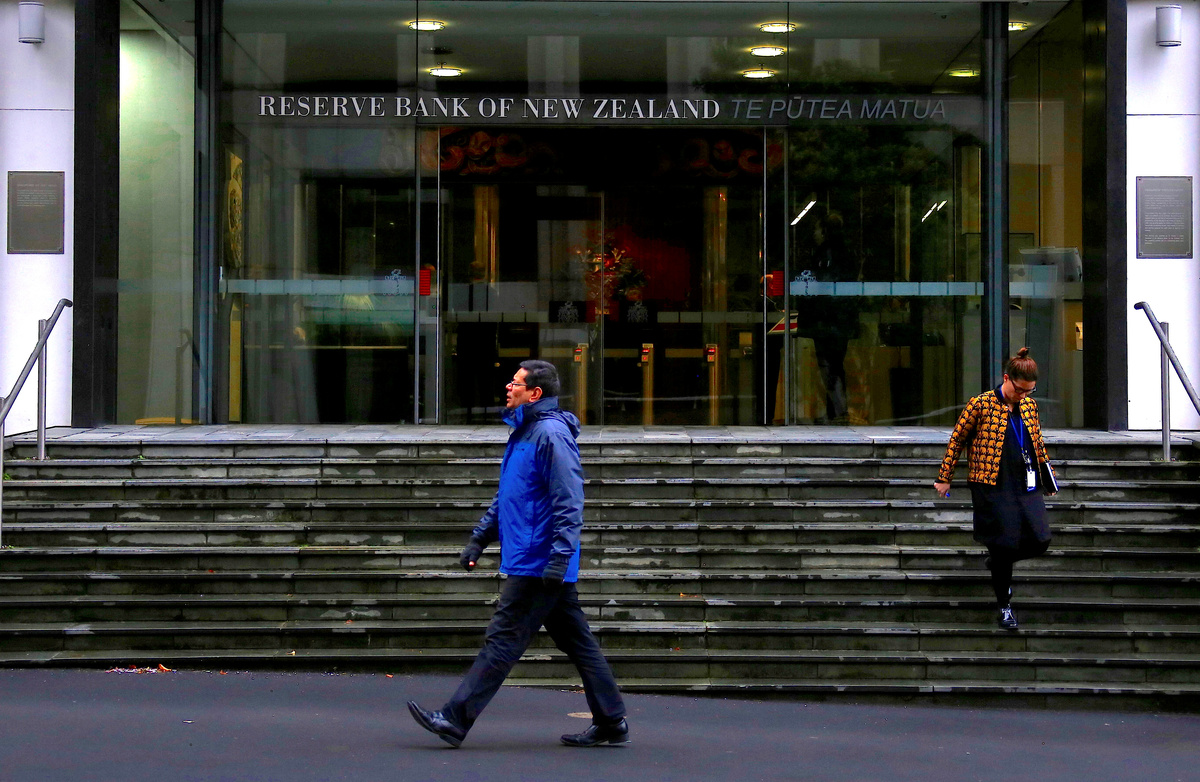
New Zealand's Central Bank further tightened mortgage lending to investors on Tuesday, while the government promised 'bold action' to control an inflated housing market that could impact the country's financial stability.
The Reserve Bank of New Zealand lifted loan-to-value ratio (LVR) restrictions on mortgage lending to investors in April last year to spur credit flow and boost the economy hit by the coronavirus pandemic.
But it decided to reinstate the restrictions from March after the housing market witnessed a rapid acceleration, with new records being set for the national median price and new mortgage lending continuing at a strong pace.
"We are now concerned about the risk a sharp correction in the housing market poses for financial stability," Deputy Governor Geoff Bascand said in a statement.
The move came shortly after the Finance Minister Grant Robertson promised 'bold action' on housing in his budget policy speech amid growing pressure on the government to control the crisis.
"What we do know is that now is the time for bold action. The market has moved quickly and rapidly in a way that is not sustainable," Robertson said in his speech.
Property prices have skyrocketed amid an acute shortage of affordable homes, record-low interest rates and eased mortgage lending curbs, putting home ownership out of reach for many New Zealanders.
The nationwide median house price rose by 17% between June and December last year, and ended the year 19% higher than the end of 2019.
RBNZ said that from March LVR restrictions would return to the level before the onset of COVID-19, which means banks could only make up to 20% of their residential mortgage lending to owner-occupiers paying deposits of less than 20%.
As for investors, no more than 5% of such lending could go to those who deposit less than 30%. From May 1, the deposit requirement for investors would be raised to 40%.
The LVR restrictions do not apply to new residential construction.
In an update on the probe into a cyberattack that breached RBNZ's data systems last month, the bank said the third-party application used to share information with external stakeholders did not inform the bank about the risk.
California-based Accellion, which provided a file-sharing service to the bank, failed to notify it for five days that an attack was occurring against its customers around the world, RBNZ said in a statement.
(Reporting by Praveen Menon; Editing by Chris Reese and Sonya Hepinstall)