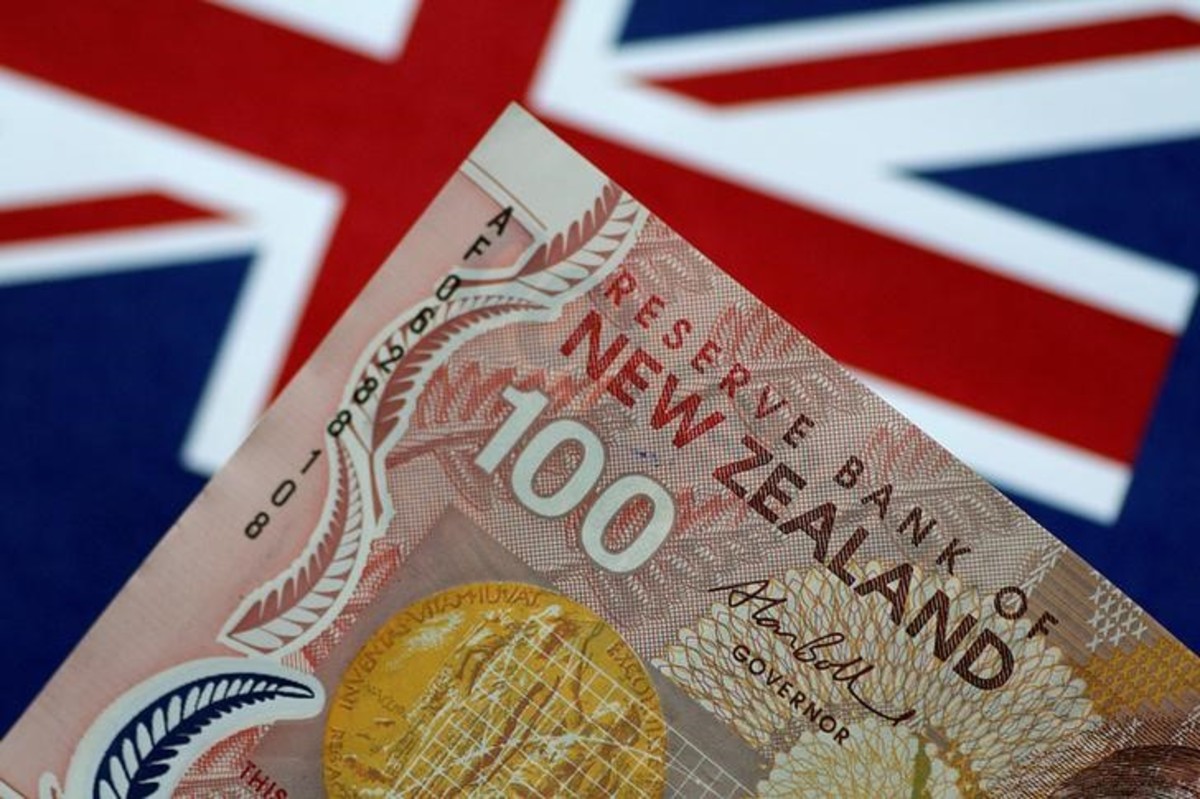
SYDNEY (Reuters) - The New Zealand dollar edged towards a two-week high on Tuesday after the country's finance minister said the new government had no desire to make targeting the currency a part of monetary policy.
Grant Robertson said proposed changes to the Reserve Bank of New Zealand's mandate would include maximising employment, instituting a committee-based decision-making model and publishing minutes of its policy meetings.
However, he ruled out adding the currency to the review, soothing concerns the new government might make a lower kiwi a goal for the central bank.
The kiwi dollar <NZD=D4> added a quarter of a cent to $0.6946 after the announcement, nudging towards Monday's high of $0.6958, a level not seen since Oct. 24.
"This...will be seen as a positive by those who favour orthodox monetary policy," said Westpac chief economist Dominick Stephens.
"The New Zealand dollar rose, presumably as markets were able to rule out actions specifically designed to lower the exchange rate," he added.
Across the Tasman Sea, the Australian dollar was a tad softer ahead of the Reserve Bank of Australia's (RBA) monthly policy announcement at 0330 GMT.
The RBA is expected to hold rates at 1.50 percent but might downgrade its inflation forecast after a five-year update of household spending patterns implied consumer prices were overstated by around 0.2 percentage points.
Core inflation has remained below the RBA's 2-3 percent target band for two full years now.
The Aussie still found support around current levels, led by a rally in commodity prices including oil, iron ore and copper.
The price of iron ore, Australia's No.1 export earner, rose about 6 percent on Monday to $63.4 a tonne, though that was still well below a recent peak of $80. Oil was at a 2-1/2-year high, while copper and nickel were buoyed by strong demand.
New Zealand government bonds <0#NZTSY=> slipped, with yields 3-3.5 basis points higher at the long-end and 2-2.5 basis points at the short-end of the curve.
Australian government bond futures eased, with the three-year bond contract <YTTc1> down 2 ticks at 98.050. The 10-year contract <YTCc1> also dipped 2 ticks to 97.3950.
(Editing by Sam Holmes)