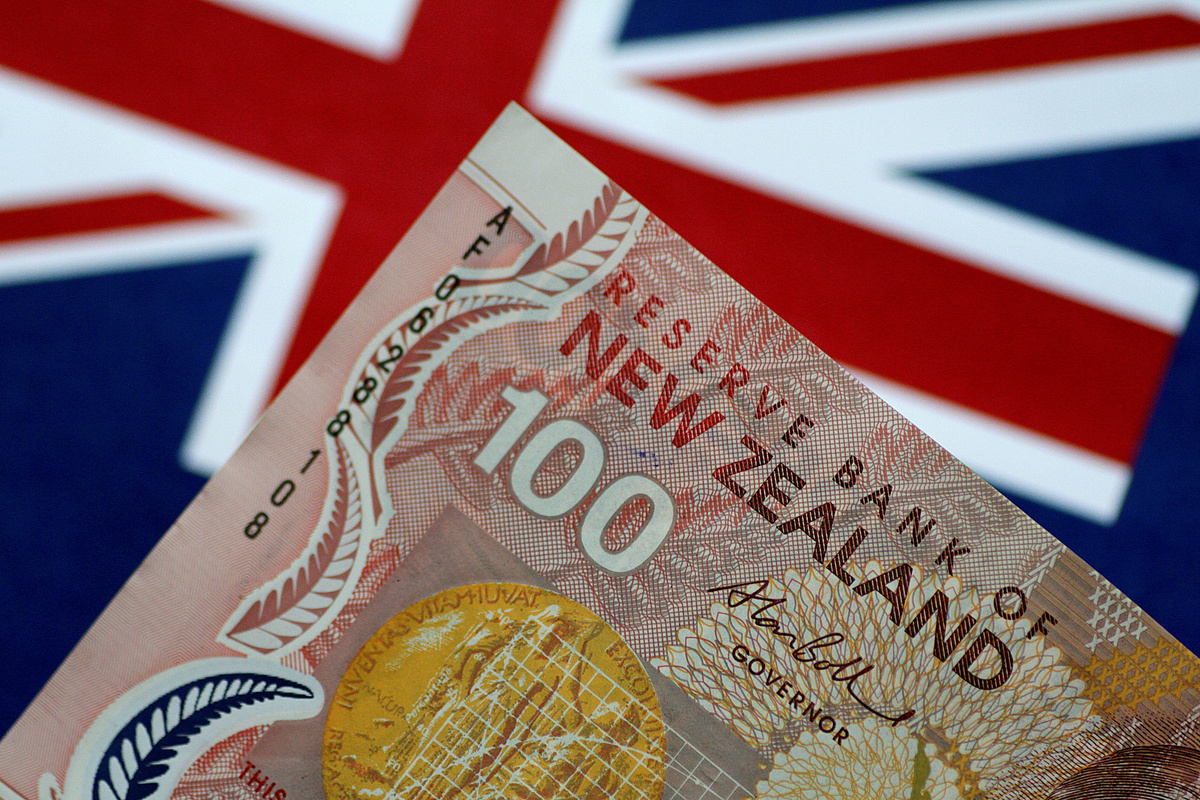
SYDNEY (Reuters) - The New Zealand dollar popped higher on Tuesday after a surprisingly high reading on domestic inflation blunted the, already modest, chance of a cut in interest rates and pushed bond yields up.
The kiwi <NZD=D3> firmed 0.4 percent to $0.6575, putting some ground between the recent 32-month trough around $0.6424.
Government data showed consumer price inflation rose 0.9 percent in the September quarter, topping the 0.7 percent expected on rising petrol costs and a weakening currency.
The annual pace of 1.9 percent was almost back at the Reserve Bank of New Zealand's (RBNZ) mid-range target of 2 percent, narrowing the scope for an easing in policy.
However, the bank's own preferred measure of core inflation stayed at 1.7 percent in the third quarter, suggesting there was no rush to tighten policy either.
"For now at least, the RBNZ can still claim that much of the recent rise in inflation pressure is coming from cost-push inflation factors that can be looked through," said Kiwibank chief economist Jarrod Kerr.
"With headline inflation on the charge, momentum is likely to build in the figures," he added. "We believe that ultimately the RBNZ will be forced to begin gradually hiking sooner than is currently signalled."
Interest rates futures slipped in response <0#NBB:> while bond yields rose 2 to 3 basis points <0#NZTSY=>.
The Aussie dollar <AUD=D3> was dragged a fraction higher by the kiwi to $0.7137, but again met stiff resistance around $0.7150.
Minutes of the Reserve Bank of Australia's (RBA) October policy meeting showed it still expected the next move in rates to be upward, but saw no strong case for a move anytime soon. Rates have been held at a record low of 1.5 percent since mid-2016.
The RBA's board did note it was watching carefully to ensure banks do not tighten credit too much and imperil the economy at a time when income growth is slow and house prices are falling.
"We believe that a weaker housing market and slower consumption growth, both in part due to tighter lending standards, are just around the corner," said Paul Dales, chief economist Australia at Capital Economics.
"That goes a long way to explaining why we doubt the RBA will raise interest rates until late in 2020."
Australian government bond futures eased in line with Treasuries, with the three-year bond contract <YTTc1> off 2 ticks at 97.870. The 10-year contract <YTCc1> dipped 3 ticks to 97.2650.
(Editing by Shri Navaratnam)